
Follow us on Google News

The Union Ministry of Social Justice and Empowerment will launch two new digital platforms on November 25, 2026, introducing an AI-powered system that will bring more than 20 government portals under one interface and simplify access to welfare schemes, grants and beneficiary services.
Union Minister Dr Virendra Kumar, accompanied by Minister of State B. L. Verma, is scheduled to launch SAMAVESH and a revamped e-Anudaan portal at Dr Ambedkar International Centre in New Delhi.
According to an official announcement issued on November 24, the platforms are intended to reduce administrative complexity, improve transparency in government fund disbursement and make welfare services accessible to citizens in multiple Indian languages.
The initiative will introduce a common login system, an AI-powered multilingual chatbot, automated document verification and digital monitoring mechanisms for institutions receiving government assistance.
FCRF Launches Certified Chief Risk Officer (CRO) Program for India’s Risk Leaders
SAMAVESH To Integrate More Than 20 Government Portals
SAMAVESH, short for Single Access Mechanism for All Verticals of Empowerment & Social Harmony, has been developed by the Department of Social Justice and Empowerment.
The platform will combine more than 20 existing departmental portals into one digital gateway.
Among these are nine portals that provide complete online workflows for government schemes and programmes.
Currently, beneficiaries and organisations may need to navigate different government websites to obtain information, submit applications or access departmental services.
SAMAVESH aims to reduce this fragmentation by providing a single interface through which users can locate relevant information and services.
The system will introduce a common login facility, allowing registered users to access multiple services through a unified authentication mechanism.
It will also integrate with DigiLocker and the Public Financial Management System (PFMS).
DigiLocker provides access to digital documents and certificates, while PFMS supports the management and tracking of government financial transactions.
A consolidated Beneficiary Dashboard is intended to help officials monitor scheme implementation and track beneficiary-related information.
The ministry expects these features to reduce administrative delays and improve coordination between different departmental programmes.
However, the government has not yet published detailed performance figures showing how much processing time the integrated system is expected to save.
AI Chatbot To Provide Welfare Information In Over 22 Languages
A major feature of SAMAVESH will be Samajik Sahayak, an AI-powered chatbot designed to help citizens obtain information about government services.
The chatbot will use BHASHINI, India’s language technology platform, to support more than 22 regional languages.
The integration is intended to help people who may find English-language government websites difficult to navigate.
Instead of searching through several departmental portals, users will be able to seek assistance through a common digital interface.
The government also plans to support document summarisation through the BHASHINI collaboration.
This could make lengthy scheme-related information easier to understand, particularly for applicants unfamiliar with administrative procedures.
However, the official announcement does not specify whether the chatbot will be authorised to make eligibility decisions or approve applications.
Its stated role is to provide information and assistance.
Any use of AI in citizen-facing services also creates questions about the accuracy of automated responses, especially when users are seeking information about eligibility, documentation and government benefits.
The ministry has not detailed the chatbot’s error-handling procedures or the arrangements for escalating incorrect responses to human officials.
New e-Anudaan Portal To Digitise Grants And Strengthen Financial Monitoring
Alongside SAMAVESH, the government will introduce a revamped e-Anudaan portal to simplify financial assistance for non-governmental organisations, voluntary institutions and other eligible organisations.
The new platform will bring grant-in-aid processes under four major schemes into one system.
These include the National Action Plan for Drug Demand Reduction (NAPDDR), SMILE, Atal Vayo Abhyuday Yojana (AVYAY) and SHRESHTA.
The ministry said the platform will simplify application procedures, reduce documentation requirements and introduce automated document verification.
It will also support electronic inspections, including video-based assessments and geo-tagged evidence.
Geo-tagged information records the location associated with a photograph or other evidence, potentially helping officials verify activities carried out by institutions receiving assistance.
Integration with PFMS will enable digital tracking of grant disbursements and payments.
This is intended to strengthen oversight of public funds and make it easier to monitor how assistance is distributed and utilised.
However, the announcement does not claim that automated verification will eliminate fraudulent applications or misuse of grants.
The effectiveness of the system will depend on implementation, data accuracy and the quality of institutional checks.
Government To Sign BHASHINI And NSDC Agreements
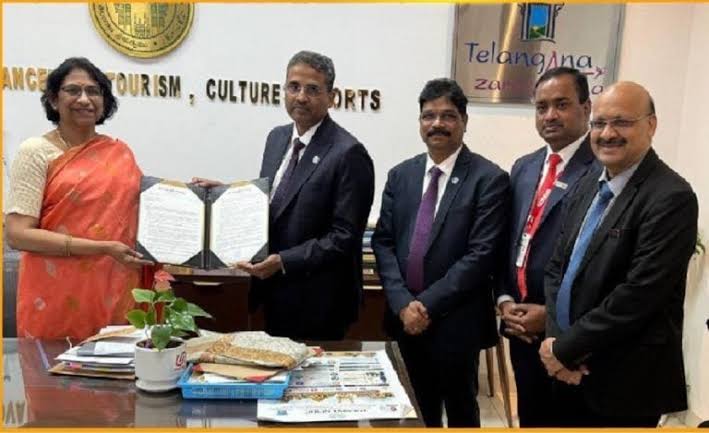
The November 25 launch event will also feature the exchange of two memoranda of understanding aimed at improving digital access and employment opportunities.
The first agreement will involve the Department of Social Justice and Empowerment and BHASHINI.
It will support multilingual services, AI-assisted information access and document summarisation through SAMAVESH.
The second agreement will be signed with the National Skill Development Corporation (NSDC).
The partnership will support skill development and employment-related activities under the Grant-in-Aid component of the Pradhan Mantri Anusuchit Jaati Abhyuday Yojana (PM-AJAY).
The government expects the combined initiatives to strengthen the delivery of welfare schemes and improve access to services for beneficiaries and participating institutions.
The launch will mark the formal introduction of the platforms, although the ministry has not specified whether every feature and integration will be available to all users immediately.
Their practical impact will depend on how effectively the new systems operate, how accessible they are to intended beneficiaries and whether the promised transparency measures improve the processing of applications and public funds.
What this means for you:
Citizens seeking welfare benefits may eventually be able to access multiple departmental services through a single login and obtain assistance in their preferred language. NGOs applying for government grants should monitor the official e-Anudaan portal for updated procedures following the November 25 launch.