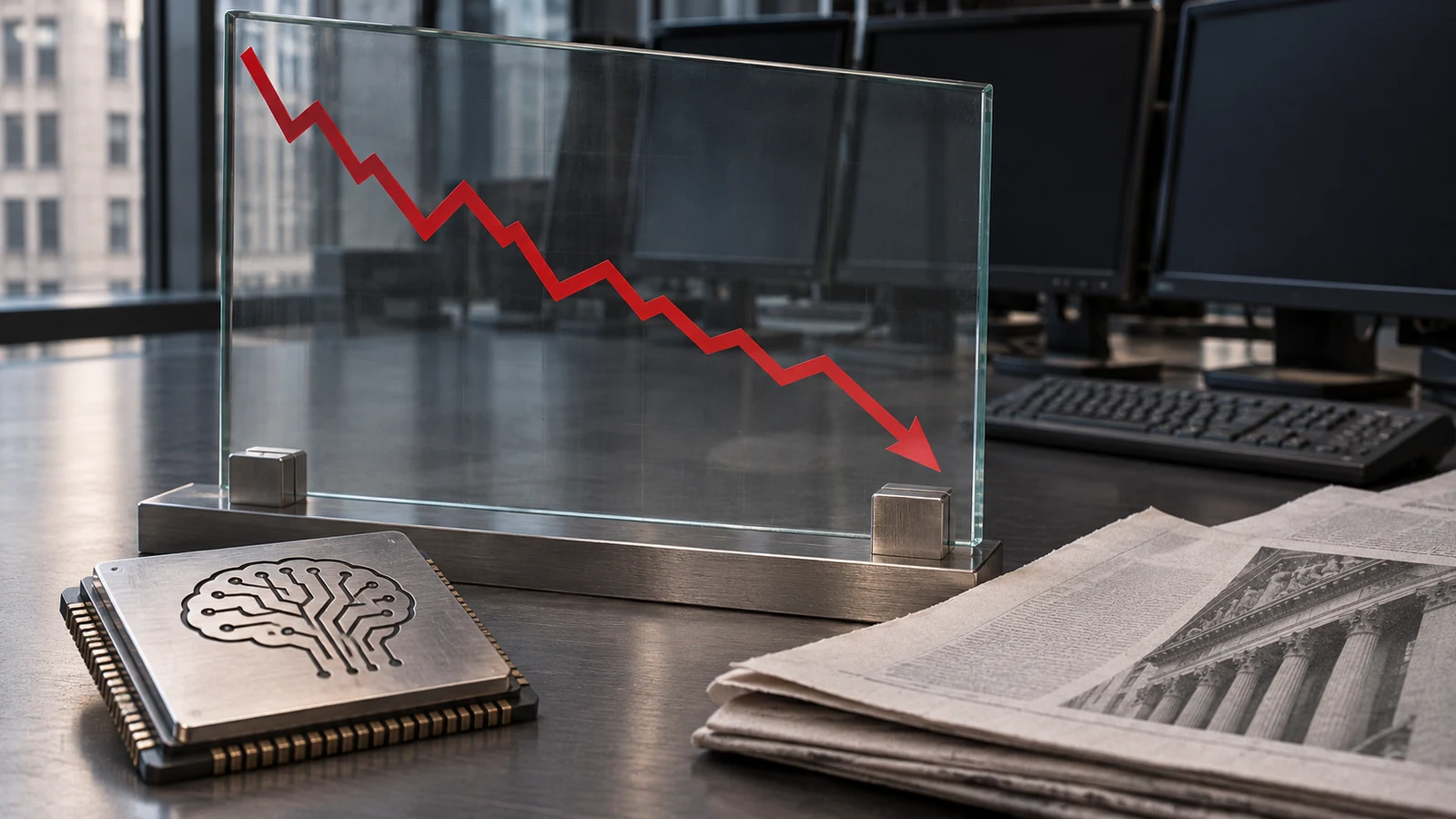


Shares in Anthropic fell below their $83 initial public offering price on Tuesday as Wall Street resumed selling technology stocks. The Claude developer was trading near $80 in early US dealing, less than a week after it made its Nasdaq debut. Investors who bought at the offering price were sitting on a paper loss, with trading still underway.
The drop puts a public price on a question that previously played out mainly in private funding rounds: how much should investors pay for a company trying to stay at the frontier of artificial intelligence? Anthropic has a large customer base and access to sizeable amounts of capital. Its ability to earn a lasting return depends on how much customers will pay for Claude, how quickly competitors improve and what it costs to run the technology at scale.
What Does the $83 Threshold Tell Investors?
Anthropic set the price at $83 a share in its November 18 offering announcement. The company said the base offering comprised 980 million Class A shares, including shares sold by existing investors. Trading began the following day on the Nasdaq Global Select Market under the ticker ANT.
The IPO price records the terms on which stock was placed in the offering. Once shares trade publicly, buyers and sellers set a new price throughout the day. Crossing below $83 provides a clear comparison with the terms of the debut and signals that the market is asking for a greater discount to hold the shares than early investors received.
A fall in the share price also has a different financial effect from a change in sales. The amount already raised in the IPO does not fall each time the quoted price drops. A sustained decline can still matter over time. It can influence the cost of raising more equity and the value of stock compensation, which technology companies use to compete for staff. Tuesday’s intraday quote provides a snapshot of sentiment. It does not provide a quarter’s worth of operating results.
Why Is the Cost of AI Central to the Story?
Frontier model developers spend money on two distinct activities. Training uses large amounts of computing capacity to build and improve models. Inference is the computing that happens every time a model responds to a request. An agent that researches a subject, works through several steps and checks its output can put a much larger load on infrastructure than a short chat exchange.
That distinction makes revenue growth only one part of the story. A model provider can sell more subscriptions and attract more enterprise workloads while also spending more to serve them. The commercial issue is whether better models, more efficient infrastructure or higher prices improve the margin on the work customers actually buy.
Competition complicates that calculation. Customers who can get good results from a cheaper service or a model they operate themselves may have little reason to pay for the most expensive option on every task. Highly capable systems can still command a premium where performance makes a measurable difference. The challenge is to show which tasks justify that premium, and how often organisations need to run them.
Which Numbers Matter After the First Week?
The next useful evidence will come from regular disclosures. Investors can look at the pace of revenue growth, the cost of serving new usage and the size and timing of computing commitments. Together, those figures can help show whether rapid adoption is translating into durable operating performance. A share price is easier to watch, but offers little detail about any of those moving parts.
For enterprise customers, Anthropic’s listing makes more information about a major technology supplier available. Buyers can follow filings, separate commitments made in contracts from longer-term aspirations and assess whether their own pricing and service terms fit how they expect to use AI. Current trading data is available through Nasdaq’s ANT quote page.
The market’s reassessment will also matter to companies following the intersection of finance and technology. Public markets now have a direct way to value a large frontier model developer, with regular financial disclosures to test the assumptions behind that valuation. The more revealing test will come when investors can compare the cost of supplying AI with what its customers consistently pay.