
Follow us on Google News

The Trump administration is preparing to impose fresh import tariffs on products coming from China, India, the European Union, and 13 other economies following a multi-month investigation into industrial subsidies and excess production capacity. US Trade Representative Jamieson Greer could publicly release the findings of the inquiry this week, potentially paving the way for higher duties on a wide range of goods. However, no official announcement has been made yet regarding the final tariff rates or the exact timeline for their implementation.
Washington alleges that the targeted economies are boosting their domestic industries through government subsidies, cheap financial assistance, and other policy incentives. According to US officials, these measures have led to manufacturing output far exceeding domestic demand in several sectors. The administration claims that this surplus production is being sold in international markets at artificially low prices, creating intense competitive pressure for American companies and domestic manufacturers. The proposed tariffs are aimed at shielding US industries from cheap imports.
Sixteen Economies Under the Scanner
A total of 16 economies are covered under the current investigation, including China, India, the European Union, Japan, South Korea, Vietnam, Taiwan, Thailand, Malaysia, Cambodia, Indonesia, Singapore, Switzerland, Norway, Bangladesh, and Mexico. Imports from all 27 member states of the European Union could fall under the proposed tariff regime. US authorities believe that the industrial policies and state backing provided by these nations are distorting global supply and pricing balances.
The proposed tariff structure is unlikely to apply a uniform rate across all nations. Early indications suggest that India and Vietnam could face comparatively higher duties, whereas the European Union, Japan, and South Korea, which have existing trade arrangements with Washington, may see rates capped at 15 percent or lower. China is expected to face the steepest levies. Still, these figures remain indicative, and the final decision will depend on the investigation’s conclusions and the administration’s broader trade strategy.
For India, the move carries significant weight because the United States is one of its largest export destinations. Additional duties could raise the landed cost of Indian goods in the American market, eroding the price competitiveness of Indian exporters and prompting overseas buyers to look toward alternative suppliers. Key sectors such as textiles, engineering goods, electronics, and chemicals could feel the impact, forcing companies to recalibrate their pricing, supply chains, and market strategies.
Broad Product Coverage Under Section 301
The upcoming tariffs are expected to be broad in scope, affecting the majority of imported goods from the listed economies. However, items such as steel, aluminum, and automobiles are likely to be excluded from the new regime, as the United States already imposes separate national security tariffs on them. This distinction will separate the new measures from existing trade duties.
The investigation is being conducted under Section 301 of the Trade Act of 1974, launched by the Office of the US Trade Representative on March 11, 2026. This legal provision empowers Washington to determine whether a foreign government’s policies are unfair or restrictive to American commerce. An adverse finding allows the administration to impose import duties, trade restrictions, or other retaliatory measures. Sectors scrutinized under the probe include steel, aluminum, vehicles, batteries, chemicals, electronics, machinery, semiconductors, solar modules, ships, and transport equipment.
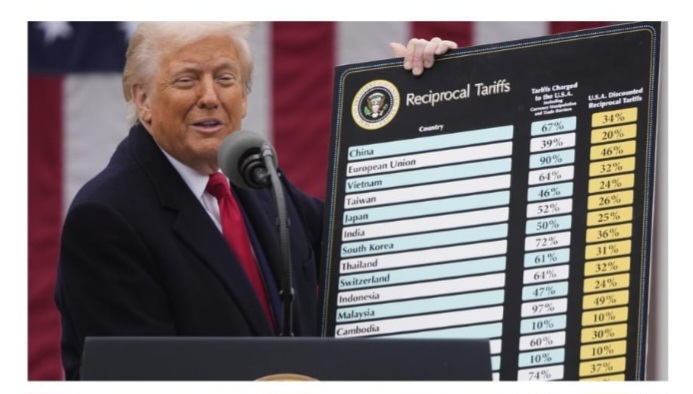
Amid the latest developments, an older Trump administration reciprocal tariff chart has also resurfaced in public discussion. That chart listed US counter-tariffs of 34 percent against China’s 67 percent, 20 percent against the EU’s 39 percent, and 26 percent against India’s 52 percent, alongside rates of 46 percent for Vietnam, 24 percent for Japan, and 25 percent for South Korea. Officials note those figures belong to an earlier framework and do not represent the new rates under the current probe.
Uncertainty Grips Financial Markets
Reports of the fresh tariff plan have already weighed on major US stock indices as investors brace for heightened global trade tensions and rising corporate input costs. S&P 500 futures declined by roughly 1.25 percent as market participants reassessed trade risks following a recent rally.
Once announced, the measures could disrupt existing trade ties and global supply chains. For New Delhi, the immediate challenge will be protecting export competitiveness in the US market and engaging diplomatically to limit the fallout from potential duties, as global markets await the trade representative’s final report.