
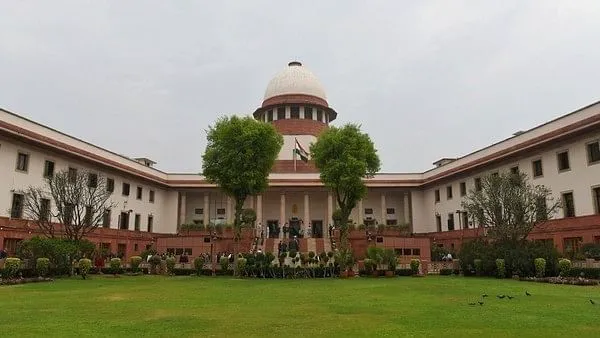
The Supreme Court has sought responses from the Union government, all state governments and Union Territories on a petition seeking stricter enforcement of Aadhaar’s legal status as an identity document. The plea argues that Aadhaar is being used as proof of citizenship, domicile, residence and date of birth despite statutory provisions stating that it should not be treated as evidence of those attributes.
The matter came up before a Bench headed by Chief Justice Surya Kant and Justice V. Mohana. The court issued notices while hearing a petition filed by advocate Ashwini Kumar Upadhyay and tagged the matter with other pending cases involving similar questions on Aadhaar usage in government processes.
FCRF’s Flagship Cyber Law Certification Returns With a New Four-Week Cohort
Petition Seeks Identity-Only Use of Aadhaar
According to the petition, Aadhaar was introduced to establish identity and facilitate access to services, but its use has expanded into areas for which it was not intended. The petitioner contends that several institutions and authorities continue to accept Aadhaar as proof of citizenship, domicile, age and residence.
The plea seeks directions to the Centre, state governments and the Election Commission to ensure that Aadhaar is accepted only as proof of identity. It argues that the broader use of Aadhaar in administrative processes has created confusion over its legal status and may lead to misuse.
The petition refers to Section 9 of the Aadhaar Act, 2016, which states that Aadhaar does not by itself confer any right of citizenship or domicile. It also cites UIDAI notifications clarifying that Aadhaar is proof of identity and not proof of citizenship, residence or date of birth.
Voter Registration Practices Under Challenge
A significant part of the plea concerns electoral registration. The petition challenges the use of Aadhaar as proof of residence and date of birth in applications for new voter registration.
The petitioner argues that such practices may conflict with the Aadhaar Act, the Representation of the People Act and constitutional guarantees of equality before law. The plea also raises concerns about the adequacy of verification procedures used during voter enrolment.
According to the petition, weaknesses in the existing process may lead to insufficient scrutiny of supporting documents and affect the accuracy of electoral databases. It calls for a comprehensive review of verification systems linked to voter registration.
Monitoring Panel Proposed
The petition has also proposed wider institutional safeguards, including the creation of a high-powered monitoring committee. The proposed body would include a retired Supreme Court judge, cybersecurity specialists and forensic experts.
The committee, according to the plea, would oversee reforms in document verification systems and ensure compliance with legal requirements governing Aadhaar usage.
The case raises broader questions about the distinction between identity verification and proof of citizenship, residence or age. The Supreme Court’s decision to seek responses from the Centre, states and Union Territories indicates that the matter involves significant legal and administrative issues. Further proceedings are expected to examine whether existing practices align with the Aadhaar Act and whether additional safeguards are needed.
