
Follow us on Google News

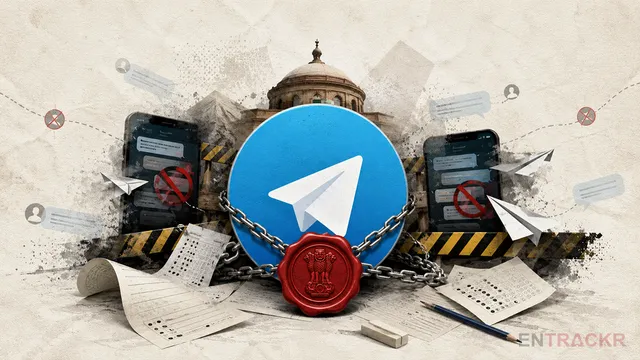
A fresh legal battle has emerged over the Centre’s decision to temporarily restrict access to Telegram ahead of the National Eligibility cum Entrance Test Undergraduate (NEET-UG) 2026 re-examination. The cloud-based messaging platform has approached the Delhi High Court to formally challenge the central government’s restrictive directive.
The emergency move comes just days before the high-stakes June 21 re-test, significantly intensifying the ongoing public debate over balancing digital platform liberties with administrative efforts to safeguard the structural integrity of national examinations.
According to the urgent court proceedings, Telegram has legally challenged the temporary operational blockades imposed under Section 69A of the Information Technology Act. Moving a vacation bench of the High Court, the platform argued that the abrupt block has directly disrupted its core regional business and cut off communication access for over 150 million legitimate users across the country.
https://the420.in/future-crime-summit-2026-registrations-open-new-delhi-tech-enabled-crime/
Countering Fake Leaks and Timestamp Manipulation
The Centre’s blocking order was executed following targeted recommendations by the National Testing Agency (NTA) amid complex digital malpractice concerns. Authorities maintain that structured syndicates were aggressively using encrypted channels to spread false claims of question paper leaks, target student communities with extortion demands, and manage networks that promised fake papers in exchange for money.
Government sources have confirmed that the core operational restriction window is scheduled to remain in force until June 22, covering the crucial testing period and its immediate aftermath. Additionally, central regulators have directed Telegram to forcefully implement a message-edit suspension for all users within India mandated through June 30.
Officials discovered that this specific feature was being actively exploited by digital fraud rings to generate misleading evidence of question paper leaks. Scammers were editing old posts and replacing attached files after the original test while successfully retaining the platform’s original publication timestamps, heavily impacting the user base of approximately 150 million regional accounts.
Surgical Takedowns versus Complete Platform Blockade
The wider administrative crisis stems from severe irregularities that prompted the NTA to cancel the original competitive test. A fresh re-examination was structured for affected candidates under heightened monitoring criteria. Since that announcement, enforcement agencies have continuously monitored online communities for cyber syndicates trying to exploit student anxiety for immense financial returns.
Investigators found that multiple rogue channels routinely advertised immediate access to the upcoming re-test paper, demanding illegal payouts ranging from thousands to several lakh rupees under names designed to attract anxious medical aspirants.
While Telegram has previously noted that the platform takes proactive measures to remove hundreds of illicit groups, investigators noted that cybercriminals frequently generated alternative chat clusters within hours of a ban, rendering basic individual channel takedowns highly ineffective.
The Complex Logistics of Cross-Border Exam Rackets
Cybercrime experts note that examination-related scams have become increasingly sophisticated. Criminals rely on advanced social engineering tactics, utilizing psychological urgency, fear of missing core opportunities, and fake inside claims to manipulate families into sending high-value financial transfers.
Multi-state investigations have also highlighted a deep financial dimension, with tracking networks tracing suspicious funds to rings running cross-border fraud schemes. These entities routinely move illicit balances across multiple states using rented bank accounts and anonymous online profiles to prevent automated trace alerts.
With the Delhi High Court now set to evaluate Telegram’s legal petition, attention remains fixed on whether the temporary administrative blocks will stand through the critical re-test period. The ultimate judicial outcome could establish significant legal precedents regarding future state interventions involving global digital platforms during sensitive national events.