
Follow us on Google News

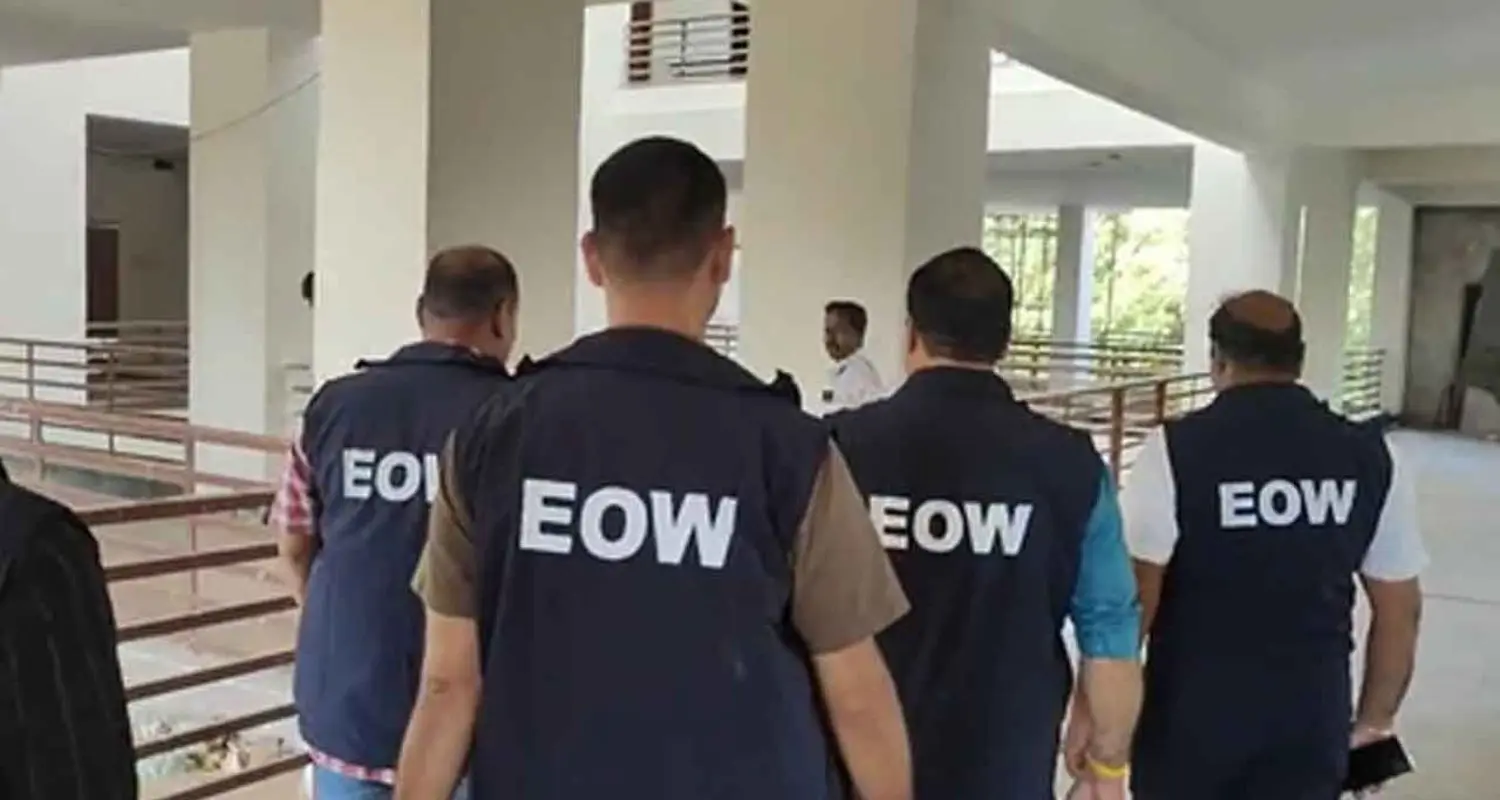
A major breakthrough has emerged in the investigation of a multi-crore bank loan fraud after the Economic Offences Wing (EOW) arrested panel advocate Avadhesh Kumar Tyagi for his alleged role in securing a ₹2.80 crore loan from a Central Bank of India branch using forged documents.
Investigators claim the advocate knowingly submitted a favourable legal opinion based on manipulated records, allowing the loan to be sanctioned despite serious discrepancies in the collateral documentation.
The case has exposed what authorities describe as a carefully planned financial conspiracy involving forged records, misleading property documents, and systemic collusion. The investigation has also raised concerns about the effectiveness of legal verification mechanisms used by banks while approving large-scale loans.
https://the420.in/future-crime-summit-2026-registrations-open-new-delhi-tech-enabled-crime/
The Double-Mortgage Discrepancy
According to EOW officials, the fraud relates to a large business loan sanctioned by Central Bank of India’s Wright Ganj branch in Ghaziabad. Investigators allege that the accused advocate worked in concert with the principal borrowers and guarantors to facilitate the approval of the loan by providing a clean legal report that deliberately failed to disclose crucial encumbrances about the mortgaged property.
The case dates back several years, with a criminal complaint originally registered in Ghaziabad in 2018 under charges related to cheating, forgery, and offences linked to corruption laws. Given the complexity of the financial transactions and the scale of the alleged fraud, the investigation was transferred to the Economic Offences Wing’s Meerut Sector in 2020.
During the course of the probe, investigators found that the main accused, Yashdev Jain, had applied for a business loan in the name of his firm, PD Traders. As part of the loan process, Ramkishore Verma was presented as a guarantor, and a residential property linked to him was offered as collateral security. Following legal scrutiny, the bank approved a loan of ₹2.80 crore.
However, further investigation uncovered a critical irregularity. Authorities discovered that the exact same property used as collateral for the Central Bank loan had already been mortgaged earlier to another financial institution.
The collateral extraction flow revealed that the first charge on the property had previously been pledged with a branch of United Bank of India in Delhi, where a separate loan of approximately ₹4 crore had reportedly been obtained. This meant that the exact same residential property was weaponized across separate loans to secure funding from two different banks, creating massive financial exposure for both institutions.
Bypassing Due Diligence Protocol
The role of the panel advocate emerged as one of the most critical aspects of the investigation. According to officials, Tyagi’s explicit responsibility was to conduct an independent legal examination of the property and verify ownership records, encumbrances, and any prior mortgages via local registry databases.
Instead, investigators allege that he relied entirely on duplicate documents and prepared a positive legal opinion without verifying the original records. Authorities contend that this fraudulent legal clearance became the foundation on which the bank approved the loan application. Had the earlier mortgage been flagged during due diligence, the loan would not have been sanctioned.
Financial crime experts say such cases highlight the vulnerabilities that can arise when verification procedures are bypassed or manipulated. Banks increasingly rely on legal experts, valuers, and technical consultants to assess risk, making integrity and independent verification critical safeguards in the lending process.
Call for Digital Registry Reforms
Renowned cyber and financial crime expert and former IPS officer Prof. Triveni Singh said organised financial frauds often exploit procedural loopholes and weaknesses in physical documentation systems. He emphasized that banks should strengthen digital verification mechanisms, cross-check property records through multiple centralized databases, and implement stricter oversight to prevent the reuse of collateral assets.
Following the arrest, the accused advocate has been handed over for further legal proceedings. Investigators are continuing to examine the roles of other individuals connected to the transaction, including possible lapses in the internal loan approval process.
Officials believe additional findings may emerge as the probe progresses, potentially revealing a wider network involved in the alleged banking fraud.