
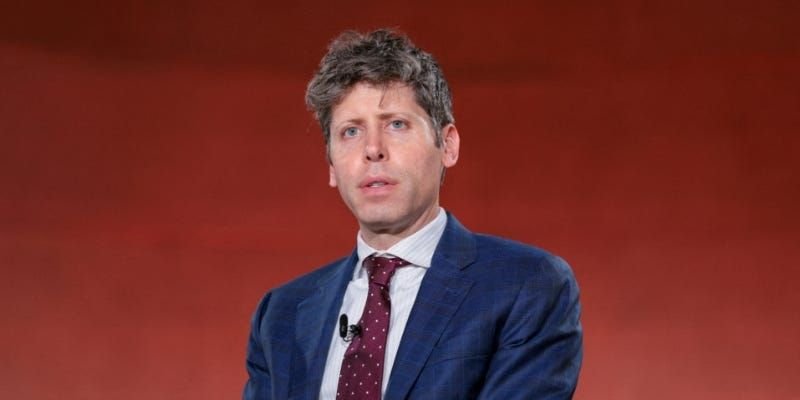
OpenAI CEO Sam Altman has called on US artificial intelligence companies to adopt stronger safety standards and avoid reckless competition as increasingly capable AI systems are developed, arguing that firms should act responsibly even without waiting for new federal legislation.
Altman said competitive pressure in the United States should not allow AI capabilities to advance faster than alignment and monitoring safeguards. His comments followed US President Donald Trump’s rejection of calls to regulate frontier AI development and came amid a wider debate over whether leading AI companies should slow the pace of capability gains.
Altman Calls for Shared AI Safety Standards
Altman said he would welcome a federal framework establishing consistent safety requirements for frontier AI, but argued that companies did not need to wait for legislation or an antitrust exemption before taking action themselves.
He said government support would be necessary for international coordination, while companies should first take whatever measures were within their own control. Altman also argued that every frontier AI laboratory had a responsibility to demonstrate responsible conduct.
According to Altman, existing approaches such as Responsible Scaling Policies and Preparedness Frameworks need to be supplemented with new tools focused on safe development and evaluation. He said OpenAI now prepares explicit safety cases ahead of frontier reinforcement learning runs expected to significantly increase capability, in addition to safety work conducted before model releases.
Altman said he hoped other companies would develop similar approaches and called for shared industry standards covering misalignment, monitoring and safety. He described collaboration among AI companies as necessary to develop stronger common standards.
He also clarified that calls for “pacing” AI development did not mean stopping progress. Development could continue rapidly, he said, but at a slower pace than would otherwise be possible because safety cases and monitoring impose significant costs.
Proposal for Conducting Cyber Crisis Drill, Tabletop Exercise (TTEx) & CCMP Readiness Exercise
Two AI Risks Altman Says Must Be Avoided
Altman outlined two scenarios that he said could lead AI development in a dangerous direction. The first involves humanity losing control of AI entirely. He said AI must continue to serve people and argued that alignment and safety techniques need to remain ahead of advances in model capabilities.
The second risk, according to Altman, is excessive AI power becoming concentrated in the hands of a single person or company. He warned that an extraordinarily powerful AI controlled by one actor could be used to impose that actor’s worldview on others, producing what he described as potentially dystopian consequences.
Avoiding both outcomes, he said, requires a narrow middle path in which neither individual companies nor countries accumulate excessive power over advanced AI.
The debate has also included proposals for independent oversight. Anthropic CEO Dario Amodei called for independent evaluators with employee-like access, coordination among frontier AI firms on safety standards and stronger international cooperation. Altman backed the idea of independent evaluators and said OpenAI would adopt the same approach.
AI Safety Debate Widens Across Industry
The discussion has intensified as AI companies and researchers raise concerns about increasingly powerful models. While some companies have sought federal regulation, former White House AI czar David Sacks argued that leading US AI companies did not need government permission to slow development and rejected the idea that antitrust law needed to be suspended for them to coordinate.
Altman’s position places responsibility on AI developers themselves while leaving room for government involvement. He said companies should establish safeguards now rather than wait for Washington to determine the entire framework.
The wider debate has also drawn comments from researchers at leading AI companies. Anthropic’s Jacob Coxon resigned while expressing concern about the potential consequences of advanced AI. OpenAI safety researcher Marcus Williams, meanwhile, was cited as predicting a 70 per cent chance that AI could end humanity within the next three years.
Altman’s central argument is that continued AI progress and stronger safeguards should advance together. As competition intensifies, he maintains that commercial and national pressure should not be allowed to push capabilities ahead of the systems designed to monitor and align them.
Follow for daily updates on cybercrime, corporate fraud, DFIR, hacking, investigations, and digital forensics
