

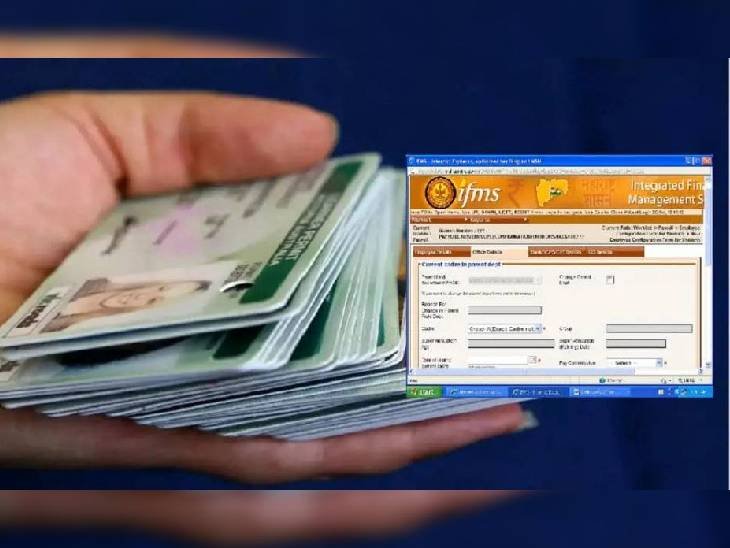
The localized enforcement cells of the Maharashtra Police have dramatically intensified their statewide crackdown on public education payroll fraud, arresting a senior desk clerk embedded within the prominent Swami Vivekanand Shikshan Sanstha. Following an internal audit and subsequent criminal complaint filed at the Shahupuri Police Station, investigators took immediate custodial action against the processing clerk for executing a multi-year document-fabrication scheme. The formal action marks a major development in the expanding “Shalarth ID” system compromise, revealing how internal bad actors successfully manipulated physical board logs to illicitly insert unqualified personnel onto the state’s centralized salary disbursement portal.
Registration Begins for FutureCrime Summit 2026, India’s Largest Cybercrime Conference
The Cloned Resolution Blueprints and Systemic Bypasses
The operational parameters of the institutional siphoning ring relied on a calculated exploitation of legacy physical verification loops before data entry onto the digital platform. Under the rules laid down by the Maharashtra Education Department, acquiring a valid Shalarth ID—the mandatory electronic employee identification number required for state-backed payroll disbursements—demands a strict sequence of verified approvals. This requires genuine institutional appointment orders, official management board resolutions, and a formal sign-off from regional education officers.
The arrested clerk managed the regulatory subversion through three continuous operational sequences:
The operator initiated the fraud by accessing blank historical letterheads and duplicating the unique corporate seals of the Swami Vivekanand Shikshan Sanstha management board. Moving into the fabrication sequence, the clerk typed up high-fidelity, lookalike appointment letters and backdated institutional resolutions, retroactively assigning full-time teaching roles to unauthorized candidates. The sequence reached its final stage as the handler pushed these unbacked physical files past compromised or negligent desk audits to trigger automated system registrations, unlocking permanent government salary channels for candidates who had completely bypassed the official state recruitment pipeline.
Multi-State Tracker Arrays and Targeted Teacher Bookings
The initial unravelling of the local network occurred after the central education department deployed an automated data-matching sweep across the Shalarth system, looking for matching registration dates that did not square with historic school allotment ceilings. The compliance audit quickly isolated an anomalous cluster of newly approved teacher IDs mapped to the Sanstha’s institutional network.
Following the initial arrest of the processing clerk, Shahupuri police detectives expanded the criminal file to formally book four beneficiary teachers originally based out of Pune. Investigating officers have placed the four women under active surveillance, filing comprehensive statutory charges for criminal conspiracy, forgery of valuable security, and cheating. Central prosecutors maintain that the beneficiaries knowingly paid massive backroom cash premiums to the clerk to secure the synthetic documentation packages, making them active partners in the extraction of public funds rather than passive victims.
The Macro-Scale Framework and State SIT Collateral
The structural parameters of the Kolhapur institutional sweep tie directly into a massive, macro-level Special Investigation Team (SIT) probe tracking a multi-district ₹100 crore payroll infiltration network across Maharashtra. Previous forensic crackdowns managed by cyber cells in Nagpur, Nashik, and Thane have already led to the spectacular downfall of more than 20 high-level education officers, school principals, and software operators who systematically injected over 540 fraudulent identities into the state treasury ecosystem.
SIT document analysts are currently arriving in Kolhapur to take possession of all hard-copy registers and hard drives seized from the Sanstha’s administrative blocks. Software programmers are deploying automated file-carving tools to check if the arrested clerk utilized the same remote access frameworks and lookalike MTR salary sheets observed in the parallel Nashik and Nagpur rackets, where operators routinely collected between ₹20 lakh and ₹30 lakh per fake enrollment.
Zero-Trust Academic Payroll and Treasury Mitigation Standards
The public exposure of this high-volume institutional baseline compromise has prompted senior finance ministries and state educational boards to demand an immediate upgrade to electronic salary clearance procedures. Financial crime specialists emphasize that relying on unverified, paper-bound board declarations remains critically vulnerable to localized machine forgery and insider collusion. To permanently protect state treasuries from strategic payroll inflation and lookalike identity insertions, national audit compliance councils are advising regional ministries to enforce strict zero-trust background checks.
Future administrative safety architectures are moving toward the mandatory integration of real-time biometric attendance mapping and automated Aadhaar-linked teacher databases, where state salary disbursements are automatically frozen if a staff member’s real-time classroom check-ins do not register across central tracking networks. Kolhapur judicial authorities emphasize that the ongoing prosecution will strictly adhere to statutory due process, warning academic management trusts across the state that failing to maintain strict oversight over administrative clerical staff will result in immediate corporate liability and the total withdrawal of government grants.
