

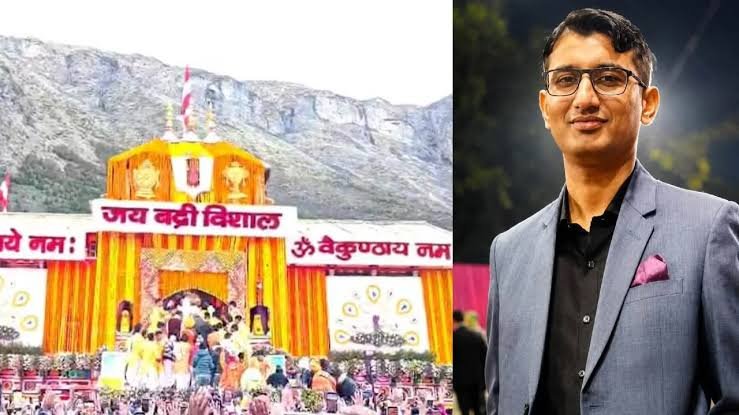
The Uttarakhand Police has officially criminalized the widening operational scandal surrounding the management of holy offerings at the Badrinath shrine, registering a high-stakes First Information Report (FIR) against a suspended temple administrator. The formal police action targets Pramod Nautiyal, a long-serving personal assistant embedded within the office of the Badrinath-Kedarnath Temple Committee (BKTC) chairman. The initiation of criminal charges marks a critical escalation, moving the investigation from an internal institutional inquiry into an active, multi-level state crackdown. Chief Minister Pushkar Singh Dhami has condemned the incident, characterizing the embezzlement of sacred offerings as a heinous spiritual crime akin to cow slaughter and ordering a zero-tolerance approach to track down the network.
Registration Begins for FutureCrime Summit 2026, India’s Largest Cybercrime Conference
The Counting Center Diversion and Immediate Suspension
The structural parameters of the theft came to light after a preliminary internal audit pinpointed a specific, high-velocity cash diversion on the morning of July 2, 2026. According to detailed evidence compilation records submitted by BKTC temple officer Yuddhveer Pushpwan, Nautiyal was assigned to oversee the daily donation counting tables at the shrine’s highly secure vault facility.
The security failure moved through rapid operational sequences before the formal legal transition occurred:
- The initial operational phase occurred during a brief 30-minute window between 9:00 a.m. and 9:30 a.m., when the accused allegedly used his proximity to the primary offering trays to physically divert large stacks of high-value cash notes into his personal clothing.
- The secondary detection phase launched within 24 hours as digital clips and whistleblower reports exposing the theft began circulating widely across regional social media streams, forcing the temple board to execute an emergency internal audit.
- The final administrative phase concluded on Tuesday evening when BKTC Chairman Hemant Dwivedi formally suspended Nautiyal, stripping him of all official field duties and attaching him to the Joshimath regional office to prevent any potential tampering with evidence.
The BNS Indictments and Specialized SIT Formations
Following the formal filing of the institutional complaint, the Badrinath Police Station locked down the case file, charging Nautiyal under the strict statutory provisions of the Bharatiya Nyaya Sanhita (BNS), 2023. The primary charges cover Section 306, which handles severe theft executed by a clerk or trusted servant of property under the direct possession of an employer, alongside Section 316(5), which covers criminal breach of trust by persons holding high public responsibility.
Recognizing the extreme public sensitivity and religious gravity of the case, the Chamoli Superintendent of Police immediately took over the local file. The SP authorized the creation of a specialized Special Investigation Team (SIT), headed directly by the Circle Officer (CO) of Chamoli. This dedicated technical unit is now managing all localized fieldwork, gathering physical accounting statements, and initiating formal forensic tracking on the suspect’s known transaction channels.
Extended CCTV Forensic Auditing and Digital Extraction
To determine whether the captured July 2 incident represents an isolated lapse or a long-standing, systematic skimming operation, the BKTC executive desk has expanded its technical audit dramatically. Chief Executive Officer Sohan Singh Rangad confirmed that video analysts have spent consecutive days executing a line-by-line review of more than 40 days of continuous high-definition video archives from the counting room.
The technical tracking cell has also addressed public concerns regarding a recent routine upgrade of the physical surveillance hardware. BKTC data teams clarified that while newer, high-resolution cameras were recently integrated into the shrine’s master grid, the complete recordings from the older Digital Video Recorder (DVR) units have been fully preserved and handed over to the police SIT. Investigators are cross-referencing these historical video files with daily bank deposit slips and volunteer attendance registers to flag any systematic drops in total daily collection volumes.
Multi-Layered State Adjudication and Systemic VIP Probes
The political and administrative fallout from the temple breach has prompted the Uttarakhand Government to construct an absolute external oversight structure. Acting on direct executive orders from the Chief Minister’s Office, the state Tourism Secretary has formed a three-member, high-level independent committee under the direct leadership of Garhwal Divisional Commissioner Anand Swaroop. The commission—which includes top health administration and state finance department directors—has been given a firm 15-day deadline to deliver a comprehensive administrative report straight to the state cabinet.
The Swaroop Commission has also been given broad powers to investigate secondary institutional controversies emerging at the shrine, including unverified complaints that rogue staff members were running an illegal backdoor entry racket, charging select visitors ₹1,100 for unauthorized VIP darshan entry without BKTC approval. By choosing to aggressively pursue accountability across both the financial and entry-management platforms of the Char Dham infrastructure, the government is working to structurally clean up shrine administration, ensuring public faith is protected by transparent, zero-trust digital workflows.
