
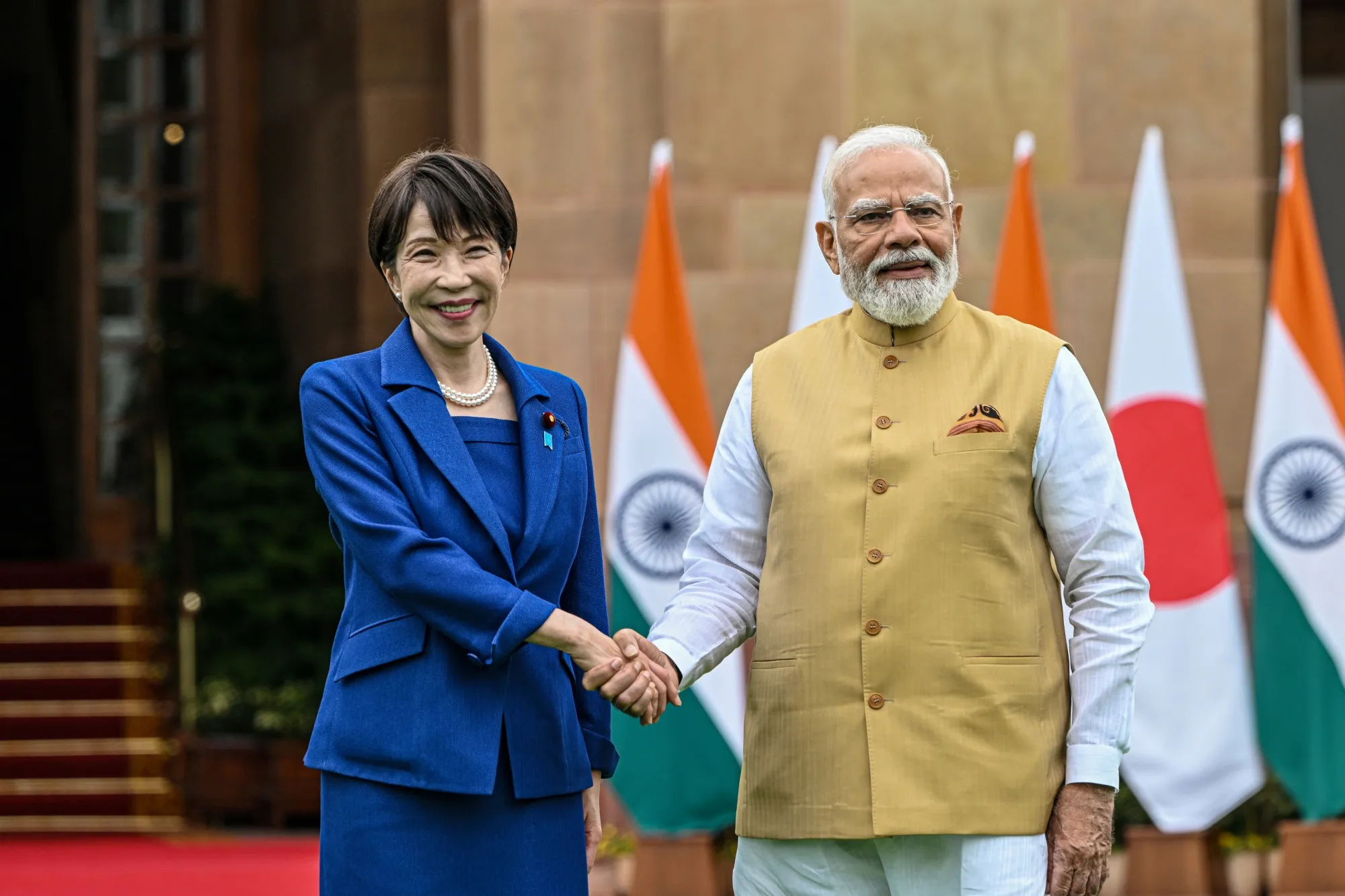

The Union Government has forged a sweeping macroeconomic and technological alliance with Tokyo, formalising a multi-billion-dollar framework to secure critical supply chains and advance next-generation digital architecture. Signed during the high-profile sixteenth India-Japan Annual Summit at Hyderabad House in New Delhi, the comprehensive bilateral agreements aim to fundamentally reshape the industrial geography of the Indo-Pacific region.
Synergising Precision Engineering and Software Scale
Artificial intelligence and semiconductor architecture emerged as the premier operational anchors of the newly signed agreements. The Centre has formalised a joint statement on artificial intelligence designed to merge Japan’s precision hardware engineering with India’s expansive enterprise software ecosystem. By integrating these disparate capabilities, both nations intend to build secure, sovereign AI models capable of insulating critical state networks from external cyber threats.
This technological integration extends deeply into semiconductor corridors and quantum technology infrastructure. Recognizing the vulnerabilities exposed by recent global supply chain disruptions, the two governments outlined a comprehensive roadmap to co-develop semiconductor manufacturing components. Under this framework, premium academic and corporate institutions within the domestic Indian AI ecosystem will collaborate directly with Japanese technological conglomerates to foster resilient hardware nodes. Furthermore, the pact provides a formal talent pathway, facilitating the migration of skilled Indian IT professionals and algorithmic researchers to Tokyo to support collaborative enterprise computing layers.
Unveiling the First Joint Defence Co-Development Hardware Project
Beyond purely digital networks, the bilateral summit marked a historic turning point in military and maritime industrial collaboration. For the first time, India and Japan have moved past simple joint military exercises to execute a formal defence co-development hardware project. The cornerstone of this security pillar is the joint manufacturing of the Naval Radio Antenna, cryptically designated as the “Unicorn” system.
Co-developed by the Indian Navy and the Japan Maritime Self-Defence Force, the “Unicorn” antenna is engineered to drastically enhance communication security, radar stealth capabilities, and anti-submarine warfare coordination across the strategic waters of the Indian Ocean. Prime Minister Narendra Modi noted that this hardware initiative effectively opens an entirely new chapter in the bilateral defense technology partnership. The Union Government views this sovereign manufacturing drive as a critical mechanism to protect regional trade channels while reinforcing a rules-based maritime order in the face of shifting geopolitical alliances.
Securing Strategic Mineral Reserves and Clean Energy Pipelines
Economic security and infrastructure resilience formed the third major operational vertical of the delegation-level talks. With global energy volatility rising, the Centre and Tokyo established a dedicated joint task force focused strictly on securing critical metals and clean energy reserves. The critical minerals pact ensures a stable, long-term supply of specialized metals necessary for manufacturing electric vehicles, advanced batteries, and domestic defense components, directly supporting the “Make in India” programme.
Simultaneously, the alliance introduced a massive rural environmental initiative known as the India-Japan Bio-Gas Initiative. Under this programme, the two countries will establish one thousand bio-gas and organic fertilizer plants across rural India, integrating seamlessly with the Centre’s ongoing GobarDhan scheme. Backed entirely by Japanese engineering and processing technologies, this distributed energy network is designed to stimulate local agricultural economies while establishing decentralized clean energy alternatives to traditional fossil fuels. Additionally, the broader energy pact addresses real-time data sharing and strategic liquefied natural gas stockpiling to protect both nations from sudden market shocks.
Capital Flows and the Ten Trillion Yen Investment Horizon
The systemic expansion of these strategic verticals is backed by an aggressive capital mobilization strategy. The Centre confirmed that approximately one hundred and twenty new business agreements have been finalized over the past twelve months, a pipeline poised to draw over ten billion dollars in immediate Japanese investment into domestic sectors. Looking toward the long-term horizon, the Union Government reaffirmed its ambitious macroeconomic target of attracting ten trillion yen in total Japanese capital over the next decade.
To facilitate this massive transfer of capital, the financial services agencies of both nations signed a separate regulatory memorandum of cooperation. This framework will streamline cross-border investments and simplify the ease of doing business for the growing cohort of Japanese corporations expanding their manufacturing footprints inside India. By combining India’s massive market scale with Japan’s high-quality capital reserves, the economic partnership is positioned to double the number of operational Japanese firms within the country, insulating both economies from external geopolitical pressures.
Follow for daily updates on cybercrime, corporate fraud, DFIR, hacking, investigations, and digital forensics
