
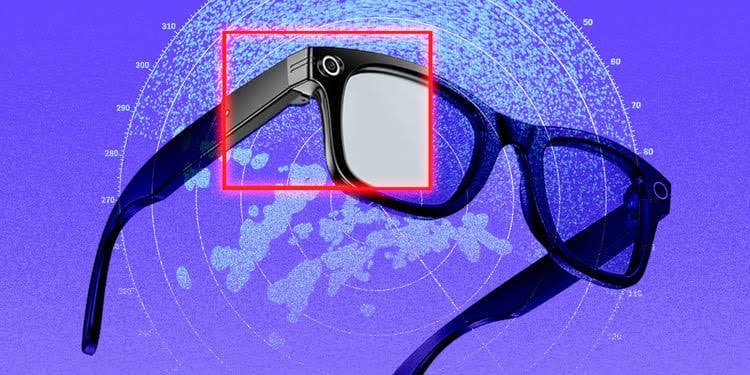

French authorities are stepping up scrutiny of smart glasses after complaints that the devices are being used to secretly film women and record people in workplaces without clear consent.
The Paris prosecutor’s office has opened a criminal investigation into suspected sexual harassment involving smart glasses. France’s data protection authority, CNIL, is separately dealing with complaints and growing questions from employers about whether the devices should be restricted at work.
The investigation comes as camera-equipped smart glasses move rapidly into the mainstream. Meta’s AI-enabled glasses, developed with EssilorLuxottica, currently dominate the global market with an estimated 76% share. Reuters reported that around 70 lakh units were sold last year.
Proposal for Conducting Cyber Crisis Drill, Tabletop Exercise (TTEx) & CCMP Readiness Exercise
Secret filming triggers a criminal probe
The Paris investigation follows complaints linked to a social media trend in which men allegedly filmed women on the street using smart glasses and uploaded the footage online without their knowledge.
French prosecutors have not publicly identified the brand involved in the criminal case. That distinction matters because several companies sell smart glasses, although Meta’s products are the largest player in the market.
The concern is simple: smart glasses look much more like ordinary eyewear than a phone or handheld camera.
Someone being recorded may therefore not realise that a camera is pointed at them.
Meta’s glasses contain a small indicator light that is designed to turn on when recording begins. Meta says newer models disable the camera if the system detects that the light has been blocked or physically tampered with.
Critics, however, argue that a small light on a pair of glasses can still be difficult for people nearby to notice.
Workplaces are now asking whether glasses should be banned
The issue is not limited to public harassment.
Reuters reported that CNIL has received workplace complaints relating to smart glasses and increasing questions from businesses about whether employees should be allowed to wear them.
That creates difficult privacy problems.
A pair of smart glasses can contain cameras, microphones and AI features capable of analysing what the wearer sees or hears. In an office, that could potentially include computer screens, documents, conversations, client information or other employees.
The person wearing the glasses may know exactly what the device is doing. Everyone around them may not.
This is why regulators are focusing heavily on transparency and consent.
What informed consent means in this case
Under European data protection principles, informed consent generally means that a person understands what information is being collected, why it is being collected and how it may be used before agreeing to it.
Smart glasses make that much harder than ordinary photography.
With a phone, people can often see that someone is raising a device and pointing a camera towards them. Smart glasses can record from the wearer’s natural line of sight while appearing almost identical to regular spectacles.
Germany’s Hamburg data protection authority examined Meta’s Ray-Ban AI glasses and reached a similar conclusion this month.
Its technical and legal assessment found that recording people outside a close circle of friends or family would generally be unlawful because meaningful informed consent is difficult to obtain when the recording itself is not sufficiently obvious.
Privacy pressure is spreading beyond France
France is not alone in examining the technology.
Australia is considering banning camera-equipped smart glasses in government buildings because of privacy and security concerns. Norway has introduced restrictions in schools, while courts in England and Wales have prohibited Meta smart glasses.
The debate is also beginning to influence product design.
Reuters reported this week that Meta is preparing a new pair of smart glasses without a camera. The model, reportedly codenamed “Luna”, would retain audio and AI functions while removing one of the features attracting the most privacy criticism.
Meta has argued that most customers use its glasses responsibly and that privacy protections, including the visible recording light and anti-tampering controls, are built into the product.
The broader regulatory question, however, is becoming harder to avoid.
Smart glasses turn recording into something that can happen continuously, hands-free and with far less visible behaviour than using a phone. That convenience is exactly what makes them attractive to users and concerning to regulators.
What this means for you: If you use camera-equipped smart glasses, do not assume that a visible recording light is enough to satisfy privacy or consent requirements. Avoid recording people, workplaces or private environments without clear permission.
Follow for daily updates on cybercrime, corporate fraud, DFIR, hacking, investigations, and digital forensics
