

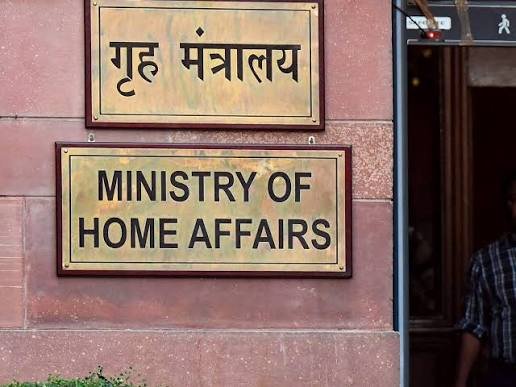
The Government of India has executed a massive structural overhaul of its domestic digital defense apparatus, deploying advanced automation and cross-sector network integrations to neutralize machine-speed financial crimes. During a high-level briefing of central ministry secretaries chaired by Prime Minister Narendra Modi, the Ministry of Home Affairs unsealed a comprehensive cybersecurity roadmap detailing the interception of approximately ₹25,095 crore in fraudulent capital extractions. The executive brief marks the institutional transition of the Indian Cyber Crime Coordination Centre from a reactive reporting clearinghouse into an active, automated enforcement engine capable of locking down illicit asset trails within the critical golden hour of exposure.
Registration Begins for FutureCrime Summit 2026, India’s Largest Cybercrime Conference
The E-Zero FIR Architecture and Speed of Litigation
The cornerstone of the government’s updated operational strategy relies on the nationwide deployment of the E-Zero FIR system, an enforcement mechanism engineered to bypass traditional geographical boundaries and manual delays in high-value cases. Under guidelines established by the Ministry of Home Affairs, whenever a citizen registers an urgent complaint involving an online financial extraction exceeding ₹10 lakh via the 1930 helpline or the National Cyber Crime Reporting Portal, the backend network automatically converts the report into a digital Zero FIR. This automated protocol completely removes the historical bottleneck of jurisdictional processing, immediately empowering specialized electronic crime units to freeze suspicious destination accounts and preserve volatile digital logs before international syndicates can complete their capital dispersion sequences.
Nationwide Territory Expansion and Investigation Conversion
The technical deployment of this rapid legal framework has achieved active operational status across ten states and Union Territories, including Delhi, Haryana, Madhya Pradesh, Uttarakhand, Goa, Chandigarh, West Bengal, Rajasthan, Odisha, and Assam. Building on the initial proof-of-concept data, central coordination squads are currently finalising the immediate expansion of the E-Zero FIR network across 19 additional regional territories to build a completely uniform, cross-border enforcement shield. Between August 2019 and May 2026, domestic digital registries processed nearly 98 lakh independent cybercrime complaints, yet the historical manual transition to formal First Information Reports remained constrained at a marginal conversion rate of 2.36%. By automating this transition for high-stakes incidents, the state security council aims to exponentially increase prosecution speeds, giving field investigators immediate statutory backing to seize illicit infrastructure before evidence can be wiped from dark web nodes.
Systematic Ledger Protection and Financial Link Marking
The underlying economic engines driving these global syndicates have faced an unprecedented technical squeeze, overseen by direct data integrations between law enforcement and 1,596 major financial institutions. Forensic tracking metrics presented to the Prime Minister reveal that between 2021 and May 2026, total reported consumer cyber exposures reached a massive ₹64,447 crore. To counter this, specialized interception algorithms deployed across the National Suspect Registry successfully applied mandatory lien markers to lock down ₹10,718 crore directly within suspect bank ledgers, while systematically executing debit-freeze mandates against more than 12.1 lakh verified money mule nodes across the country. Concurrently, central intelligence filters blocked over 2.27 crore anomalous financial transactions and deactivated 31.6 lakh suspicious digital identifiers to permanently shatter the communication networks used by corporate impersonation groups.
Predictive Security Infrastructures and Elite Cyber Commandos
To preserve sovereign data integrity against external information operations and malicious cyber warfare, federal authorities aggressively leveraged the Information Technology Act to execute sweeping network sanitations. Over a five-year period, intelligence desks systematically blocked approximately 2.75 lakh fraudulent URLs, terminated 233 weaponized mobile applications, and permanently took down 3,691 websites flagged for distributing material prejudicial to the security and integrity of India. Moving toward a permanent state of proactive defense, the Home Ministry’s forward roadmap outlines the establishment of regional cybercrime coordination cells, the deployment of predictive AI investigative modules, and the immediate training of an elite cadre of frontline police personnel designated as Cyber Commandos to safeguard critical public infrastructure against decentralized threat clusters.
