

The judicial machinery of Uttar Pradesh has brought a long-standing public sector employment scam to a definitive close, convicting a man nearly 27 years after he used fraudulent means to enter the state’s security apparatus. Following a comprehensive trial featuring extensive witness testimonies and documentary audits, the court of Special Chief Judicial Magistrate Shivanand Gupta found the accused guilty of cheating and forgery. The landmark ruling transfers the long-term offender straight into formal confinement, demonstrating that institutional accountability filters remain active regardless of the time elapsed since the initial infraction.
Registration Begins for FutureCrime Summit 2026, India’s Largest Cybercrime Conference
The 1999 Constable Recruitment Mirage and Irregularity Traces
The operational parameters of the baseline fraud went live during the 1998-1999 provincial police recruitment drive, when the applicant sought to bypass standard structural screening protocols. Aiming to secure a permanent appointment as a constable within the elite Provincial Armed Constabulary (PAC), the candidate submitted a series of validation records to processing desks.
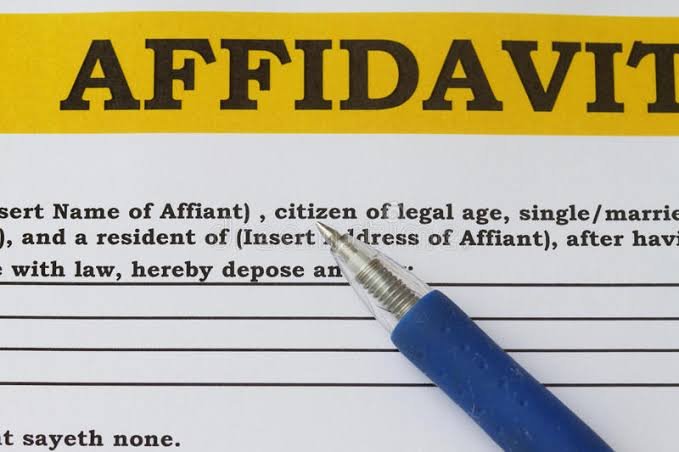
The underlying deception network managed the selection exploit through three distinct historical sequences. The applicant initiated the fraud by filing a completely fabricated personal affidavit during the intake cycle, intentionally misrepresenting his background credentials to meet institutional entry criteria. The secondary positioning loop launched as the paperwork successfully cleared initial high-volume recruitment queues, allowing the candidate to advance deep into the active physical and administrative evaluation blocks. The final extraction loop concluded when alert departmental clerks executed an intensive background documentation verification, catching critical structural anomalies in the submitted files and immediately halting the candidate’s operational induction before he could assume active station duties.
The Tajganj Police Filing and Charge-Sheet Trajectories
The formal legal pursuit of the forgery cartel commenced on January 1, 1999, when an administrative clerk, Pradeep Kumar Verma, uncovered the falsified validation records and filed a comprehensive criminal complaint. Enforcement officers at the Tajganj Police Station in Agra formally locked down the case file, booking the resident—identified in court registries as Bhojraj, a native of Sithrapur village in Hathras district—under the strict statutory anti-cheating and document forgery codes of the era.
Investigating cells moved with notable initial velocity, compiling extensive character evidence and completing the formal charge-sheet filing by May 31, 1999. However, as the paperwork entered the high-volume regional court system, the trial timeline stretched across more than two and a half decades. The case rotated through numerous judicial benches and procedural backlogs before the prosecution successfully locked down the definitive evidentiary presentation required to secure an absolute conviction.
Mandatory Fine Impositions and Prosecution Assessments
During the final sentencing phase, the prosecution mounted a rigorous argument for institutional penalties, emphasizing that allowing recruitment fraud to go unpunished compromises the integrity of the state’s law enforcement apparatus. The judicial bench validated the state’s tracking briefs, sentencing Bhojraj to a mandatory three-year term of rigorous imprisonment. In addition to the absolute custodial sentence, the magistrate imposed a flat monetary penalty of ₹3,000, configuring an explicit directive that failure to clear the cash fine will automatically trigger an extended period of structural confinement.
Commenting on the final disposition of the 27-year-old case docket, Senior Prosecution Officer Rajesh Kumar confirmed that the falsified nature of the original affidavit had been mathematically proven through comparative document analysis during the trial. The successful prosecution serves as a stark warning to active syndicates attempting to plant lookalike credentials into current civil service registers, proving that the state’s economic offense databases maintain absolute memory tracking over past structural violations.
Zero-Trust Credentialing and Civil Service Selection Reforms
The public resolution of this decades-old police hiring scam has pushed national recruitment boards and threat researchers at the Future Crime Research Foundation (FCRF) to demand an absolute transition to zero-trust applicant screening architectures. Security analysts emphasize that relying on manual paper-bound affidavits and physical verification stamps allows individual candidates to easily hide past criminal records or manufacture lookalike qualification certificates.
To permanently insulate public service inductions and police department registries from organized document manipulation, state administrative boards are advising the immediate integration of end-to-end cryptographic background checks. Future hiring workflows will mandate that all applicant credentials, identity proofs, and character certificates be linked directly to centralized, blockchain-verified digital registries, ensuring no selection lists or appointment orders are finalized unless real-time automated telemetry cross-references the candidate’s biometric profile across national verification databases. State authorities maintain that purging historic and active fraud files remains an absolute priority, ensuring that only fully verified individuals are permitted to hold positions of public trust.
