

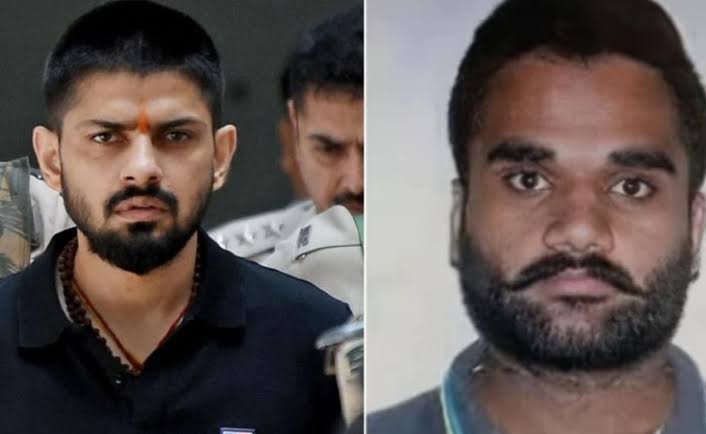
In an unprecedented expansion of cross-border white-collar and violent crime enforcement, international security panels have reclassified the domestic Lawrence Bishnoi and Satwinderjit Singh alias Goldy Brar network into a tier-1 transnational organized crime syndicate. The structural evolution follows definitive legal updates from the United States, where federal prosecutors formally indicted the duo under the Racketeer Influenced and Corrupt Organizations (RICO) Act. The highly restrictive classification shifts the ongoing multi-jurisdictional inquiry out of localized gang databases and straight into global anti-racketeering prosecution pipelines.
Registration Begins for FutureCrime Summit 2026, India’s Largest Cybercrime Conference
The Student Politics Genesis and Global Operational Transformation
The baseline investigation compiled by the National Investigation Agency (NIA) highlights a highly resilient operational pattern where local student cell rivalries evolved into a highly automated international enterprise. Born in the Fazilka district of Punjab, Bishnoi first entered law enforcement logs around 2010 during high-friction student political clashes in Chandigarh.
The underlying criminal network managed its rapid scaling sequence through three distinct operational loops:
The operators initiated the syndicate’s growth inside regional correctional facilities, where Bishnoi systematically leveraged his custodial access to forge alliances with high-risk interstate criminal groups.
The secondary positioning loop launched as Goldy Brar migrated to Canada on a student visa in 2017, transitioning the group’s operational hub overseas and establishing automated digital communication grids to direct localized operations from external sanctuaries.
The final extraction loop concluded as the syndicate co-opted major real estate and entertainment sectors, using proceeds from high-profile protection rackets to fund international narcotics trafficking and shadow corporate assets across the United Arab Emirates, Thailand, and Australia.
High-Profile Assassination Matrix and US Legal Indictments
The international trajectory of the syndicate reached critical thresholds following its documented involvement in multiple high-stakes criminal executions. The network’s domestic face has been heavily implicated in the 2022 targeted killing of Punjabi singer Sidhu Moosewala and the 2024 political assassination of Maharashtra leader Baba Siddique. Furthermore, the gang attracted severe federal monitoring after executing repeated, public threats against prominent Bollywood actor Salman Khan, anchored to a historical 1998 poaching dispute.
The integration of the US RICO Act framework represents a massive escalation in the legal weapons deployed against the cartel. Historically engineered to dismantle entire corporate mafia structures, the RICO classification allows federal agencies to prosecute the syndicate’s leadership for crimes committed by proxy operators down the line. Even though Bishnoi remains isolated within the high-security blocks of Sabarmati Central Jail in Gujarat, the international racketeering charges ensure that any assets or corporate proxies linked to the network within Western jurisdictions face immediate freezing and asset forfeiture mandates.
Fracturing Alliances and Interstate Fugitive Tracking
Despite the syndicate’s rapid global scaling, current intelligence briefs indicate a severe structural weakening within the high-level command framework. Specialized data-carving squads and communication monitoring nodes have mapped growing internal friction between Bishnoi and Brar. Regional investigators reveal that the baseline alignment began to break down following deep strategic disagreements over operational logistics and the financial handling of matters surrounding Bishnoi’s younger brother, Anmol Bishnoi.
Simultaneously, international containment grids are tightening around Brar, who remains one of India’s most wanted external fugitives. Backed by a high-priority Interpol Red Corner Notice activated in 2022, federal intelligence cells are working alongside US and Canadian security attachments to close off his active transit gates. US enforcement agencies have heightened the tracking velocity by announcing substantial cash rewards for definitive biometric or location metadata that terminates his flight from justice.
Zero-Trust Identity Verification and Student Visa Overhauls
The global expansion of this Punjab-rooted crime matrix has pushed international migration panels and threat researchers at the Future Crime Research Foundation (FCRF) to demand an immediate structural upgrade to visa verification frameworks. Security experts emphasize that allowing unverified student migration profiles and shadow money transfers to bypass baseline checks enables transnational networks to easily plant deep operational roots across Western countries.
To permanently insulate educational pathways and financial corridors from syndicate exploitation, global administrative boards are advising a total transition to zero-trust immigration architectures. Future visa workflows will mandate the absolute integration of end-to-end cryptographic background tracking linked directly to national criminal registries, ensuring no travel documents or international bank accounts are cleared unless the applicant’s biometric profile undergoes continuous digital auditing against global threat watchlists. Investigative commands maintain that the multi-nation dragnet will expand continuously until the entire financial scaffolding supporting the Bishnoi-Brar syndicate is completely neutralized.
