

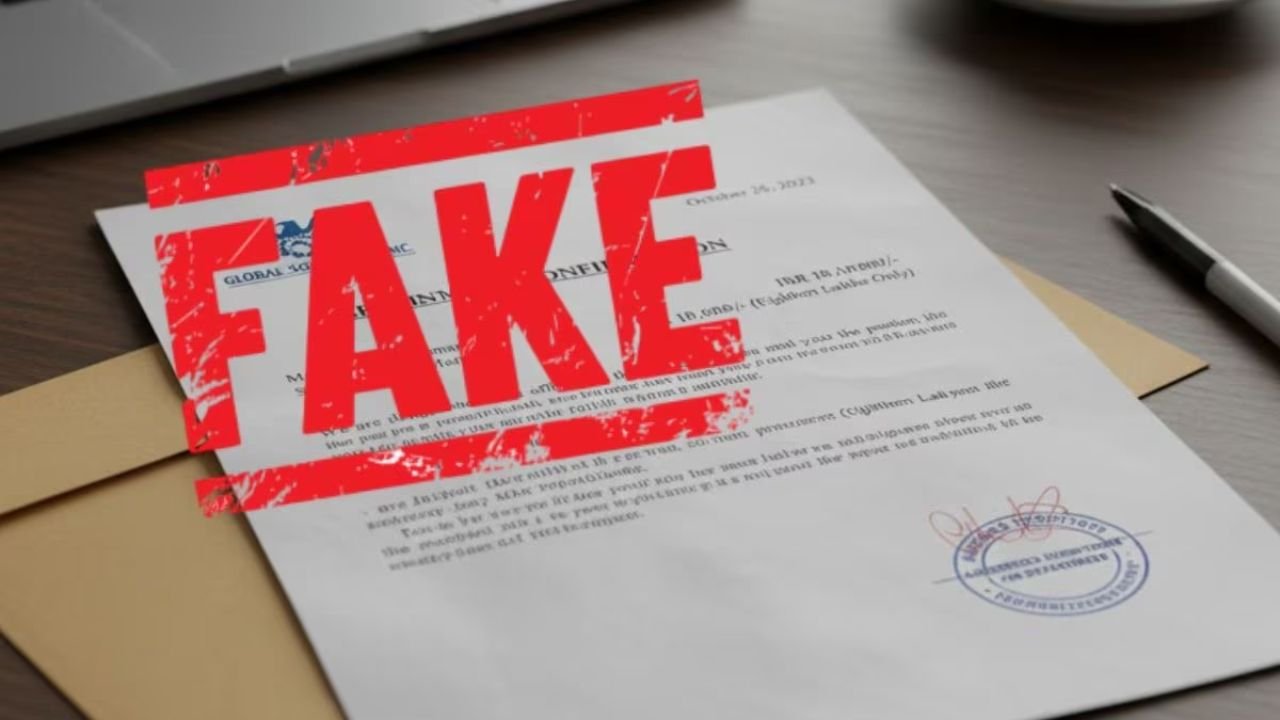

Udaipur | A surprising case involving a forged UPSC Civil Services Preliminary Examination admit card has emerged from Rajasthan’s Udaipur, where a civil services aspirant was caught while attempting to enter an examination centre using fake documents. The accused was later found carrying opium during a police search and was subsequently arrested. The court has now granted him bail, while investigators continue examining the forgery and narcotics-related aspects linked to the case.
The incident gained attention after investigators revealed that the accused had narrowly missed selection in the Rajasthan Administrative Services (RAS) 2024 examination by just three marks, raising expectations within his family that he could eventually clear higher-level competitive examinations as well.
FCRF’s Flagship Cyber Law Certification Returns With a New Four-Week Cohort
According to preliminary investigation details, the accused, identified as Vijesh Jat, had been preparing for competitive examinations and was studying through an online coaching platform after completing his BTech degree between 2015 and 2019. Investigators said his father had encouraged him to apply for the UPSC Civil Services Examination. However, despite assuring his family that he had completed the application process, the accused allegedly never submitted the actual form.
As the examination date approached, the pressure of maintaining the false claim reportedly increased. Police investigation revealed that the accused allegedly used a mobile application named “PICSCART” to create a forged UPSC admit card. Authorities said the fabricated document was designed in a way that closely resembled an original examination entry pass and was also shown to family members to avoid suspicion.
On the day of the examination, the accused’s father reportedly dropped him outside the examination centre for the morning session. Investigators said that after his father left the location, the accused quietly disappeared from the premises instead of entering the examination hall. Later, when the first session concluded, the father returned to the centre and waited outside for the second session examination scheduled in the afternoon.
Police said the accused then attempted to join the queue for entry into the second session of the examination. However, during document verification, examination staff allegedly detected irregularities in the admit card and denied him entry. Considering the matter serious, officials immediately informed police personnel deployed at the centre.
During the subsequent search conducted by police, around one gram of opium was allegedly recovered from the accused’s possession. The recovery added a narcotics-related dimension to what initially appeared to be a case of document forgery and impersonation attempt linked to a prestigious national-level examination.
During questioning, the accused reportedly told investigators that he had obtained the opium from a wandering holy man near the Sawariya temple area. Police officials, however, did not provide clear details regarding whether the accused regularly consumed narcotic substances or whether the recovery was connected to any larger supply network.
The accused was produced before a local court on Wednesday, where he was granted bail. Authorities are now continuing the investigation into the forged document, including how the admit card was created, whether any templates or digital tools were used repeatedly and if others may have assisted in the process.
Experts say examination-related fraud involving forged admit cards, manipulated identity documents and fake digital credentials has increased in recent years due to easy access to photo-editing applications and AI-assisted image tools. Investigators across several states have previously uncovered cases where aspirants used fake hall tickets, altered identity cards or impersonation tactics to gain entry into recruitment and competitive examinations.
Renowned cyber crime expert and former IPS officer Prof. Triveni Singh said modern document forgery has become easier because criminals and offenders can now use advanced mobile applications and editing software to replicate official-looking documents within minutes. He warned that examination authorities must strengthen digital verification systems, QR-code validation and real-time authentication processes to prevent forged credentials from being used at competitive examination centres.
He further noted that psychological pressure, social expectations and career anxiety are increasingly becoming factors in examination-related fraud cases. According to him, families and institutions must focus on counselling and transparency rather than unrealistic performance pressure that may push candidates toward unethical or illegal actions.
Police officials said the investigation remains ongoing, and digital evidence related to the forged admit card and associated devices is being examined for further forensic analysis.
