

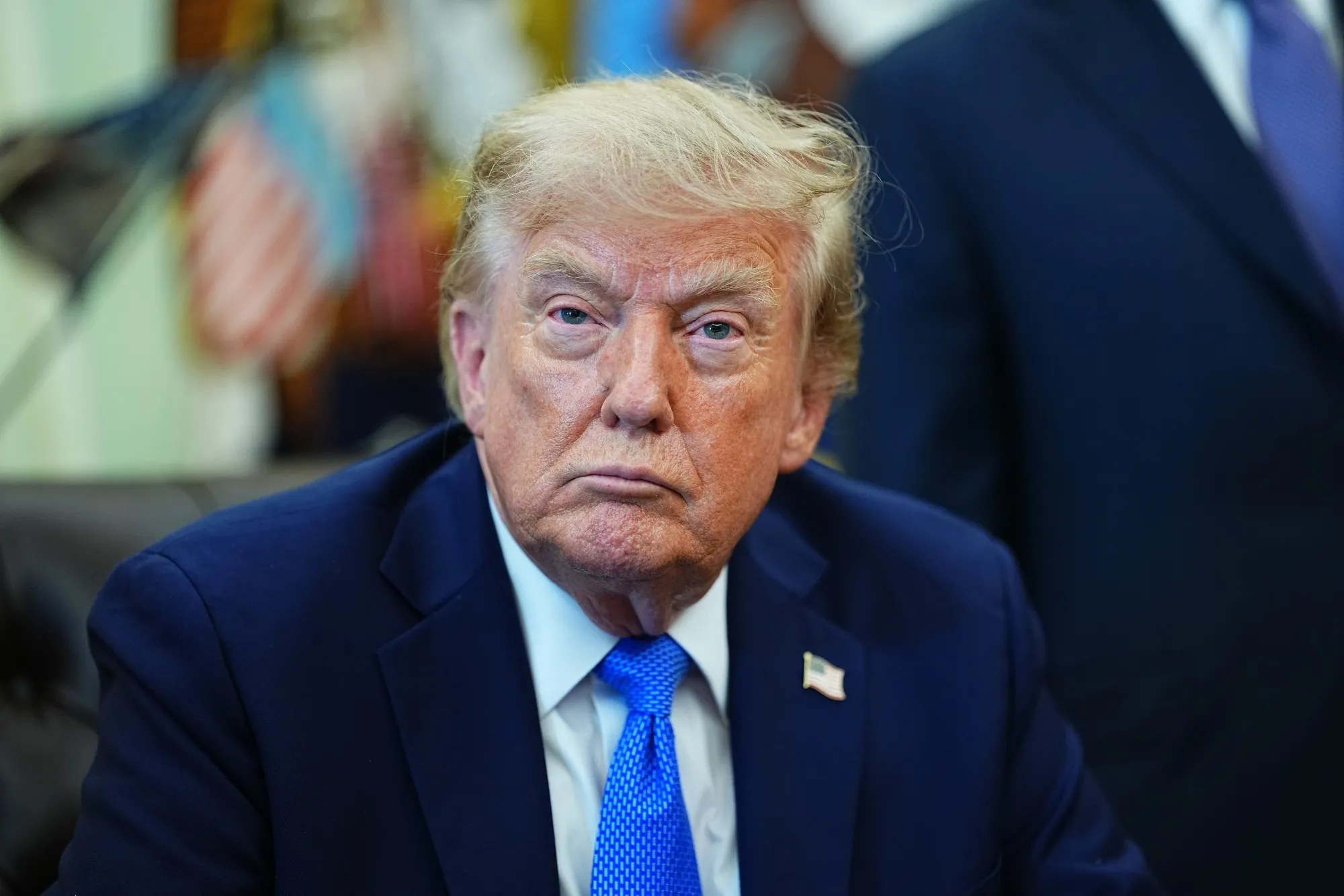

US President Donald Trump has announced plans to create an “AI Force” to oversee artificial intelligence policy and said he will soon name an “AI czar” as Washington faces growing pressure over how rapidly advancing AI should be governed.
Trump announced the plan in a social media post on Saturday. He said the new structure would protect the growth of the AI industry while watching for misuse, but did not provide details about its legal powers, membership or when it would begin operating.
The announcement comes during an unusually intense debate in the United States over AI safety, data centres, jobs and competition with China.
Trump has opposed calls to slow AI development, arguing that excessive restrictions could weaken US technological leadership. At the same time, he said existing laws should be used when AI is misused.
Proposal for Conducting Cyber Crisis Drill, Tabletop Exercise (TTEx) & CCMP Readiness Exercise
What exactly will the ‘AI Force’ do?
For now, that remains unclear.
Trump compared the concept with the Space Force created during his first presidency, but he has not said whether the AI Force would become a new federal agency, an inter-agency task force or a White House coordinating body.
There is also uncertainty surrounding the proposed AI czar.
The White House already has David Sacks serving as Special Advisor for AI and Crypto. His role includes helping guide presidential AI policy and work on issues including AI chips, large computing clusters and foundation models.
Sacks also helped shape the administration’s existing AI Action Plan.
Trump’s latest announcement therefore raises an obvious administrative question: whether the new AI czar would replace, expand upon or operate alongside the current AI advisory structure.
Reuters reported that the White House had not provided further clarification on the plan at the time of publication.
Trump has favoured faster AI development
The administration’s existing policy has largely focused on accelerating American AI development while reducing barriers it believes could slow innovation.
The White House’s AI Action Plan, released in 2025, centres on three broad priorities: encouraging AI innovation, expanding American computing and energy infrastructure, and strengthening US leadership internationally.
The administration has also pushed AI deeper into national security.
In June, Trump signed a national security memorandum directing defence and intelligence agencies to speed up the adoption of advanced AI systems while maintaining human accountability and security controls.
More recently, Trump publicly criticised warnings that advanced AI could pose catastrophic risks.
On September 14, he described claims that AI could eventually threaten humanity as a “hoax” and argued against efforts to slow its development.
His new AI Force announcement suggests the administration still sees a role for government oversight, but appears to favour targeted intervention rather than broad restrictions on development.
AI regulation has become politically contested
The announcement arrives as lawmakers and technology leaders disagree sharply over how much oversight advanced AI requires.
Some figures across the US political spectrum have called for stronger restrictions following warnings from AI researchers about autonomous systems, cybersecurity risks and potential job disruption.
Others argue that heavy regulation could slow American companies while China continues investing aggressively in AI.
The United States also lacks a single comprehensive national AI law comparable with the European Union’s regulatory framework.
Instead, several states have developed their own AI rules. The Trump administration has challenged parts of that approach and promoted a more uniform federal policy that emphasises innovation and competition.
That tension is likely to be one of the central questions facing any future AI Force.
China competition sits behind the policy debate
AI has also become a major strategic issue between Washington and Beijing.
US and Chinese officials are preparing to discuss artificial intelligence during high-level talks ahead of a planned meeting between Trump and Chinese President Xi Jinping.
The countries remain divided over access to advanced computer chips, accusations of technology copying, export controls and the appropriate level of government oversight for powerful AI systems.
For the Trump administration, AI policy therefore involves more than regulating chatbots or consumer applications.
It now touches national security, semiconductor production, electricity demand, military technology and US competition with China.
The significance of the proposed AI Force will ultimately depend on details that have not yet been released: who leads it, which agencies participate, what authority it receives and how it fits alongside officials already managing federal AI policy.
What this means for you: The announcement does not create new rules for AI users or companies yet. Any practical impact will depend on the formal structure, powers and regulations the administration announces for the AI Force and its future czar.
Follow for daily updates on cybercrime, corporate fraud, DFIR, hacking, investigations, and digital forensics
