

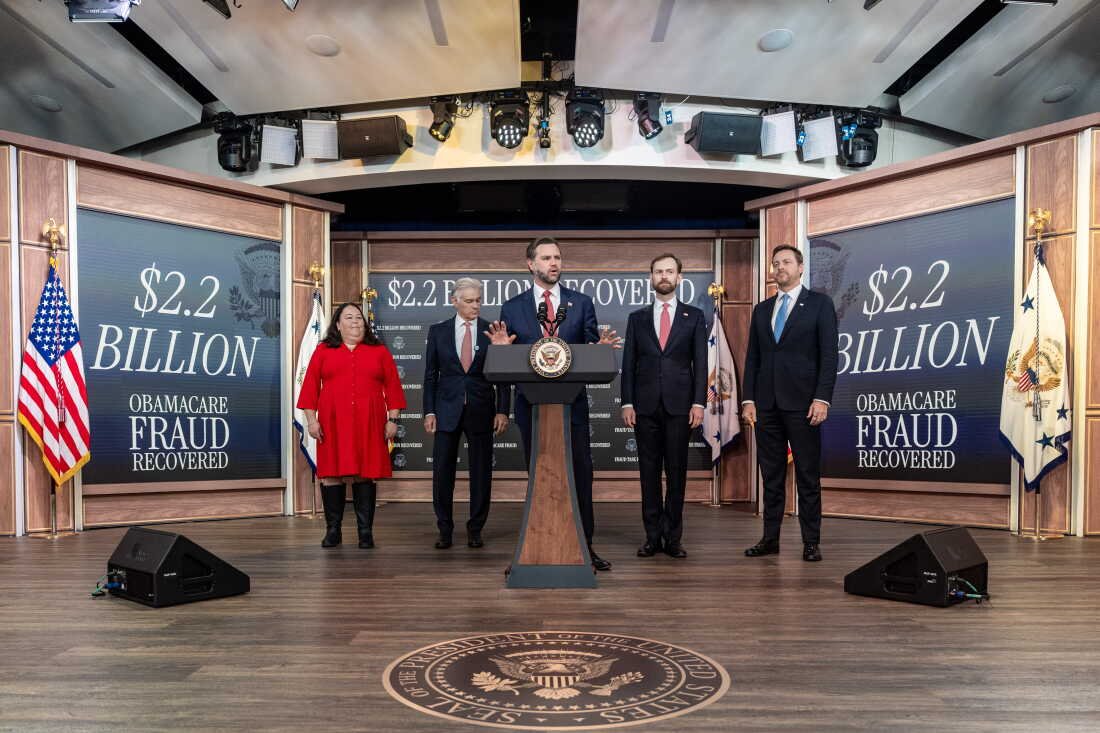

The Trump administration has cancelled about 315,000 Affordable Care Act marketplace plans covering roughly 760,000 people, citing suspected fraudulent or improper enrollments and problems verifying citizenship or immigration documentation.
The Centers for Medicare & Medicaid Services said the policies were cancelled in August as part of a wider anti-fraud drive led by Vice President JD Vance. The administration estimates that stopping subsidies linked to the affected plans could save about $2.2 billion in federal spending.
A separate group of roughly 419,000 enrollments will undergo additional checks to determine whether beneficiaries meet residency and income requirements.
Proposal for Conducting Cyber Crisis Drill, Tabletop Exercise (TTEx) & CCMP Readiness Exercise
315,000 plans covering 760,000 people cancelled
The number of affected people is larger than the number of policies because a single ACA plan can cover more than one member of a household.
CMS said around 315,000 plans covering approximately 760,000 people were removed after officials identified unverified citizenship or immigration documentation and suspected improper enrollments.
Vance said the affected population included what the administration describes as “phantom” enrollees as well as real people who may not have met eligibility requirements.
Some people may also have been enrolled by brokers without knowing that coverage had been opened in their names, according to the administration.
The government has not released a detailed public breakdown showing how many of the 760,000 people fall into each category.
That distinction matters because an improper enrollment does not necessarily mean the person whose name appears on the policy personally committed fraud.
Another 419,000 enrollments face verification
The administration is separately examining approximately 419,000 additional enrollments.
Vance said officials will verify whether the people concerned are legally resident in the United States and whether they meet income requirements for ACA subsidies.
Those policies have not all been declared fraudulent.
Their future will depend on the results of the verification process, making it important to distinguish them from the 315,000 plans already cancelled.
Roughly 19.2 million people were actively enrolled in ACA exchange plans in early 2026, according to the US Department of Health and Human Services.
569 brokers face action as new registrations are frozen
The crackdown also targets insurance agents and brokers.
CMS said 569 brokers would be barred after the agency identified what it described as statistically implausible rates of 2026 applications that lacked key information such as Social Security numbers.
The administration has also imposed a six-month freeze on new broker registrations for ACA marketplace enrollments.
Officials argue that some brokers exploited subsidies by enrolling people who were ineligible or had not authorised the application.
The move is intended to give CMS time to strengthen enrollment controls.
Industry groups have argued that enforcement should focus on brokers shown to have engaged in improper conduct rather than imposing broad restrictions that could also affect legitimate agents. Reuters reported that the National Association of Benefits and Insurance Professionals has criticised the wider moratorium and favoured more targeted action.
Fraud concerns are real, but the scale remains disputed
The administration has cited earlier government investigations as evidence of weaknesses in ACA enrollment controls.
A June 2026 HHS analysis estimated that improper, fraudulent or so-called phantom enrollment had reached 5.6 million people in 2025. The report said almost half of new exchange enrollment growth between 2021 and 2024 may have involved improper, phantom or fraudulent sign-ups.
Those figures are government estimates rather than individual findings of fraud against every enrollee included in the calculation.
The Government Accountability Office has also demonstrated vulnerabilities in the system through covert tests using fictitious applicants.
Those exercises showed that fake identities could sometimes receive subsidised coverage, highlighting weaknesses in verification. They do not establish how many genuine ACA beneficiaries nationwide were improperly enrolled.
Experts question how cancellations were identified
Health policy specialists have raised concerns about whether all affected cases received sufficient individual review.
Cynthia Cox of KFF told the Associated Press that coverage obtained through fraud should be cancelled but questioned whether the government had provided enough information about how the affected population was identified.
Former federal health official Ellen Montz similarly said anti-fraud measures were already underway before the current action and called for greater clarity about the methodology used to select policies for cancellation.
The administration maintains that stronger verification is needed to prevent taxpayer-funded subsidies from being paid for ineligible or unauthorised enrollments.
The disagreement is therefore less about whether fraud should be addressed and more about how accurately the government is separating confirmed abuse from documentation failures, broker misconduct and genuine beneficiaries.
ACA coverage remains politically contested
The enforcement action comes amid broader changes affecting Affordable Care Act insurance.
Enrollment expanded significantly after enhanced subsidies were introduced during the Biden administration, while those temporary subsidy provisions later expired.
The Trump administration has argued that stronger eligibility checks are necessary to control improper federal spending.
Democratic lawmakers and some health-policy advocates, meanwhile, have warned that overly broad cancellations or verification rules could cause eligible people to lose insurance.
For affected households, the immediate issue will be whether they can establish eligibility or correct any documentation problems identified by CMS.
What this means for you: The 760,000 figure refers to people covered by about 315,000 policies that CMS says it has already cancelled, not 760,000 separate policies. Another 419,000 enrollments remain under review and should not yet be described as fraudulent.
Follow for daily updates on cybercrime, corporate fraud, DFIR, hacking, investigations, and digital forensics
