

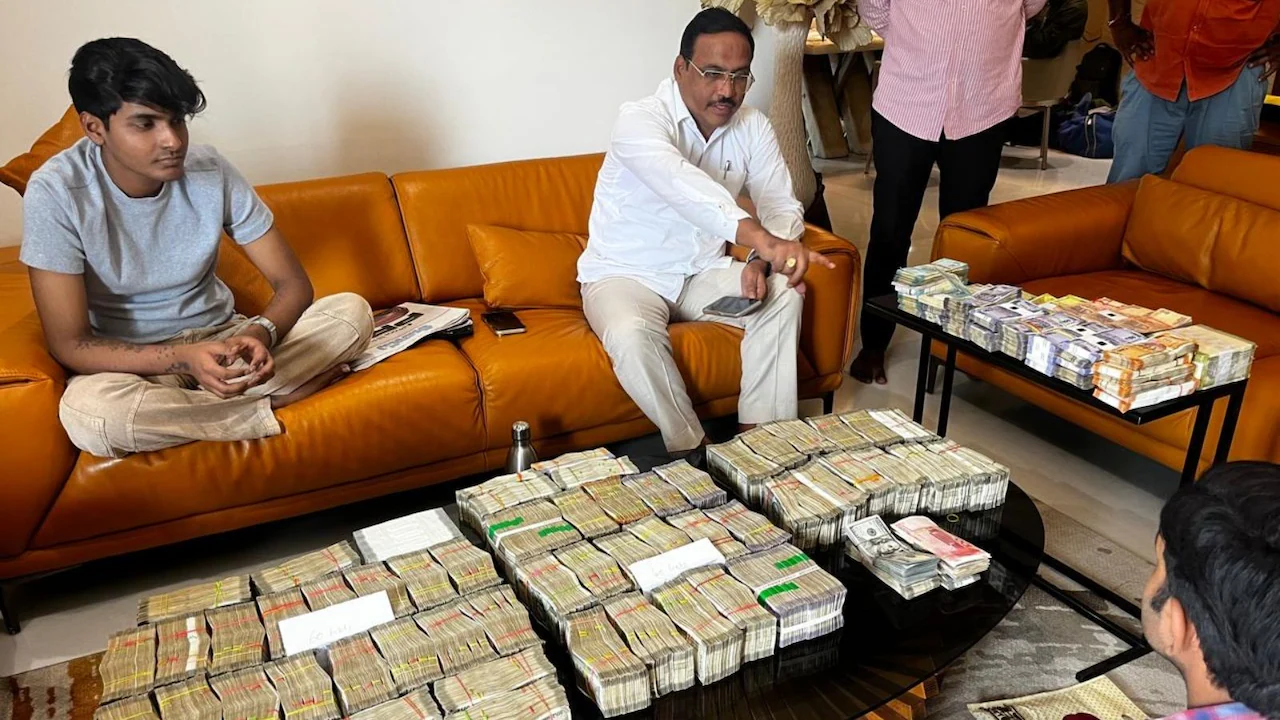

The Telangana Anti-Corruption Bureau has intensified its disproportionate-assets investigation against suspended Deputy Superintendent of Police Sankireddy Bheem Reddy, conducting fresh searches at 10 locations in Hyderabad and Zaheerabad.
During the September 24 operation, officials seized ₹1.35 crore in cash from the residence of Bomma Venkatesh, along with foreign currency, documents linked to suspected benami assets and around 14 litres of foreign liquor. The liquor recovery has been referred to the Excise Department for separate action.
The searches were carried out under warrants issued by the Principal Special Judge for SPE and ACB Cases in Hyderabad and targeted people suspected of having financial or property dealings with Bheem Reddy.
Proposal for Conducting Cyber Crisis Drill, Tabletop Exercise (TTEx) & CCMP Readiness Exercise
Fresh searches widen probe into alleged benami network
The latest operation marks a new phase in an investigation that began earlier this year.
Bheem Reddy, then serving with Telangana Police Computer Services, was booked in a disproportionate-assets case and arrested in July. The420.in had reported at the time that investigators were examining a network of properties and investments allegedly held through relatives, associates and suspected benamidars.
Thursday’s searches focused on people believed to have had transactions with the suspended officer.
The ACB said officials were examining property documents, financial dealings and other material to determine whether assets were being held in the names of other people while allegedly benefiting Bheem Reddy.
₹1.35 crore recovered from associate’s residence
The most significant recovery came from the residence of Bomma Venkatesh.
ACB officials said ₹1.35 crore in cash was found there during the search. Investigators will now need to establish the source of that money and whether it has any connection with assets or transactions already under examination in the Bheem Reddy case.
Foreign currency was also recovered.
The agency has not yet publicly disclosed the value or denominations of the foreign currency, nor has it said that the cash itself represents proceeds of corruption. Those questions will depend on the financial investigation.
Around 14 litres of foreign liquor were also found, and the ACB informed the Excise Department for further action under the applicable law.
Earlier raids uncovered gold, silver and high-value properties
The latest searches follow a much larger operation carried out in July.
At that time, ACB teams searched 16 locations in Telangana and Karnataka linked to Bheem Reddy, his relatives, friends and suspected benamidars. Investigators reported finding cash, gold, silver and documents relating to villas, flats, commercial properties, open plots and agricultural land.
The420.in reported that ₹3.60 lakh was recovered from Bheem Reddy’s residence, while ₹40 lakh was allegedly found at the residence of a suspected benamidar.
Officials also identified around 2 kg of gold, 20 kg of silver and bank balances linked to the wider investigation.
Investigators have alleged that some properties were held in the names of people with relatively modest occupational profiles, including a former home guard and a watchman.
Those allegations remain subject to investigation and eventual court findings.
₹300 crore figure refers to estimated market value
The ₹300 crore figure associated with the case should also be read carefully.
It refers to the estimated market value of properties and assets investigators believe may be connected to Bheem Reddy and suspected benamidars. It is not a final judicial determination of disproportionate assets worth ₹300 crore.
Earlier reporting had put the market value of properties identified during the July searches at around ₹200 crore, while subsequent investigation expanded the suspected asset base.
That is why the figure has increased over time as new properties and transactions have been examined.
The legal test in a disproportionate-assets case is not simply the gross market value of everything found during a raid. Investigators must establish ownership or beneficial control and then compare the assets and expenditure with the accused public servant’s known lawful sources of income.
What a benami asset means
A benami asset is one held in one person’s name while another person is alleged to be the real beneficial owner.
In corruption investigations, agencies often examine whether relatives, employees or associates were used to hold property, bank accounts or investments that allegedly belonged to a public servant.
The mere fact that an associate owns property does not make it benami.
Investigators need documentary and financial evidence showing where the purchase money came from, who exercised control over the asset and who ultimately benefited from it.
That is why bank statements, property agreements, loan records and communications seized during searches can become crucial to the case.
ACB continues tracing transactions and ownership
The ACB is now analysing documents recovered during the fresh raids and comparing them with material seized in July.
Investigators are expected to examine the relationship between Bheem Reddy and the people searched, the source of cash and investment funds, and whether property ownership structures were used to conceal beneficial ownership.
The latest searches do not alter the presumption of innocence.
The allegations against Bheem Reddy and the people whose premises have been searched will have to be established through evidence and legal proceedings.
What this means for you: Disproportionate-assets investigations often expand beyond the public servant to relatives, associates and suspected benamidars. Large cash or property recoveries may become important evidence, but investigators still have to establish ownership, source of funds and the link to alleged corruption.
Follow for daily updates on cybercrime, corporate fraud, DFIR, hacking, investigations, and digital forensics
