

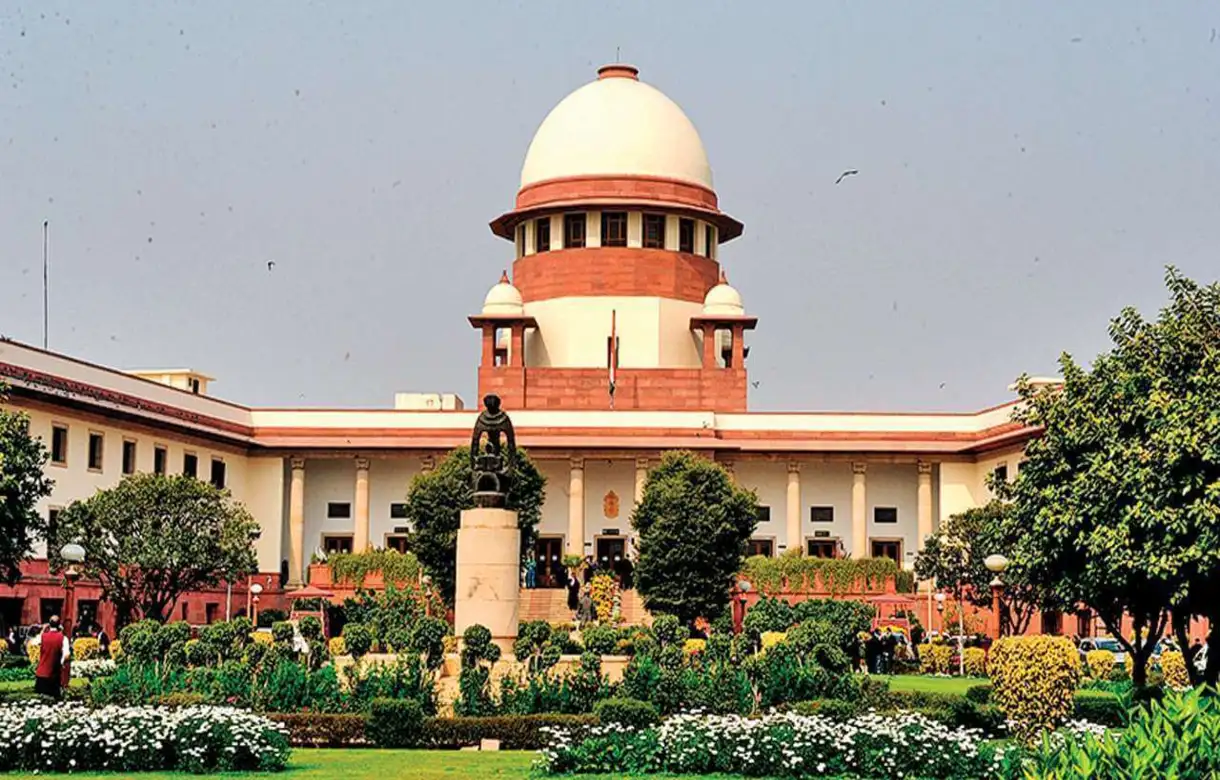

Investigating agencies and police forces across the country must supply the grounds of arrest in writing and in a language the accused understands whenever they take an individual into custody, the Supreme Court ruled on Monday. Emphasizing personal liberty, the top court held that merely reading out allegations orally is insufficient to satisfy constitutional requirements. The court made it clear that this protection applies universally to all criminal cases and special statutes, warning that police cannot bypass the safeguard or immediately re-arrest a person if their initial custody is declared unlawful.
A bench comprising Justice Ujjal Bhuyan and Justice Atul Chandurkar observed that communicating the reasons for custody is a fundamental safeguard guaranteed under Article 22(1) of the Constitution. The bench stated that providing written grounds ensures that an arrested individual fully comprehends the allegations and can effectively exercise the right to legal counsel. The judges ruled that compliance with this provision is mandatory and cannot be disregarded by investigating agencies under any circumstances, noting that the seriousness or gravity of an alleged offence provides no ground for exemption.
Universal application across special laws
The court clarified that the obligation to furnish written grounds applies not only to ordinary criminal offences but also to arrests carried out under stringent special statutes, including the Prevention of Money Laundering Act and the Unlawful Activities (Prevention) Act. Drawing upon its earlier ruling in the Pankaj Bansal case as well as subsequent judgments, the bench observed that providing grounds of arrest is an integral aspect of protecting personal liberty rather than a routine administrative formality.
The bench noted that the statutory severity of a case does not dilute the constitutional framework. Consequently, investigating officers cannot withhold written reasons by citing the sensitive nature of an inquiry, operational urgency, or the gravity of the accusations facing the suspect.
Magistrate approval mandatory for re-arrest
Laying down comprehensive directions on custody, the Supreme Court barred police from immediately re-arresting an individual if their initial arrest is quashed for failing to provide written grounds. In such instances, investigating agencies cannot take the person back into custody on their own authority. Instead, the agency must first furnish the written grounds of arrest to the accused and obtain prior approval from the immediate superior of the arresting officer before approaching a competent judicial magistrate with a formal application.
The court directed that the magistrate must not treat the application as a routine rubber stamp. The magistrate is required to scrutinize whether genuine and reasonable grounds existed for the initial failure to provide written reasons, while also determining whether a fresh arrest is genuinely indispensable to the ongoing investigation.
Accountability and status of release
The bench further ordered that an officer responsible for violating constitutional mandates during the first arrest should not retain unchecked authority to execute a re-arrest in the same matter. In such situations, the investigation may be transferred to an independent officer, and departmental proceedings can be initiated against the errant personnel. If established during an internal inquiry, the violation may result in formal disciplinary action and an adverse entry on the officer’s service record.
Clarifying the legal status of an individual released under these circumstances, the court noted that freeing a person because their arrest breached Article 22(1) amounts to terminating unconstitutional custody rather than granting bail. While investigating authorities retain the legal right to seek custody afresh if deemed necessary, they must strictly comply with the judicial checks and oversight established by the court.
Follow for daily updates on cybercrime, corporate fraud, DFIR, hacking, investigations, and digital forensics
