
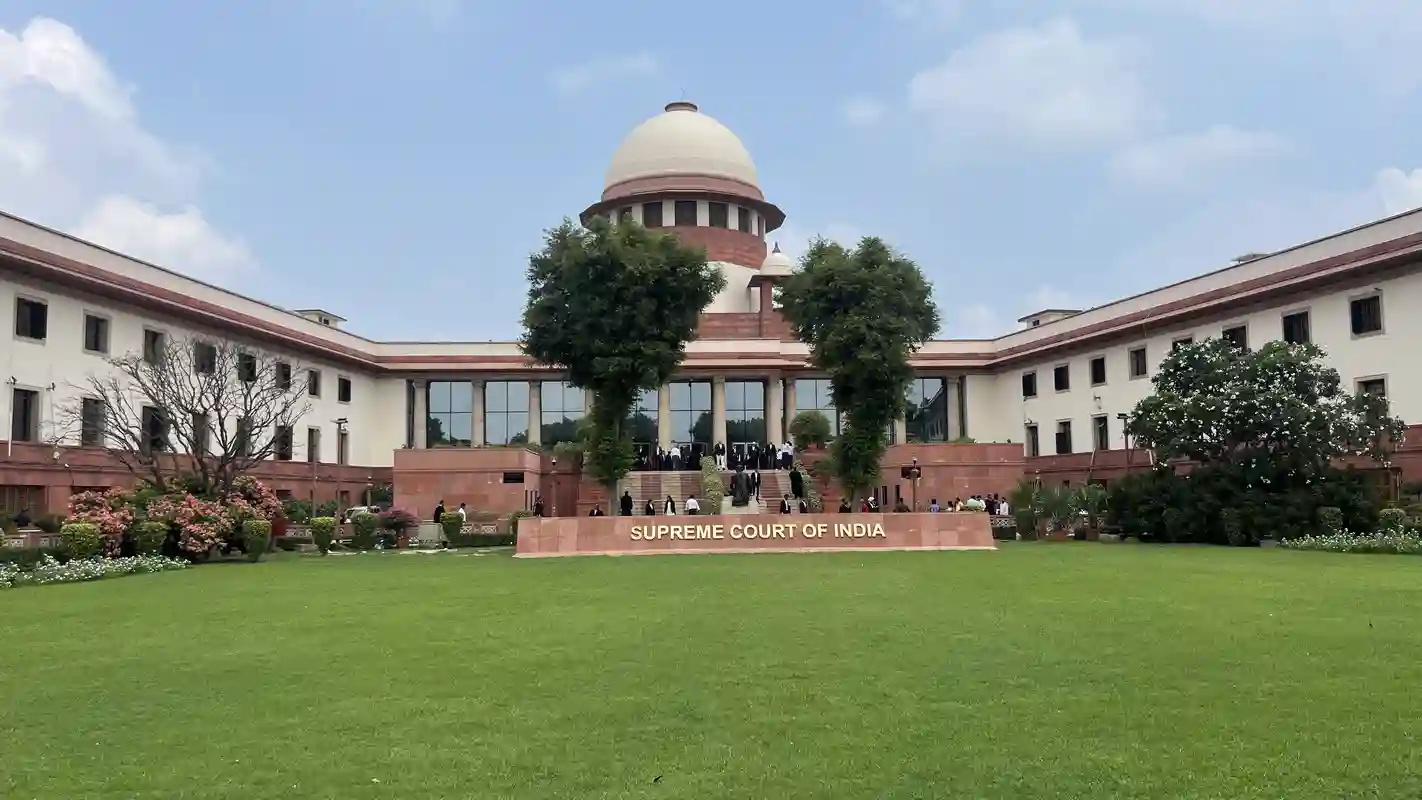
The Supreme Court has taken a strict view of alleged large-scale fraud in motor accident compensation claims and directed all states and Union Territories to constitute special investigation teams to probe suspicious cases.
The court came across an alleged pattern in which the same vehicle was shown as being involved in multiple accidents to secure compensation from insurance companies.
Supreme Court Expands Scrutiny Across India
A bench of Justice Ahsanuddin Amanullah and Justice Prasanna B Varale said the issue could not remain confined to an individual claim or a single state.
The court expanded the scope of scrutiny from cases reported in Odisha and Tamil Nadu to a nationwide exercise.
The Insurance Regulatory and Development Authority, the Union Finance Ministry, the Ministry of Road Transport and Highways and the General Insurance Council have also been brought within the scope of the proceedings.
Proposal for Conducting Cyber Crisis Drill, Tabletop Exercise (TTEx) & CCMP Readiness Exercise
What Triggered the Supreme Court’s Intervention?
The proceedings originated from a case in Odisha involving a dispute over whether a particular vehicle was actually responsible for an accident for which compensation had been claimed.
The appeal was filed by Oriental Insurance Company, which alleged that a vehicle had been shown as the offending vehicle merely because it carried a valid insurance policy.
An investigation ordered in Odisha, as recorded in the court’s February order, found that the vehicle was involved in the accident in question.
However, investigators also found that the same vehicle had appeared in four other accident cases.
Same Vehicle Found in Four Other Accident Cases
The discovery raised concerns that the case might not be an isolated instance.
Odisha authorities subsequently informed the Supreme Court that their investigation had uncovered indications of a wider racket in which several stakeholders could be involved.
Arrests were also made in connection with the alleged racket.
These findings prompted the court to widen its examination beyond the original accident claim and look into potentially fraudulent compensation claims across the country.
Why Have All States Been Asked to Form SITs?
The Supreme Court has directed every state and Union Territory to constitute a special investigation team to examine fraudulent motor accident compensation claims.
On March 18, the directors general of police of all states and Union Territories were brought into the proceedings.
Odisha was also asked to share the model used in its investigation so that other states could adopt appropriate mechanisms for identifying and probing suspicious claims.
States have now been asked to disclose the procedures they are following to investigate such cases.
Insurance Companies Warned Against Selective Referrals
The Supreme Court made it clear that responsibility for tackling fraudulent compensation claims does not rest solely with police authorities.
The bench warned insurance companies against selectively forwarding suspicious claims to SITs.
The court said that if insurers adopt a selective approach in referring cases for investigation, the top management of the concerned insurance company could be held accountable.
What Must Insurers Do When Fraud Is Suspected?
The court directed insurance companies to initiate departmental action against officials if an SIT recommendation or an FIR indicates that they facilitated a fraudulent claim.
Whenever a Motor Accident Claims Tribunal rejects a compensation claim on grounds of fraud or collusion, the concerned insurer will also have to conduct an internal investigation.
Details of such cases must then be immediately forwarded to the SIT operating in the state where the claim was filed.
Nationwide Probe to Examine Claims and Possible Collusion
With SITs being constituted across the country, investigators are expected to scrutinise suspicious compensation claims, vehicle records, insurance documents, financial transactions and possible links between claimants and other parties.
The wider exercise is also expected to examine whether organised groups or other stakeholders were involved in facilitating fraudulent motor accident claims.
The matter will next be heard on September 23.
States, insurance companies and the newly constituted investigative authorities are expected to submit reports on the steps taken in response to the Supreme Court’s directions.
The nationwide exercise could lead to closer scrutiny of potentially fraudulent accident claims and alleged collusion within the motor accident compensation system.
About the author — Ayesha Aayat writes on cybercrime, digital safety, and emerging online threats. Her work focuses on public awareness, legal clarity, and technology-driven risks.
