

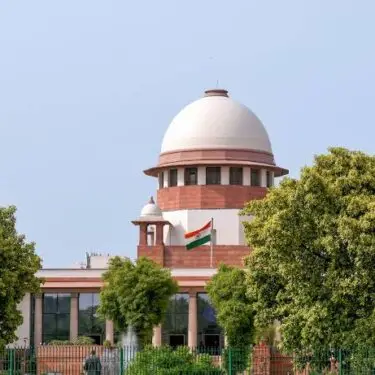
The Supreme Court has warned against the use of fake or AI-generated judicial decisions as legal precedents, calling the practice a grave threat to the administration of justice. The court said “hallucinated” or fabricated judgments produced through artificial intelligence could seriously damage the legal system, and set aside an order passed by the National Company Law Tribunal.
Zero Tolerance for Fabricated Precedents
A Bench of Justice P.S. Narasimha and Justice Alok Aradhe held that courts must adopt a policy of zero tolerance towards AI-generated judicial precedents that have not been independently verified.
The Bench said it would amount to professional misconduct if an advocate cited AI-generated judgments without proper verification. It also observed that a judge relying on such fabricated material while deciding a case would be committing a serious judicial lapse.
Non-Existent Cases Found in NCLT Order
The matter arose from an insolvency dispute involving Essel Infraprojects Ltd, in which the Mumbai Bench of the NCLT had admitted an application under Section 7 of the Insolvency and Bankruptcy Code.
While examining the case record, the Supreme Court found that several judicial precedents cited by the tribunal did not exist. It noted that some case names had been fabricated, while other references contained paragraphs wrongly attributed to genuine judicial decisions.
Among the non-existent authorities mentioned in the NCLT order were ICICI Bank Ltd vs Urban Infrastructure Real Estate Ltd and Sarbjit Singh vs Union Bank of India. The Supreme Court said no such judgments existed in the official judicial record.
BCI Asked to Frame Guidelines
During the hearing, Jammu and Kashmir Bank filed an affidavit stating that its counsel had not relied on the disputed citations and that the references had been introduced by the tribunal during its own research. The Supreme Court, however, said the source of the error did not reduce the damage caused to the rule of law.
The Bench clarified that its ruling should not be read as opposition to the legitimate use of artificial intelligence in the justice system. It said AI may be used as a technological aid, but human oversight and independent verification must remain central to adjudication.
The Supreme Court directed the Bar Council of India to constitute a committee to examine the issue of advocates submitting fake or AI-generated precedents before courts. The committee has been asked to frame guidelines and recommend a disciplinary framework for violations.
