

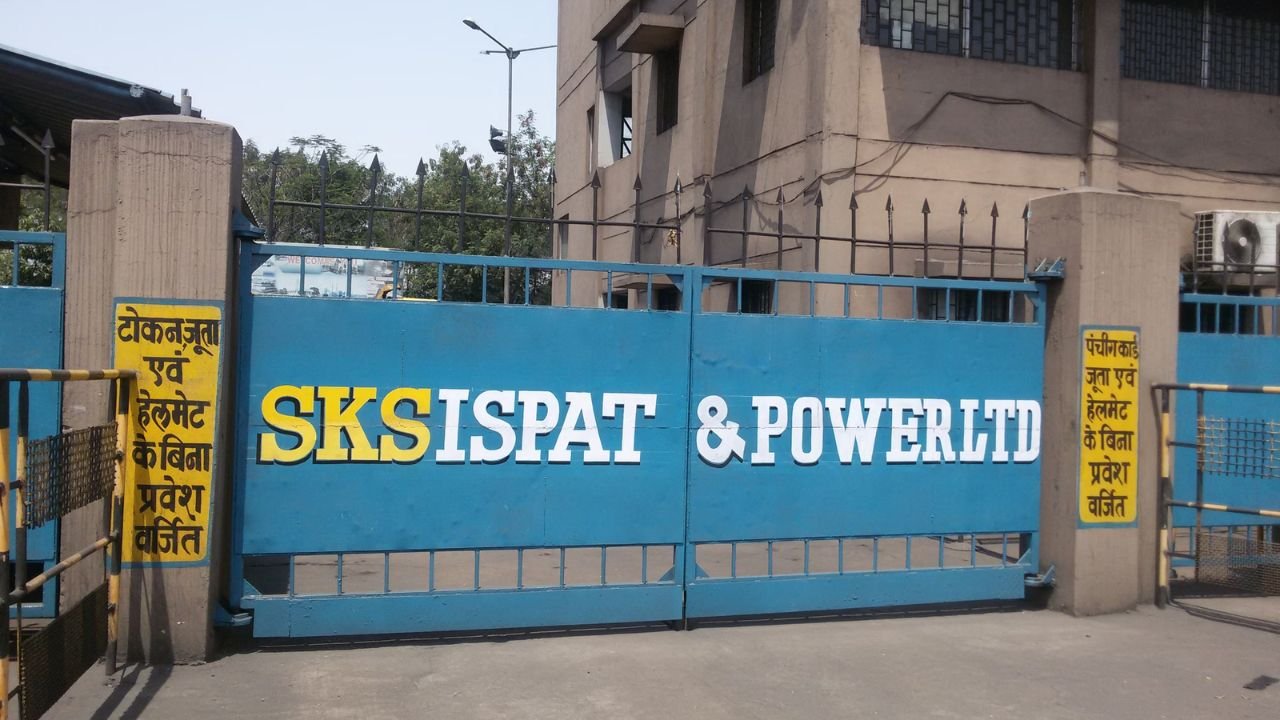

New Delhi | A special court in Delhi has acquitted SKS Ispat and Power Limited and five other accused in a case related to alleged irregularities in the allocation of a coal block. The court observed that the prosecution failed to prove the charges beyond reasonable doubt and that the evidence presented was insufficient to establish offences of cheating or criminal conspiracy.
Among those acquitted are Anil Gupta, Managing Director of the company, Deepak Gupta, Joint Managing Director, Amrit Singh, Manager, and Sudhir Kumar Sahay, a designated director who is said to be the brother of former Union minister Subodh Kant Sahay.
FCRF’s Flagship Cyber Law Certification Returns With a New Four-Week Cohort
The court noted that the evidence placed on record by the prosecution was weak and inadequate. Special Judge Sunena Sharma, in her 271-page judgment, held that the essential ingredients of offences such as cheating, dishonest intention, and criminal conspiracy could not be established. The court further observed that there was no concrete material to show that any of the accused had deliberately misled the Ministry of Coal.
The Central Bureau of Investigation (CBI) had alleged that the company and its officials made exaggerated claims regarding net worth, land holdings, investments, and statutory clearances in order to secure the allocation of the coal block. According to the agency, the entire process was part of a well-planned criminal conspiracy aimed at influencing the screening committee responsible for allotment decisions.
However, the court rejected these allegations, stating that the prosecution failed to prove that any of the claims made in the application were false or made with fraudulent intent. It also noted the absence of any direct or indirect evidence showing that the screening committee was influenced or induced due to such representations.
The case is part of a broader set of coal block allocation-related prosecutions. More than 50 cases were registered, out of which 27 have already been disposed of, while over 25 cases remain pending before special courts. The Enforcement Directorate has also informed the Supreme Court that multiple proceedings under the Prevention of Money Laundering Act (PMLA) related to the same issue are still under trial.
In 2014, the Supreme Court cancelled 214 coal block allocations made between 1993 and 2010 and directed that trials be conducted by a special CBI court. Since then, several cases arising out of the same allocation process have been under judicial scrutiny across different courts.
Following the latest verdict, legal discussions have intensified regarding the standard of proof required in such cases. Legal experts have noted that convictions in corruption or fraud-related matters must be based on strong documentary and direct evidence rather than assumptions or circumstantial inferences. The court also reiterated the fundamental principle that suspicion alone cannot replace proof.
The judgment is being seen as significant in the context of several pending coal scam-related cases. It highlights the need for stronger evidentiary backing in investigations and prosecutions. The acquittal of SKS Ispat and the other accused is being viewed as an important legal precedent, although investigative agencies still retain the option to appeal the decision.
The court further emphasized that criminal conspiracy cannot be inferred merely on the basis of assumptions. It requires clear evidence of a prior meeting of minds or coordinated action among the accused. In this case, the court found no documents, records, or testimonies that could establish such a connection between the accused persons for any unlawful gain or manipulation of the allocation process.
The verdict has triggered mixed reactions in legal circles. While some view it as a reaffirmation of evidence-based justice, others see it as a setback for ongoing efforts to prosecute alleged irregularities in coal block allocations.
