
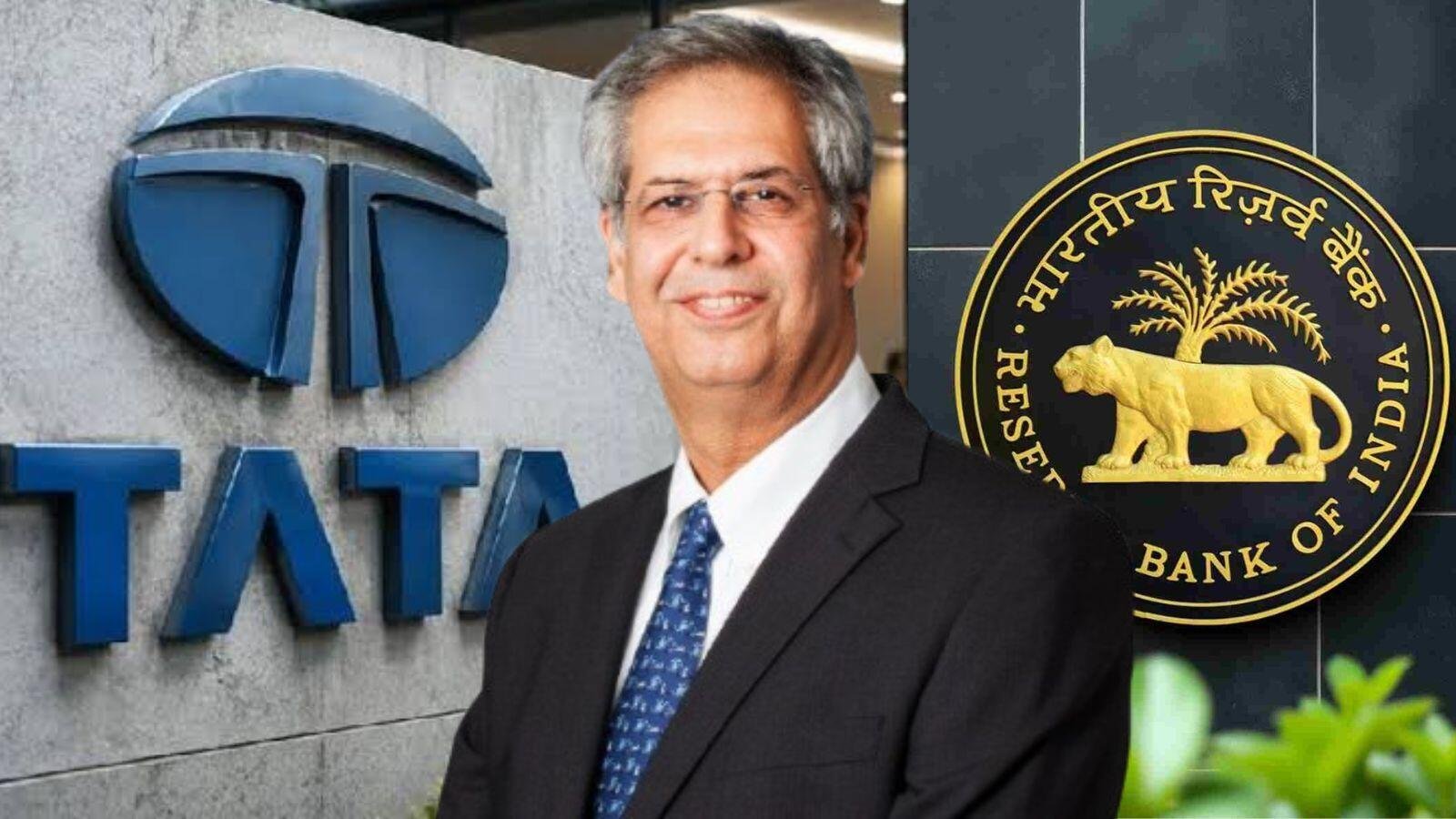
The Reserve Bank of India has rejected Tata Sons’ request to surrender its core investment company registration, therefore bringing the prospect of a stock market listing closer.
The central bank has told Tata Sons that its request to give up its CIC registration “cannot be acceded to” and asked the company to comply with regulations governing upper-layer investment companies. Tata Sons had applied on March 28, 2024, to surrender the registration and had repaid its entire debt in an effort to avoid the listing requirement.
RBI Decision Puts Listing Back in Focus
RBI rules require upper-layer investment companies with assets above ₹1 lakh crore, or those with direct or indirect access to public funds, to list. Tata Sons had assets of ₹2 lakh crore as of March 31, 2026, according to the information in the report.
The company was classified by the RBI as an upper-layer non-banking financial company on August 6. Such entities face enhanced regulatory oversight because of their size, systemic importance, interconnectedness and risk profile.
The regulatory framework also requires an NBFC classified in the upper layer to list within three years of being identified as one. The report said Tata Sons had been required to list by September 2025.
Tata Sons did not comment on the development when contacted. Legal circles, however, are of the view that the company has the option of approaching the court against the RBI’s rejection of its application to remain an unregistered core investment company.
The issue could therefore move to court, particularly because Tata Trusts, led by Noel Tata, has opposed the company going public.
Tata Trusts Remain Divided Over IPO
The RBI decision complicates efforts by Noel Tata, chairman of Tata Trusts and a director of Tata Sons, to keep the company private. Tata Trusts wants Tata Sons to remain unlisted to preserve its long-term stewardship of the Tata Group and its charitable ownership structure without the pressures associated with public markets.
Trustees have remained divided over a possible listing. Noel Tata has advocated keeping Tata Sons private, while some former directors have also opposed an IPO. Trustees Venu Srinivasan and Vijay Singh, however, have argued in favour of a listing.
The Pallonji Mistry group, which holds an 18.3 per cent stake in Tata Sons, also supports a listing because it would provide an exit route. The report said the group carries debt of ₹55,000 crore and its entire 18.4 per cent Tata Sons stake is pledged as collateral against borrowings. Since Tata Sons is privately held, the shares cannot be freely sold.
Under Article 121A of Tata Sons’ Articles of Association, an IPO requires majority approval from Tata Trusts’ two nominee directors, Noel Tata and Venu Srinivasan. Srinivasan’s support for a listing is publicly known, while Noel Tata is opposed.
The report said that if the vote is tied 1-1, the Tata Sons chairman would have the casting vote, which could result in approval of the IPO.
The RBI’s September 11 letter is expected to be placed before Tata Sons’ September 17 board meeting. The board could proceed with an IPO, while Tata Trusts could direct Tata Sons to challenge the regulatory decision before the Bombay High Court.
IPO Could Unlock Value and Bring Greater Scrutiny
Under new Securities and Exchange Board of India rules cited in the report, Tata Sons could dilute a minimum 2.5 per cent of its equity through an IPO if its post-listing valuation exceeds ₹5 lakh crore. Public shareholding would then have to rise to 15 per cent within five years and reach the mandatory 25 per cent within 10 years of listing.
Tata Sons has not disclosed a valuation, but analysts cited in the report estimate it at ₹10 lakh crore or more after applying a holding-company discount.
A listing could provide liquidity to minority shareholders and give Tata Sons access to capital for future growth. At the same time, those opposed to the move argue that public ownership could dilute control and reduce the influence and rights of Tata Trusts.
One Tata Trusts trustee cited in the report said a public listing could unlock value for minority shareholders and equip Tata Sons with capital to sustain growth. Another trustee argued that the Trusts could retain their large shareholding, board seats and promoter status even after a listing.
The RBI’s direction also places responsibility on Tata Sons to address any gaps in its regulatory compliance and align its operations, governance and financial practices with requirements applicable to upper-layer NBFCs. This could mean additional oversight, changes to internal processes and greater emphasis on board-level monitoring and disclosures.
The report said Tata Sons would remain subject to the enhanced regulatory framework for at least five years from its classification in the upper layer, even if it subsequently ceases to meet the prescribed criteria.
Follow for daily updates on cybercrime, corporate fraud, DFIR, hacking, investigations, and digital forensics
