

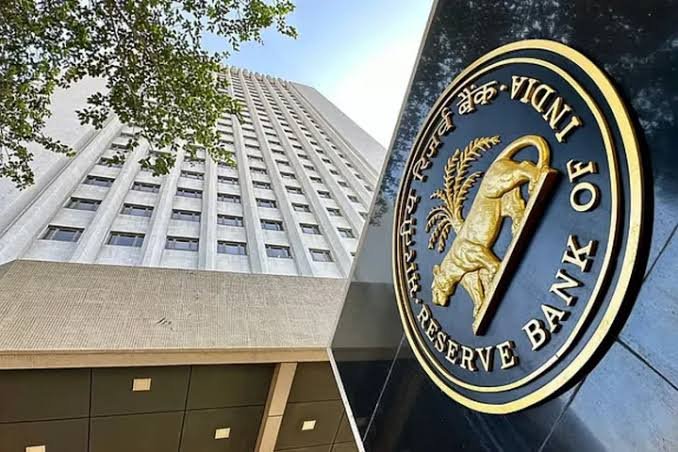

The Reserve Bank of India has cancelled the Certificates of Registration of five non-banking financial companies and separately cancelled the registrations of eight other NBFCs after they surrendered their licences for different reasons.
The two actions were announced on September 17 under Section 45-IA(6) of the Reserve Bank of India Act, 1934. The distinction matters because the five companies were subject to RBI cancellation orders, while the other eight voluntarily surrendered their registrations after exiting the business, ceasing to exist as legal entities or meeting criteria under which registration was no longer required.
Proposal for Conducting Cyber Crisis Drill, Tabletop Exercise (TTEx) & CCMP Readiness Exercise
Five NBFCs can no longer carry on NBFI business
RBI cancelled the registrations of Dar’s Financial Services Pvt Ltd, Rolta Holding and Finance Corporation Private Limited, Vasudeo Securities Pvt Ltd, Parsoli Corporation Limited and A. C. Choksi Financial Services Pvt Ltd.
The last company is listed in Ministry of Corporate Affairs records as Deus Financial Capital Private Limited.
The cancellation orders were issued on different dates in August.
Dar’s Financial Services lost its registration on August 3, while Rolta Holding and Vasudeo Securities were cancelled on August 6. Parsoli Corporation’s cancellation order was dated August 18, and A. C. Choksi Financial Services’ order was dated August 31.
RBI said that following the cancellations, these companies cannot transact the business of a Non-Banking Financial Institution as defined under the RBI Act.
The central bank’s September 17 press release does not spell out the detailed factual reasons behind each of the five cancellation orders. That is an important point because the action should not automatically be described as arising from the same type of violation in every case.
Four companies simply exited the NBFC business
The situation is different for four of the eight companies that surrendered their registrations.
Anupam Mercantile Limited, Grand Motor and Finance Private Limited, Sky Limit International Finance Limited and ASA International India Microfinance Limited gave up their certificates because they exited the Non-Banking Financial Institution business.
Their CoRs were then formally cancelled by RBI.
Anupam Mercantile’s registration was cancelled on August 4, Grand Motor and Finance on August 18, Sky Limit International Finance on August 19 and ASA International India Microfinance on August 31.
These cases are therefore not equivalent to a regulator removing a licence against a company’s wishes.
The companies themselves surrendered the registrations because they no longer intended to operate under that NBFC structure.
Two companies ceased to exist as legal entities
Shivam Securities Private Limited and April Investment and Finance Private Limited surrendered their registrations because they had ceased to exist as legal entities due to amalgamation, merger, dissolution or voluntary strike-off.
RBI cancelled Shivam Securities’ CoR on August 18 and April Investment and Finance’s registration on August 24.
This is another reason why the headline figure of 13 NBFC registrations needs context.
A surrendered licence can result from corporate restructuring or closure rather than a regulatory breach.
Two others no longer required RBI registration
Anagram Industries Limited surrendered its registration after meeting the criteria for an unregistered Core Investment Company that does not require registration.
CDN Finance Private Limited did the same after meeting the criteria for an unregistered Type-I NBFC. RBI’s release notes that such Type-I entities do not avail public funds and do not have customer interface.
This means the regulatory status changed because the companies fell within categories that did not require them to continue holding an NBFC registration.
Anagram Industries’ registration was cancelled on August 18, while CDN Finance’s was cancelled on August 20.
What cancelling an NBFC registration actually means
An NBFC cannot simply carry on regulated non-banking financial activity without meeting RBI’s registration requirements.
Section 45-IA of the RBI Act governs the registration of NBFCs, while subsection 6 gives RBI power to cancel a Certificate of Registration in specified circumstances.
Once an NBFC’s registration is cancelled, it cannot continue carrying on NBFI business merely because the company itself still exists.
For customers, lenders and counterparties, the status of the CoR is therefore an important regulatory check.
But the reason behind cancellation also matters.
A voluntary surrender after leaving the business is fundamentally different from an RBI-initiated cancellation, and both are different again from a company ceasing to exist through merger or dissolution.
RBI action highlights importance of licence status
The September 17 notices show why licence information should be read carefully rather than reduced to the statement that “13 NBFCs lost their registrations”.
Five registrations were cancelled directly by RBI.
Four companies voluntarily exited the NBFI business, two ceased to exist as legal entities and two moved into categories where an NBFC registration was no longer required.
For borrowers and investors, the practical takeaway is to verify whether a financial company is currently registered with RBI before entering into a lending or investment relationship.
For promoters, the notices also highlight how business restructuring, regulatory thresholds and the decision to continue or exit regulated financial activity can all affect licence status.
What this means for you: A cancelled NBFC registration does not always mean misconduct. Check why the licence was cancelled and verify the company’s current RBI status before dealing with it as a lender, financier or investment entity.
Follow for daily updates on cybercrime, corporate fraud, DFIR, hacking, investigations, and digital forensics
