

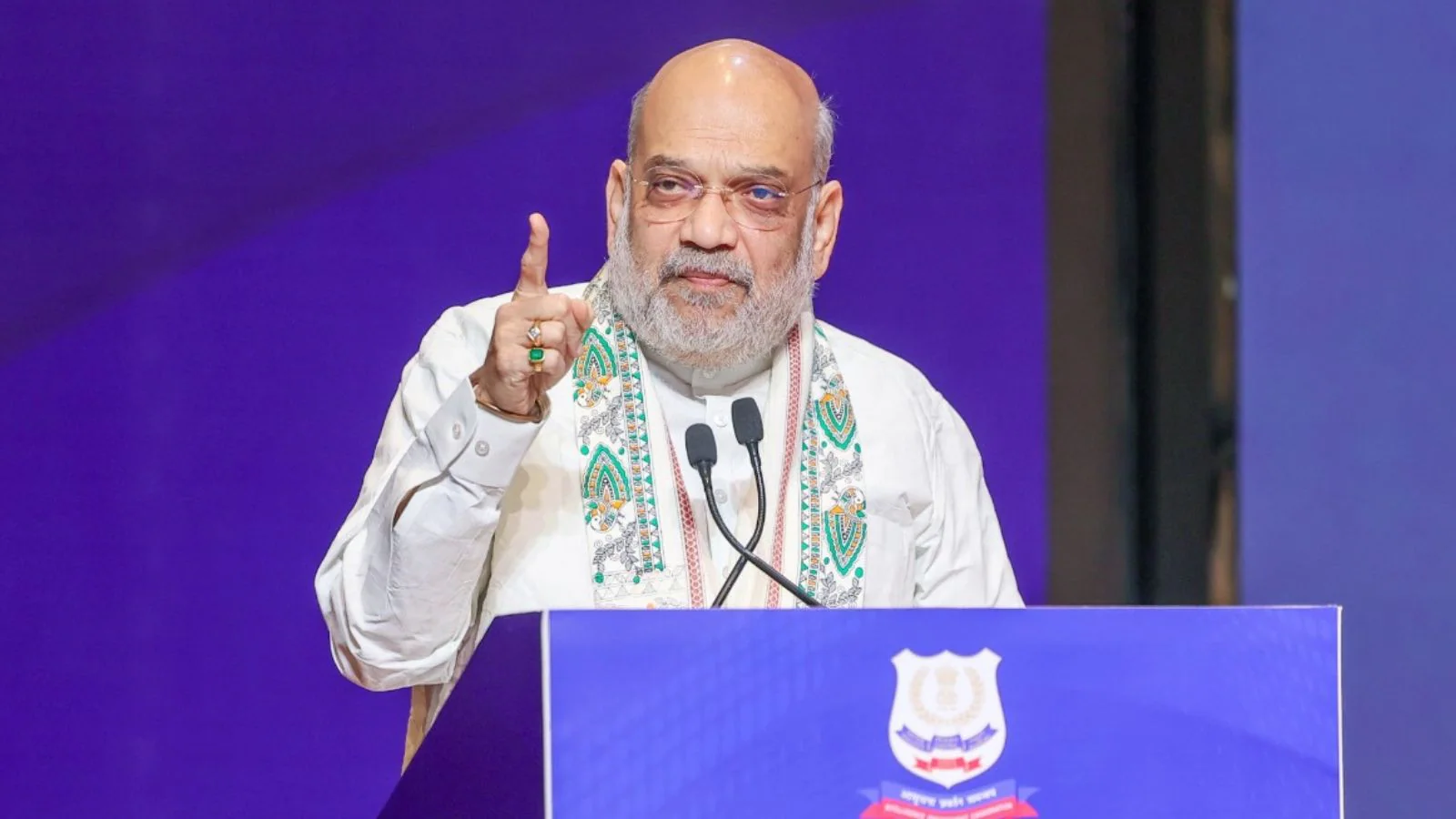

Union Home Minister Amit Shah has set December 31, 2029, as the target for collectively eliminating the illegal drug trade from India, calling for a shift from routine seizures to dismantling entire narcotics networks.
Speaking at the third national conference of Anti-Narcotics Task Force heads from states and Union Territories in New Delhi, Shah said the objective should be to prevent even a single gram of narcotics from entering or leaving the country.
He said the campaign would require coordinated action by the Centre, states, enforcement agencies and other departments, with clear targets, timelines and accountability.
Proposal for Conducting Cyber Crisis Drill, Tabletop Exercise (TTEx) & CCMP Readiness Exercise
Enforcement to move beyond drug seizures
A central theme of the conference was that seizures alone should not be treated as the end of an investigation.
Shah said agencies must identify and dismantle the complete network behind a consignment, including its suppliers, distributors, financiers and digital links.
The strategy calls for both backward and forward investigation.
That means tracing where the drugs came from, who financed the operation, how they entered the supply chain and where they were ultimately meant to be sold.
The Home Ministry has also placed greater emphasis on financial investigations so that proceeds generated by drug trafficking can be traced and targeted.
Shah said cartels should be attacked at three levels: entry points, interstate distribution systems and local sales networks within districts.
2026–2029 roadmap sets more than 100 targets
The government’s Vision Document on Narcotics Control 2026–2029 will serve as the main operational framework.
The document was released earlier this year and sets out a three-year strategy using what the government describes as a whole-of-government and whole-of-society approach.
At the conference, Shah said the roadmap was prepared after consultation with more than 35 departments and stakeholders.
The plan is built around four pillars: intelligence and operations-based enforcement, control of precursor chemicals and synthetic drugs, demand and harm reduction, and capacity building and coordination.
More than 100 specific targets have been distributed across these areas.
The document also sets timelines and accountability mechanisms so that agencies can be assessed against defined outcomes rather than only the quantity of drugs seized.
Darknet, crypto and synthetic drugs form part of strategy
The two-day ANTF conference is examining several emerging challenges in narcotics enforcement.
The agenda includes synthetic drugs, clandestine laboratories, precursor chemicals, darknet markets and cryptocurrency-linked investigations.
These areas have become increasingly important because drug networks no longer depend only on conventional street-level distribution.
Encrypted platforms, anonymous online marketplaces and digital payments can allow buyers, sellers and middlemen to operate across jurisdictions.
Synthetic drugs also create a different enforcement challenge because they may be manufactured closer to consumer markets rather than smuggled entirely from traditional cultivation regions.
The government’s strategy therefore combines border enforcement with domestic laboratory detection and cyber-enabled financial investigation.
NCB expansion planned in Lucknow and Dehradun
Shah also laid the foundation stones for new Narcotics Control Bureau zonal complexes in Lucknow and Dehradun during the conference.
He launched a redesigned NCB website and released television campaigns aimed at increasing awareness of the dangers associated with narcotics.
Officials from all 36 states and Union Territories, along with representatives from relevant departments and agencies, are participating in the conference.
The Centre wants state-level Anti-Narcotics Task Forces to function as what Shah described as an “Anti-Narco Mission Command”, with improved manpower, technology and resources.
Awareness campaign to reach 10 lakh institutions
The enforcement effort is being accompanied by a large-scale prevention campaign.
The Vision Document has set a target of creating 1 lakh Nasha Mukt Mitras, or anti-drug volunteers.
So far, 46,780 volunteers have been registered across ministries and are already working, according to the government.
The plan is for these volunteers to visit 10 lakh schools, colleges and other institutions across the country.
They will focus on warning young people about drug abuse and sensitising school and college administrators about prevention and early intervention.
This reflects the government’s broader attempt to combine supply reduction with treatment, rehabilitation and demand reduction.
2029 target sits within longer 2047 goal
The 2029 target is more immediate than the government’s broader ambition of making India drug-free by 2047.
Shah has repeatedly said that narcotics trafficking should be treated as a national-security and social problem rather than merely a policing issue. Earlier this month, he again said India would not allow narcotics to enter or leave the country through its territory.
The latest conference sharpens that goal into a shorter operational deadline.
Whether the 2029 target is achieved will depend not only on seizures but on whether agencies can disrupt financing, identify major traffickers, dismantle domestic distribution networks and reduce demand.
What this means for you: The new strategy means narcotics investigations are likely to focus increasingly on financial trails, digital communications and entire trafficking networks rather than only individual seizures. For families and institutions, the government is also expanding prevention and awareness programmes alongside enforcement.
Follow for daily updates on cybercrime, corporate fraud, DFIR, hacking, investigations, and digital forensics
