
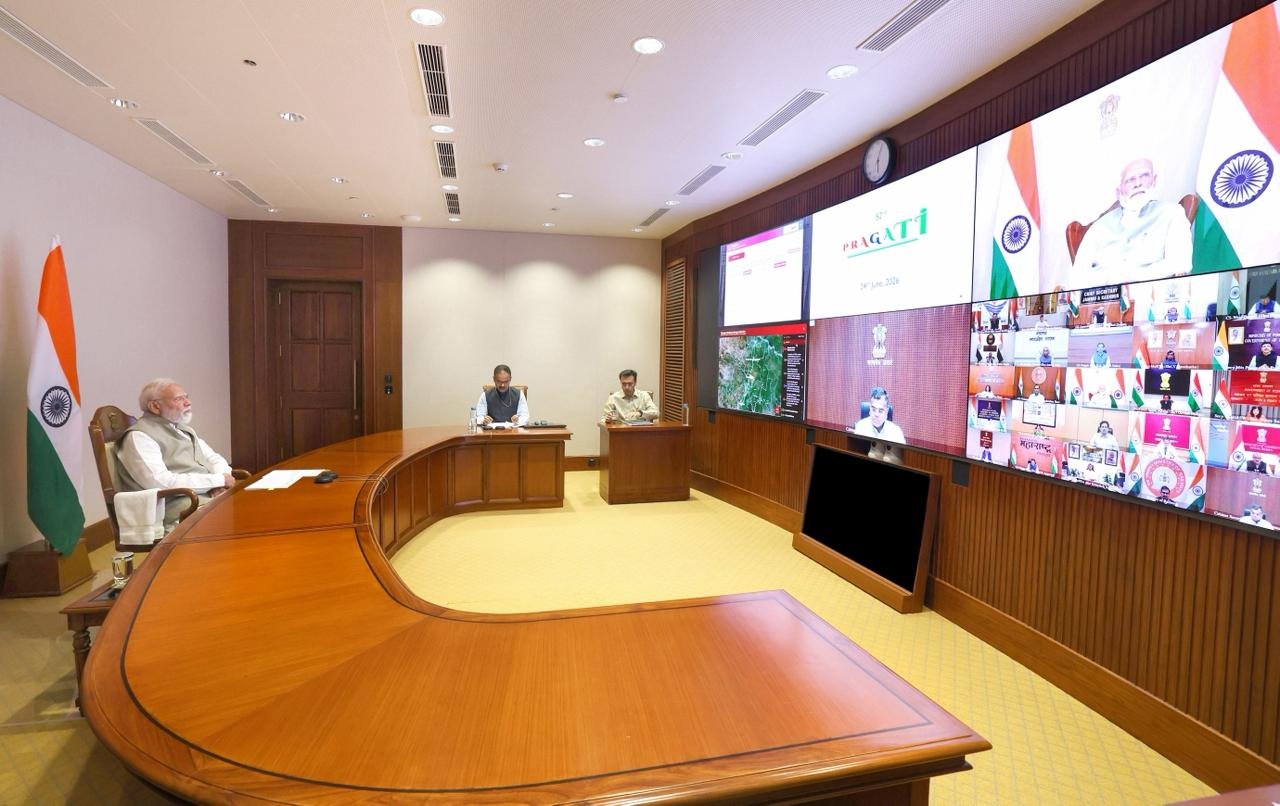

Prime Minister Narendra Modi has directed state governments to immediately implement an integrated digital “e-Zero FIR” system to combat the escalating nationwide epidemic of cyber fraud and sophisticated “digital arrests.” Chairing the 52nd PRAGATI review meeting, Modi stated that the current fragmented response from local police forces often leaves victims running from one department to another while nimble transnational syndicates erase their digital footprints.
The Prime Minister’s directive marks a critical administrative shift in India’s domestic cybersecurity strategy, focusing on eliminating traditional police jurisdictional barriers that slow down active financial investigations. According to official statements from the Prime Minister’s Office, the rise in the organized misuse of mainstream digital platforms to defraud citizens requires a “coordinated, sensitive, and time-bound handling” across state lines.
Dismantling Jurisdictional Barriers via e-Zero FIRs
The centerpiece of the federal intervention is the nationwide expansion of the e-Zero FIR initiative, a digital framework engineered by the Indian Cybercrime Coordination Centre (I4C). Under the current system, victims of online scams face severe bureaucratic delays when attempting to lodge complaints at local police stations, which frequently refuse jurisdiction if the financial crime originated across state borders or via international cloud servers.
An e-Zero FIR automatically converts verified, high-value cyber financial fraud complaints into actionable, borderless first information reports. This allows law enforcement agencies to instantly initiate cross-border investigations without waiting for physical case transfers.
Currently, only nine states have successfully operationalized this digital platform. Taking note of this sluggish adoption, Modi directed senior officials within the Prime Minister’s Office to actively coordinate with each state’s Chief Secretary and Director General of Police (DGP) to fast-track an absolute national rollout. The Prime Minister indicated that he will personally monitor the compliance logs of individual states to ensure that bureaucratic inertia does not continue to shelter active cybercriminals.
Chasing Fast-Vanishing Financial Trails
The policy shift addresses a critical technical vulnerability in India’s current enforcement apparatus: the golden hour of asset recovery. When a citizen falls victim to online stock-trading scams, fake Know-Your-Customer (KYC) updates, or coercive “digital arrest” schemes, the stolen capital is rapidly layered through dozens of corporate mule accounts and unregulated cryptocurrency payment gateways within minutes.
“In cases involving cyber fraud, timely action is crucial to prevent absolute financial loss and restore public confidence,” the Prime Minister observed during the review session.
By utilizing the automated infrastructure of the e-Zero FIR, financial intelligence units and local cyber cells can immediately execute freeze orders on suspect bank accounts before the funds can be siphoned into overseas hawala networks or offshore special economic zones. The administrative delay between a victim reporting a crime and an officer initiating a bank freeze has long been identified by security experts as the single greatest bottleneck impeding asset recovery in India.
Orchestrating Coordinated Institutional Ownership
Beyond legal fast-tracking, the Prime Minister emphasized the immediate need for clear institutional ownership and tighter coordination among three historically disconnected sectors: law enforcement agencies, commercial banking institutions, and mainstream digital service platforms. Historically, private banks and messaging services like Telegram and WhatsApp have operated under disparate compliance timelines, often taking days to respond to formal data requests from police investigators.
The federal directive mandates a unified, multi-modal governance approach to force these stakeholders into real-time operational compliance. Central ministries have been instructed to resolve pending inter-agency technical bottlenecks in a mission-mode manner.
Concurrently, the government is expanding localized public awareness frontlines. The Prime Minister suggested leveraging grass-roots volunteer networks, including NCC cadets and National Youth Corps volunteers, to conduct community-level cyber-hygiene campaigns. This specialized focus on rural districts and senior citizens targets the core demographic currently being systematically swindled of lifelong savings through increasingly complex identity-theft rackets.
As India moves to secure its expanding digital population, the implementation of the e-Zero FIR framework represents a structural recognition that defeating modern online fraud requires an administrative apparatus as borderless and rapid as the internet itself.
Follow for daily updates on cybercrime, corporate fraud, DFIR, hacking, investigations, and digital forensics
