
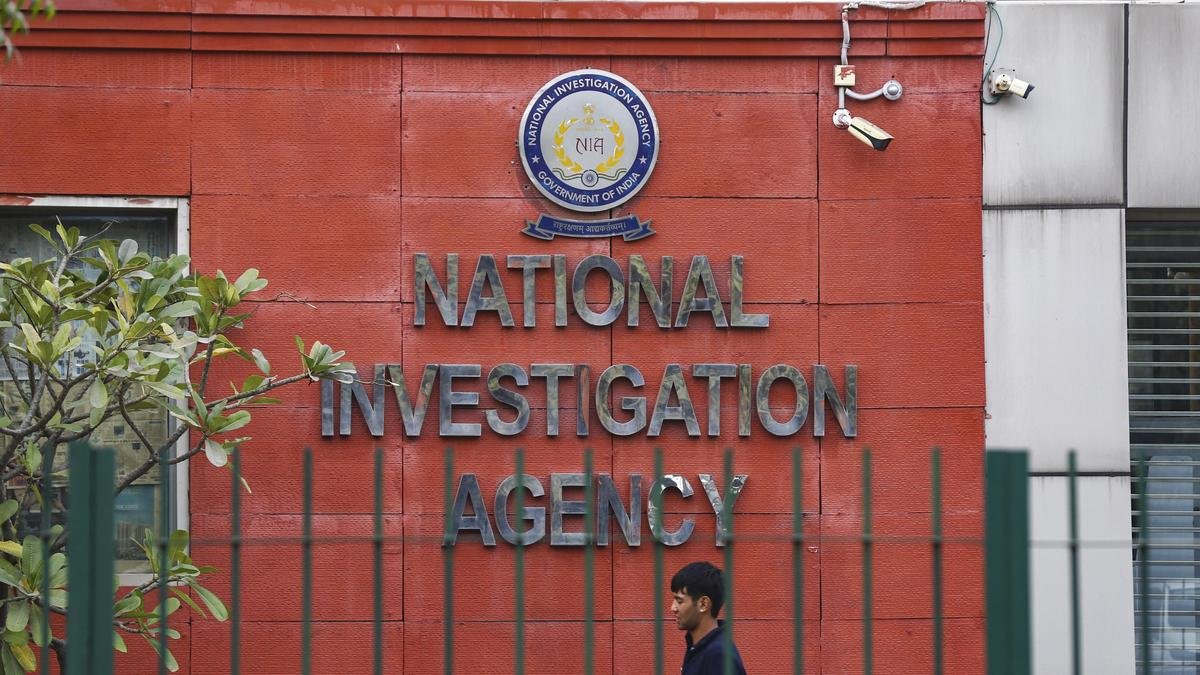
The National Investigation Agency (NIA), in its chargesheet filed in the Red Fort area car blast case in Delhi, has made startling revelations suggesting that the accused misused artificial intelligence (AI) platforms to develop what investigators described as “terror engineering” techniques and to assist in the design and fabrication of improvised explosive devices (IEDs).
AI, YouTube and ‘in‑house engineer’ role
According to the detailed 7,500-page chargesheet submitted before a special court, the entire network operated in a highly structured and coordinated manner, with members allegedly leveraging modern technology to evade detection by security agencies. The investigation also found that the accused attempted to gather information related to explosives and weapon-making through YouTube videos and AI-based search tools.
The key accused in the case, Jasir Bilal Wani, has been described by the agency as the “in-house engineer” of the module, providing technical support to other members of the network. The NIA stated that Wani frequently stayed at the Al Falah University campus in Faridabad during 2024–25, where he allegedly assisted co-conspirators with technical inputs.
FCRF’s Flagship Cyber Law Certification Returns With a New Four-Week Cohort
High‑tech module, AQIS influence and field testing
The agency further claimed that the module was influenced by Ansar Ghazwat-ul-Hind, an offshoot linked to Al-Qaida in the Indian Subcontinent (AQIS). Officials described the group as operating like a “lab-grade” terror cell, with systematic experimentation and testing of explosive devices.
The chargesheet mentions that the accused conducted tests of rocket-based IEDs in the Qazigund forest area of Anantnag in Jammu and Kashmir. Other members of the group, including Dr Umar, Dr Muizzam, and Dr Aadil, were also reportedly involved in these activities, according to the agency.
The NIA also revealed that Dr Umar allegedly provided drones (UAVs), which were intended to be modified for carrying explosives. Investigators believe the drones were part of a larger plan to target security installations after being weaponised.
One of the most significant findings is that the accused used commonly available e-commerce platforms to procure electronic components such as sensors, relay switches, soldering kits, and circuit devices. These items were allegedly used in building IED trigger mechanisms.
Officials stated that the conspiracy involved multiple layers, including financial assistance, technical training, and logistical support, making it a highly organised and complex network. The financial transactions and funding channels are currently under detailed scrutiny.
According to the agency, the vehicle-borne IED used in the blast involved Triacetone Triperoxide (TATP), a highly unstable and dangerous explosive allegedly prepared clandestinely using procured chemical ingredients. The explosion reportedly killed 11 people and injured several others.
Hybrid ‘high‑tech’ terror module and ongoing probe
The NIA further noted that the module was not limited to physical attacks alone but also relied heavily on digital and cyber tools for coordination and planning. Due to this hybrid nature, it has been categorised as a “high-tech terror module.”
Officials said the case reflects a changing pattern of terrorism in which technology and digital platforms are increasingly being exploited for planning and execution, rather than relying solely on traditional methods.
Investigators have intensified interrogation of multiple accused individuals and are working to determine the extent of the group’s international links. Based on digital and financial evidence, more arrests are likely in the coming days.
Security agencies believe that the network has not been fully dismantled and that several associates may still be active in different parts of the country. Surveillance and intelligence operations have therefore been significantly strengthened.
The case has now evolved beyond a single terror incident, highlighting the emerging threat of technologically enabled extremism. Authorities believe that further investigation may reveal deeper layers of the network and additional operatives involved in the conspiracy.
