
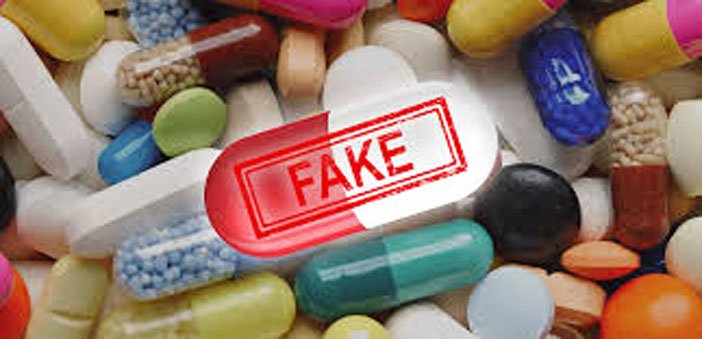
Agra: A massive counterfeit medicine racket allegedly operating across several Indian states has come under the scanner after investigators uncovered digital records from a firm operator’s laptop, exposing what officials describe as a highly organised network involving fake medicines, sample drugs and government-supply stock being sold in the open market using genuine invoices.
Digital Invoice Duplication and Quality Interception
According to officials, a Lucknow-based pharmaceutical firm is suspected of distributing counterfeit medicines in Delhi, Uttar Pradesh and several other states while using authentic billing records to make the supply chain appear legitimate. Preliminary findings suggest that medicines worth nearly ₹500 crore may already have been circulated through the network.
The case surfaced after a medicine sold in Delhi was found to be suspicious during a routine quality check. Authorities sent the sample for laboratory examination, where it was reportedly confirmed to be counterfeit. Following this, investigators began examining the records of the associated pharmaceutical firm.
Initially, the company’s purchase and sales documents appeared normal, and the billing system did not show any obvious irregularities. However, when investigators analysed the operator’s laptop, they allegedly discovered manipulated digital records indicating that the same genuine invoice had been used repeatedly to show supplies to multiple medical agencies.
Multi-District Raids and Warehouse Seizures
Officials say this method enabled counterfeit medicines to be pushed into the legal distribution system without immediately raising suspicion. Since the invoices appeared authentic, retailers and buyers often believed the products were genuine, even though the actual medicines allegedly belonged to the fake or illegal category.
As the scale of the operation became clearer, authorities constituted a special investigation team comprising nearly 30 drug inspectors from multiple districts. During the probe, officials identified 25 firms in Agra that were suspected to be linked to the network.
The special team then carried out coordinated raids on medical stores and warehouses across the city. During the operation, authorities seized large quantities of medicines from at least 15 medical stores, while three establishments were sealed. Officials also reported that several vendors fled during the raids, raising suspicions about their possible involvement in the racket.
Registration Begins for FutureCrime Summit 2026, India’s Largest Cybercrime Conference
Chemical Alteration of Government Hospital Supply
Investigators said the raids led to the recovery of sample medicines and drugs meant exclusively for government hospitals. Packaging recovered during the operation reportedly carried warnings such as “Not for Sale” and “Hospital Supply.” According to officials, these markings were allegedly erased using chemicals before the medicines were sold in the open market at commercial rates.
Authorities also recovered chemicals believed to have been used for removing printed warnings from the packaging. Drug department officials suspect that the operation involved a coordinated commission network including medical representatives, distributors, hawkers and retail sellers.
The investigation further revealed that the accused allegedly manufactured counterfeit medicines in the names of well-known pharmaceutical brands. Officials said the packaging, batch numbers, tablet shapes and printing styles were designed to closely resemble genuine products, making detection extremely difficult for ordinary consumers and, in some cases, even for medical retailers.
Reputed Brand Counterfeiting and Public Safety Risks
According to investigators, the counterfeit products were introduced into the market using genuine-looking paperwork. As the circulation of fake medicines increased, genuine pharmaceutical companies reportedly began noticing a drop in sales and subsequently alerted authorities, leading to further scrutiny.
Officials noted that a similar pattern had emerged in a previous case involving counterfeit medicines worth ₹71 crore that was detected in Agra last year. In that case too, fake medicines resembling products of reputed pharmaceutical companies were allegedly manufactured and distributed through organised supply chains.
Health experts warn that counterfeit medicines pose a serious public health risk in addition to being an economic offence. Since such medicines often do not contain standard chemical compositions, they can damage vital organs such as the liver and kidneys. In many cases, patients fail to recover properly, and prolonged consumption may even reduce the effectiveness of genuine medicines in future treatments.
The drug department has urged consumers to remain cautious while purchasing medicines. Officials advised people to always obtain a proper bill, verify batch numbers on both the packet and invoice, and immediately report any suspicious packaging, poor-quality tablets or irregular product appearance.
Authorities have also issued a public helpline number — 180001805533 — for reporting suspected counterfeit medicines and illegal pharmaceutical sales.
