
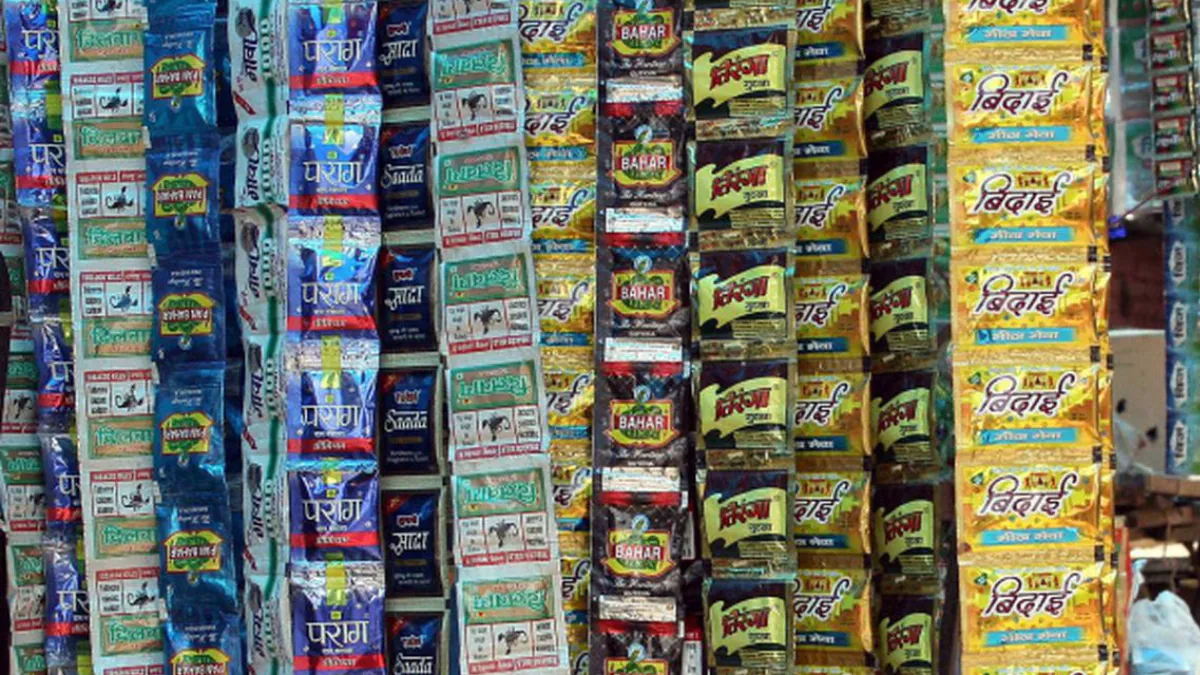
Fourteen years after the government of Madhya Pradesh imposed a comprehensive ban on tobacco-mixed gutkha on April 1, 2012, the ground reality stands in sharp contrast to official regulatory claims. While the restriction was originally enacted to break the lethal combination of tobacco and betel nut to lower oral cancer cases, manufacturing companies quickly circumvented the law by altering their packaging strategy.
Instead of a single pre-mixed packet, companies began distributing pan masala and pure tobacco in two separate pouches sold as a combination, leaving the final toxic mixture unchanged on the ground. Data from Jawaharlal Nehru Cancer Hospital in Bhopal reveals that rather than declining, oral cancer cases have risen by 42.37 percent during this period, indicating the ban has had minimal structural impact.
Registration Begins for FutureCrime Summit 2026, India’s Largest Cybercrime Conference
Manufacturers Exploit Legal Loopholes via Twin Pouches
Under food safety and standard authority regulations, mixing tobacco or nicotine directly into a food product is strictly prohibited. To bypass this legal hurdle, manufacturers exploited definitions by splitting the product into a twin-pouch system. Because the separate packets are technically distinct items, they fall outside the category of a pre-mixed banned substance, even though consumers regularly purchase both, mix them on their palms, and consume them together.
The chemical components of the product remain identically hazardous. Prior to 2012, tobacco and nicotine were mixed inside a single pouch, whereas they are now packaged as pure substances in an independent sachet. Betel nut, lime, and catechu continue to be served in the secondary pouch, supplemented by artificial flavorings, chemical fragrances, and synthetic preservatives just as before the ban.
Unregulated Proportions Maximize Health Vulnerabilities
Medical experts indicate that the shift to separate pouches has actually exacerbated health risks by removing standardized manufacturing proportions. Dr. Vinay Kumar, Head of Department for Oncosurgery at AIIMS Bhopal, stated that while older gutkha packets contained fixed, measured proportions of tobacco, the current twin-pouch system allows users to mix tobacco according to personal preference. This self-mixing often results in higher consumption volumes, making it substantially more hazardous than its pre-ban iteration.
According to oncological assessments, this mixture inflicts damage on three distinct levels. First, continuous friction from betel nut induces Oral Submucous Fibrosis, causing the inner lining of the mouth to harden and gradually restricting the patient’s ability to open their mouth, which doctors classify as a primary stage of cancer. Second, harmful nitrosamines present in the tobacco directly damage the DNA of cheek cells, initiating tumor formation. Third, the highly alkaline slaked lime peels back the protective layers of the oral skin, enabling rapid absorption of nicotine and carcinogenic chemicals directly into the bloodstream, which dramatically intensifies addiction.
Hospital Records Map Steady Increase in Patient Volume
Annual statistical data recorded at Jawaharlal Nehru Cancer Hospital tracks a steady progression in oral cancer diagnoses since the implementation of the ban. In 2012, the hospital registered 1,836 cases, followed by 1,801 cases in 2013, 1,777 in 2014, 1,792 in 2015, and 1,895 in 2016. A significant upward shift became apparent in subsequent years, with cases reaching 1,904 in 2017, 2,273 in 2018, and peaking for that period at 2,411 in 2019.
Following a slight drop to 2,118 cases during 2020, the volume climbed back to 2,519 in 2021, 2,492 in 2022, and 2,566 in 2023. The highest numbers were recorded in recent years, with 2,743 cases in 2024 and 2,614 cases in 2025. Medical authorities have issued warnings that individuals experiencing a reduction in their ability to open their mouth must seek immediate clinical evaluation, as early intervention remains critical to stopping the condition from transitioning into a terminal malignancy.
