

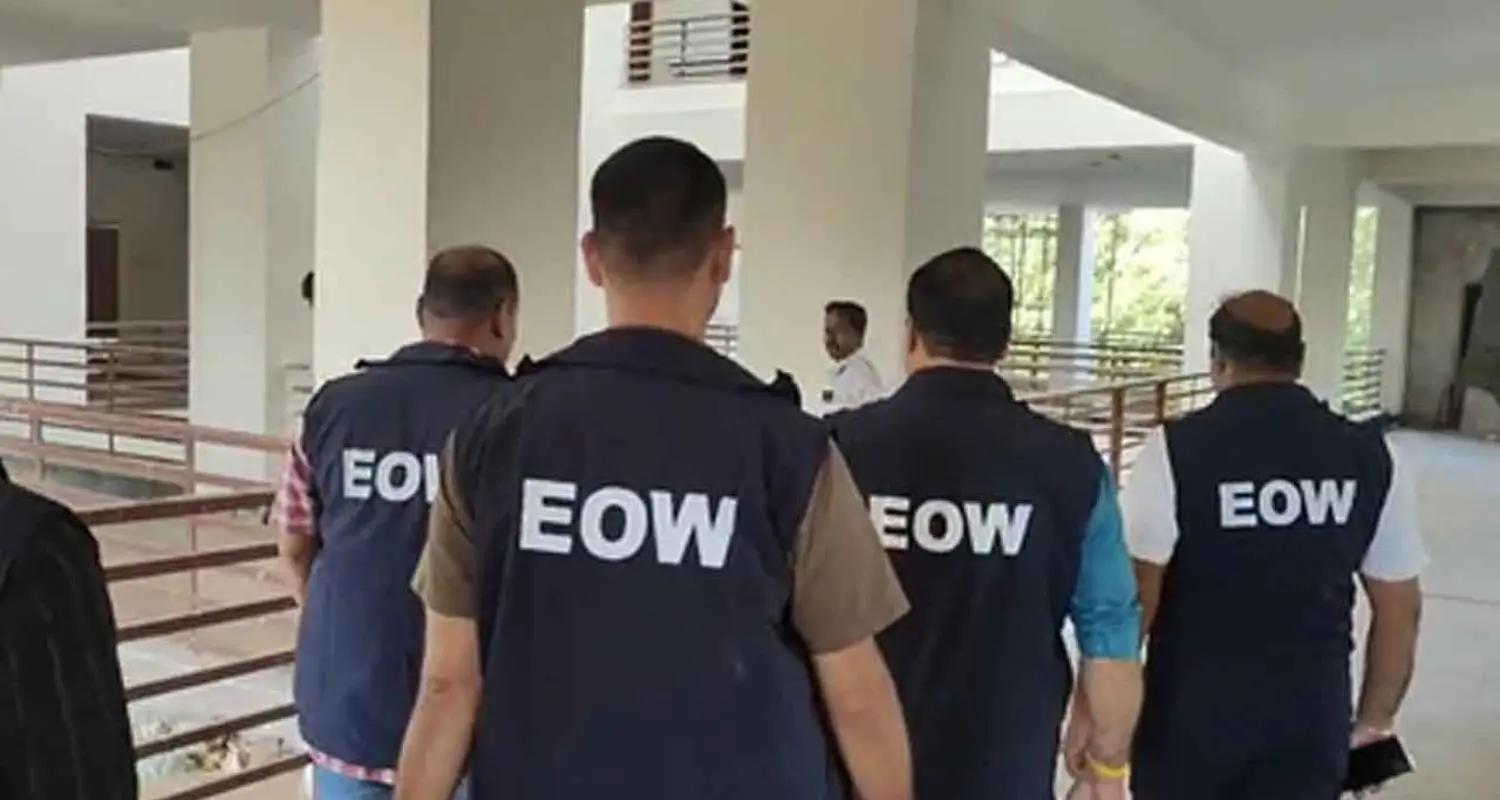
The Economic Offences Wing (EOW) has arrested Rohit Kumar Upadhyay, the alleged mastermind and director of a large-scale investment fraud involving nearly ₹14 crore, from Kharagpur in West Bengal. The criminal case against him had been registered in 2017 at the Alambagh police station in Lucknow under multiple legal provisions, including criminal breach of trust, cheating, forgery, and criminal conspiracy. Having successfully evaded arrest and remained absconding for several years, the suspect was tracked down as part of an aggressive multi-state operation targeting wanted economic offenders.
Registration Begins for FutureCrime Summit 2026, India’s Largest Cybercrime Conference
Interstate Mobilization of Unregulated Schemes
Investigations revealed that the fraudulent network operated across multiple states, primarily targeting unsuspecting retail investors in major commercial hubs such as Delhi, Haryana, Kanpur, and Basti. Upadhyay, a native of Khairiya Bazaar in Uttar Pradesh’s Basti district, managed the underground network by floating entities registered under the names M/s Pears Allied Corporation Limited and M/s DPears Allied Corporation Limited. The firms established physical branch offices across several regional districts to project corporate legitimacy and build trust among the local populations.
The group aggressively mobilized large public deposits by marketing structured financial products branded as Recurring Deposits and Fixed Deposits. Promoters assured investors that their capital contributions would double or triple within an exceptionally short timeframe. However, a detailed regulatory review by central investigators confirmed that these financial operations were conducted without the mandatory registration or statutory approvals required from the Reserve Bank of India (RBI) to operate as a Non-Banking Financial Company.
Structured Extraction Cycle and Sudden Blackout
To neutralize suspicion and bypass early consumer hesitation, the syndicate executed a carefully timed multi-stage extraction process. In the initial phase of deployment, the directors utilized fabricated bonds, counterfeit receipts, and forged official documents to validate their collection activity. The operators paid out regular, low-value returns to early participants, effectively using word-of-mouth social engineering to attract a secondary, much larger wave of institutional and individual depositors.
Once a substantial pool of capital had been successfully siphoned into their accounts, the organization executed a sudden operational blackout. Branches in Lucknow, Bijnor, and various neighboring districts were abruptly locked down overnight, and the executive management team immediately went underground with the public funds. When depositors later tried to visit the regional headquarters to claim their matured refunds, they encountered abandoned facilities, disconnected support helplines, and evasive corporate responses, prompting a cascade of official complaints across various police stations.
Legal Action and Forensic Financial Mapping
The scale of the multi-state operation widened after the EOW coordinated with neighboring border states, establishing that Upadhyay is similarly wanted by the Bihar Police for executing identical financial scams. Specialized asset-tracking teams are currently interrogating the suspect to trace the downstream flow of the siphoned capital and map out the exact routing trails used to layer the stolen funds. Investigators are also conducting data extraction on recovered digital ledgers and corporate registries to isolate secondary accomplices who actively facilitated collection logistics.
National financial compliance experts warn that citizens must exercise absolute caution when approached by private entities promising guaranteed high-yield returns that deviate sharply from standard market rates. Legitimate wealth generation schemes are legally bound to display active registration profiles on verified central databases managed by the RBI or the Securities and Exchange Board of India. Regulatory agencies continue to urge the public to independently audit any corporate offering prior to executing capital transfers, and to instantly flag unverified non-banking entities to state enforcement cells.
