

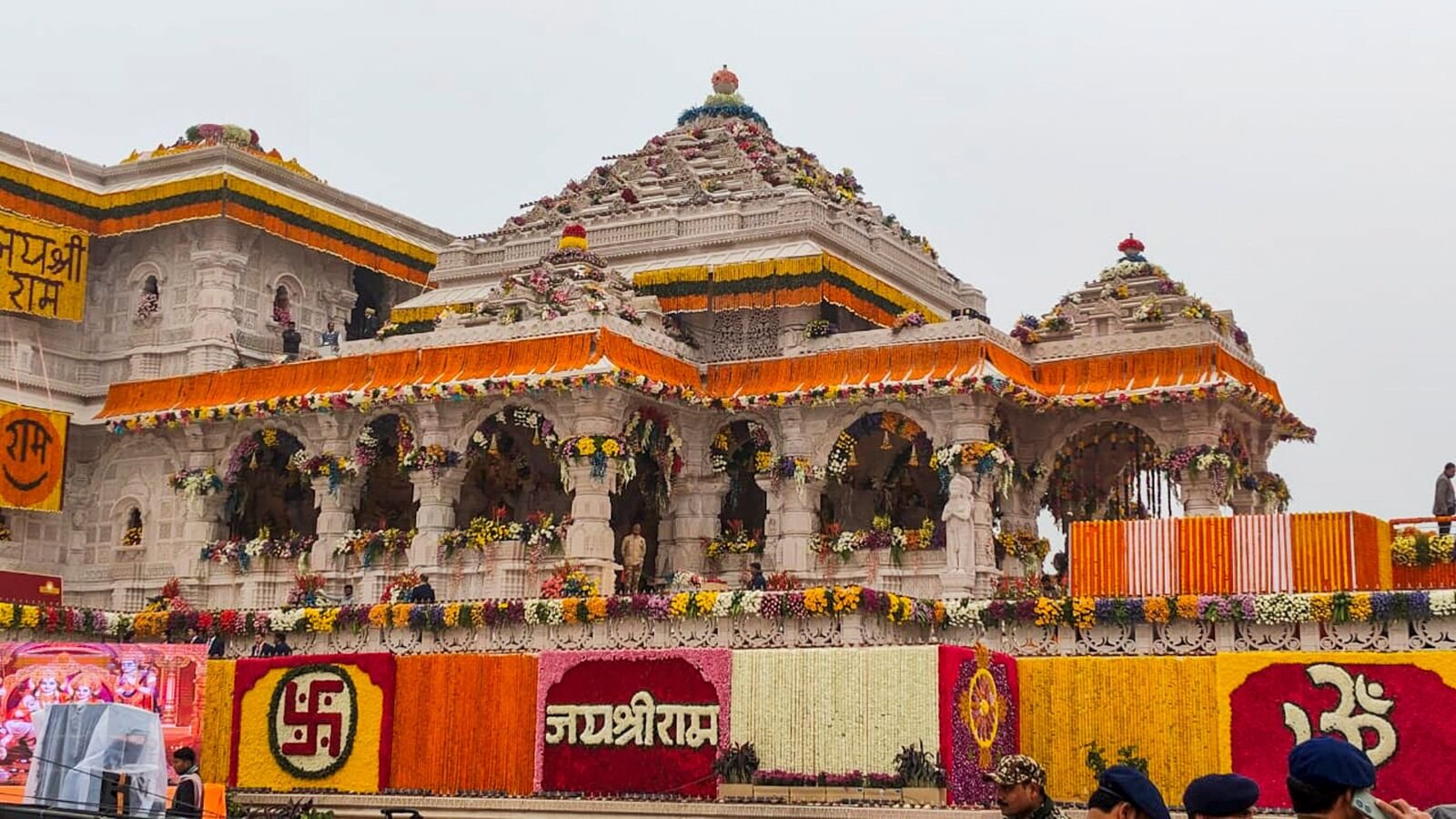
A special anti-corruption court in Ayodhya has remanded all eight individuals arrested in connection with the alleged embezzlement of cash donations at the Ram Temple to judicial custody until Monday, June 29, 2026. The legal enforcement action follows an exhaustive multi-day preliminary inquiry conducted by a high-level government-appointed Special Investigation Team (SIT), which exposed massive systemic regularities in the handling of cash offerings. Security was significantly tightened around the court complex as judicial magistrates officially accepted the case portfolios and ordered the immediate confinement of the suspects to local transit facilities.
Registration Begins for FutureCrime Summit 2026, India’s Largest Cybercrime Conference
Deep Financial Extraction and Substantial Cash Recoveries
The ongoing financial investigation unraveled a massive network of cash misappropriation inside the temple’s central counting house. During targeted raids, investigators recovered a cumulative total of ₹79,85,893 in cash directly linked to the siphoned temple donations. A detailed forensic breakdown confirmed that these large cash stacks were seized from seven of the accused individuals. Conversely, no cash recovery was made from the eighth suspect, Subhash Srivastava, a retired banking professional who was hired to supervise the entire cash-counting workforce.
The technical investigation reveals that the siphoning pipeline operated primarily through structural vulnerabilities in the outsourced cash management system. Six of the arrested individuals were employees of an agency outsourced by commercial banks to handle, count, and document the immense daily cash offerings delivered by millions of devotees. The specific identities of the processing workers remanded to custody include Avinash Shukla, Anukalp Mishra, Lavkush Mishra, Karunesh Pandey, Manish Yadav, and Ramashankar Mishra. Investigators allege that these operators systematically pocketed distinct transaction envelopes, a claim further validated by central CCTV footage that reportedly captured multiple instances of physical theft.
Operational Shields and Invocations of the Anti-Corruption Act
A major focal point of the prosecution centers on Ramashankar Yadav, popularly known as “Tinnu,” who is identified as a long-term personal driver and close aide of the temple trust’s general secretary, Champat Rai. Investigators believe Yadav used his proximity to senior administration networks to establish an influential shield, facilitating the appointment of his relatives to the highly restricted cash-counting rooms without proper background verification. Although none of the currently detained suspects are direct government employees, the court has explicitly permitted the invocation of Section 13(1)(a) of the Prevention of Corruption Act alongside sections of the Bharatiya Nyaya Sanhita (BNS) governing criminal breach of trust, theft, and conspiracy.
The statutory inclusion of anti-corruption clauses indicates that the state plans to significantly widen the scope of its investigation into broader institutional collusion. The original FIR was lodged on Thursday by Krishna Mohan, an executive member of the Shri Ram Janmabhoomi Teerth Kshetra Trust, following the formal recommendations of the SIT. The three-member panel, which included Lucknow Divisional Commissioner Vijay Vishwas Pant and Lucknow Range Inspector-General Kiran S, spent days auditing collection vaults, access registries, and digital surveillance feeds to establish the foundational parameters of the conspiracy.
Reports of Resignations Amid Intense Systemic Fallout
The exposure of the internal cash-counting theft has sent massive ripples through the highest levels of the temple’s administrative leadership. Unconfirmed reports and institutional sources state that the trust’s General Secretary, Champat Rai, and prominent trust member Anil Mishra have offered their formal resignations from their respective administrative positions. Sources close to the matter suggest that Rai reportedly communicated his intent to step down to the trust chairman to safeguard the public sanctity of the institution and ensure an unhindered, transparent investigation, while continuously denying any personal wrongdoing or direct involvement in the fraud.
However, administrative officials have urged caution regarding these leadership developments, as the trust’s executive committee has not yet formally ratified or officially confirmed the structural departures. Senior political leadership has responded aggressively to the unfolding judicial findings, promising uncompromised enforcement against any individual who exploits public faith for private financial gain. As the first phase of judicial custody concludes on Monday, police units are expected to petition the anti-corruption court for extended custodial remand to aggressively trace secondary asset trails, map out downstream digital fund routing, and execute additional recovery sweeps across suspected storage sites.
