

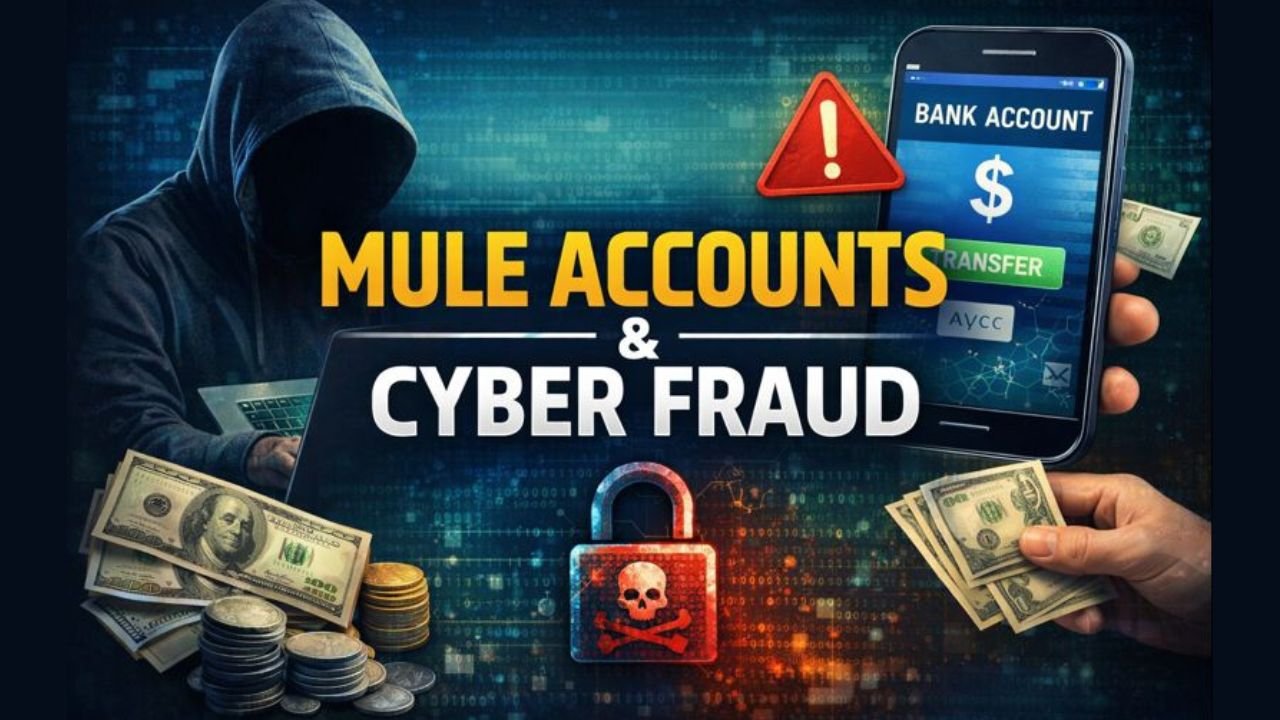

Kanpur | In a major breakthrough against cyber-enabled financial crime, police in Kanpur have busted a mule account network allegedly involved in supplying bank accounts to cyber fraudsters and hawala operators. Acting on a tip-off, the Beken Ganj police station team and cyber cell jointly arrested six accused, including the alleged kingpin of the gang.
According to police officials, the arrested individuals include Javed (identified as the gang leader), Deepak Sharma, Prince Gautam, Yuvraj, Mohammad Asad, and Lakshyadeep. The group is accused of running a systematic racket that targeted ordinary citizens by promising bank loans and financial benefits, only to later misuse their identities for opening bank accounts.
FCRF Academy Launches Premier Anti-Money Laundering Certification Program
Police said the gang operated by collecting personal documents from individuals under the pretext of helping them secure loans. Once accounts were opened, the accused allegedly retained full control over banking instruments such as passbooks, ATM cards, and registered mobile SIMs linked to those accounts. The original account holders were effectively cut off from access.
Investigations have revealed that the gang opened around 25 bank accounts over the past six months. These accounts were later sold to cyber fraud networks and hawala operators at a rate of approximately ₹7,000 per account. Police believe these accounts were then used for online scams, illegal money transfers, and laundering of proceeds of crime.
Officials stated that the racket was carefully structured to avoid suspicion. While some members worked as delivery agents, others were employed in private jobs. This helped them maintain a low profile while continuing financial fraud activities. Authorities believe this setup was deliberately designed to distance the main operators from direct involvement.
During interrogation, the accused reportedly admitted that they provided bank accounts to cyber fraudsters as well as individuals involved in hawala transactions. These accounts were used to route large volumes of illegal funds, making it difficult for enforcement agencies to trace the original source of money.
Police have recovered five bank passbooks belonging to different banks, along with several other financial documents from the accused. Authorities are now examining transaction records, account opening forms, and linked mobile numbers to trace the full extent of the network.
Officials also confirmed that bank employees and account holders whose identities were used may be questioned as part of the investigation. If any involvement of bank staff is established, strict action will be taken against them.
Investigators believe that the network may not be limited to Kanpur alone and could have connections across multiple districts and possibly other states. Cyber cell teams are currently tracking digital transaction trails and financial flows linked to the seized accounts.
Cyber experts say mule accounts have become a critical backbone of modern cybercrime operations. These accounts allow fraudsters to receive and transfer stolen money without revealing their real identities, making detection and recovery extremely challenging.
Renowned cyber crime expert and former IPS officer Prof. Triveni Singh said that such networks have evolved into organized criminal systems. According to him, “Mule accounts now form the backbone of cyber fraud and hawala-linked money laundering. Criminals lure individuals with promises of loans or benefits, open accounts in their names, and later use them as tools for large-scale illegal financial transactions.”
Police officials further noted that since the offences fall under categories carrying less than seven years of imprisonment, the arrested accused were released on personal bonds after initial legal procedures. However, the investigation remains active, and further arrests cannot be ruled out.
Authorities are now working to map the entire network and identify additional beneficiaries and handlers involved in the racket. The cyber cell expects more links to emerge as digital forensic analysis of banking and communication records progresses.
Follow for daily updates on cybercrime, corporate fraud, DFIR, hacking, investigations, and digital forensics
