

As financial crime grows more sophisticated and regulators place greater emphasis on compliance controls, reporting systems, and risk-based governance, training providers have begun to reposition professional education around these shifting demands. The Future Crime Research Foundation, a non-profit think tank better known in cyber policy and law enforcement circles, is now extending that strategy further into the compliance domain.
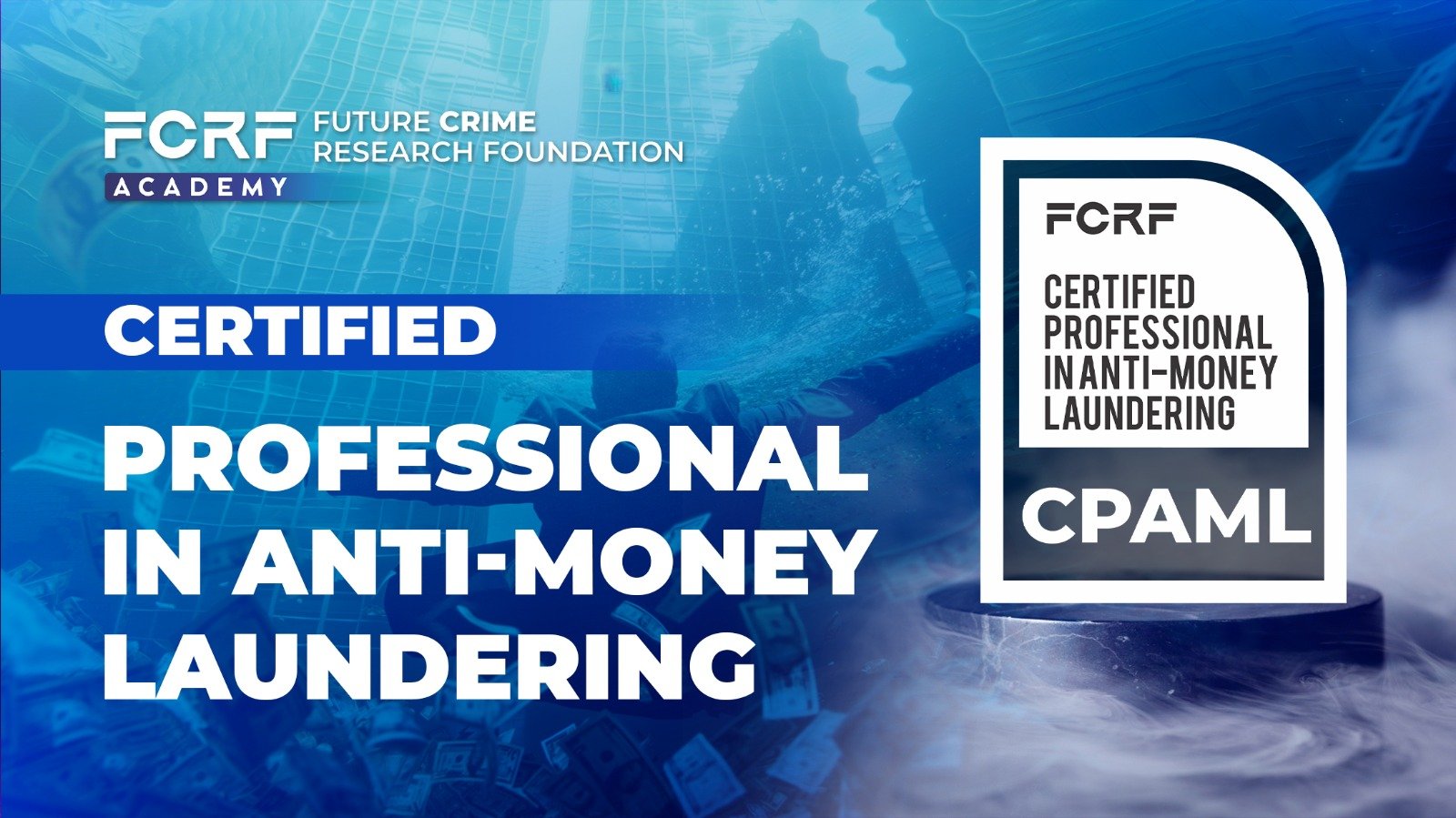
Its training vertical, FCRF Academy, will begin the Certified Professional in Anti-Money Laundering (CPAML) program on May 16, 2026, offering what it describes as a practitioner-led certification for professionals working across compliance, banking, legal practice, investigations, audit, and risk functions. The academy says the upcoming cohort will have limited seats, a framing that signals both the selective positioning of the course and the growing commercial and professional interest in anti-money laundering expertise. Interested participants can click here to register for the Certified Professional in Anti-Money Laundering (CPAML) program.
The launch comes at a moment when anti-money laundering compliance is no longer treated as a narrow back-office requirement. For banks, fintech firms, insurers, investigators, and legal advisers, AML has become a central part of institutional governance, blending legal interpretation, regulatory reporting, technology systems, and operational controls. That shift has created a market for short-format, executive-style programs that promise practical fluency rather than purely theoretical instruction.
A New Credential for a Changing Compliance Landscape
The new program is being introduced as a 4-week certification designed around the Indian regulatory and enforcement environment. According to FCRF Academy, the curriculum will cover the legal and operational architecture of anti-money laundering compliance, including the Prevention of Money Laundering Act, KYC and due diligence obligations, beneficial ownership, sanctions and PEP screening, transaction monitoring, suspicious transaction reporting, and emerging financial crime risks such as digital laundering and virtual assets.
That breadth reflects how the compliance profession itself has changed. AML work today increasingly spans not just banks and traditional financial institutions, but also payment systems, fintech platforms, corporate investigations, forensic audit teams, and legal advisory practices. Lawyers, in particular, are being drawn more directly into this space as regulatory disputes, enforcement exposure, internal investigations, and documentation burdens expand.
FCRF Academy appears to be positioning the program accordingly: not as a specialist course for one narrow category of employee, but as a wider professional credential for those who need working knowledge of how modern financial crime compliance functions inside institutions. In that sense, the course is less about rote regulatory familiarization and more about preparing participants to understand the mechanics of detection, reporting, escalation, and risk response.

Built on a Track Record in Niche Professional Certification
The launch also draws on a pattern FCRF Academy has been building over the past several program cycles. The academy has sought to establish itself not simply as a general training platform, but as a provider of niche certifications at the intersection of cybersecurity, governance, law, and public-sector capacity building.
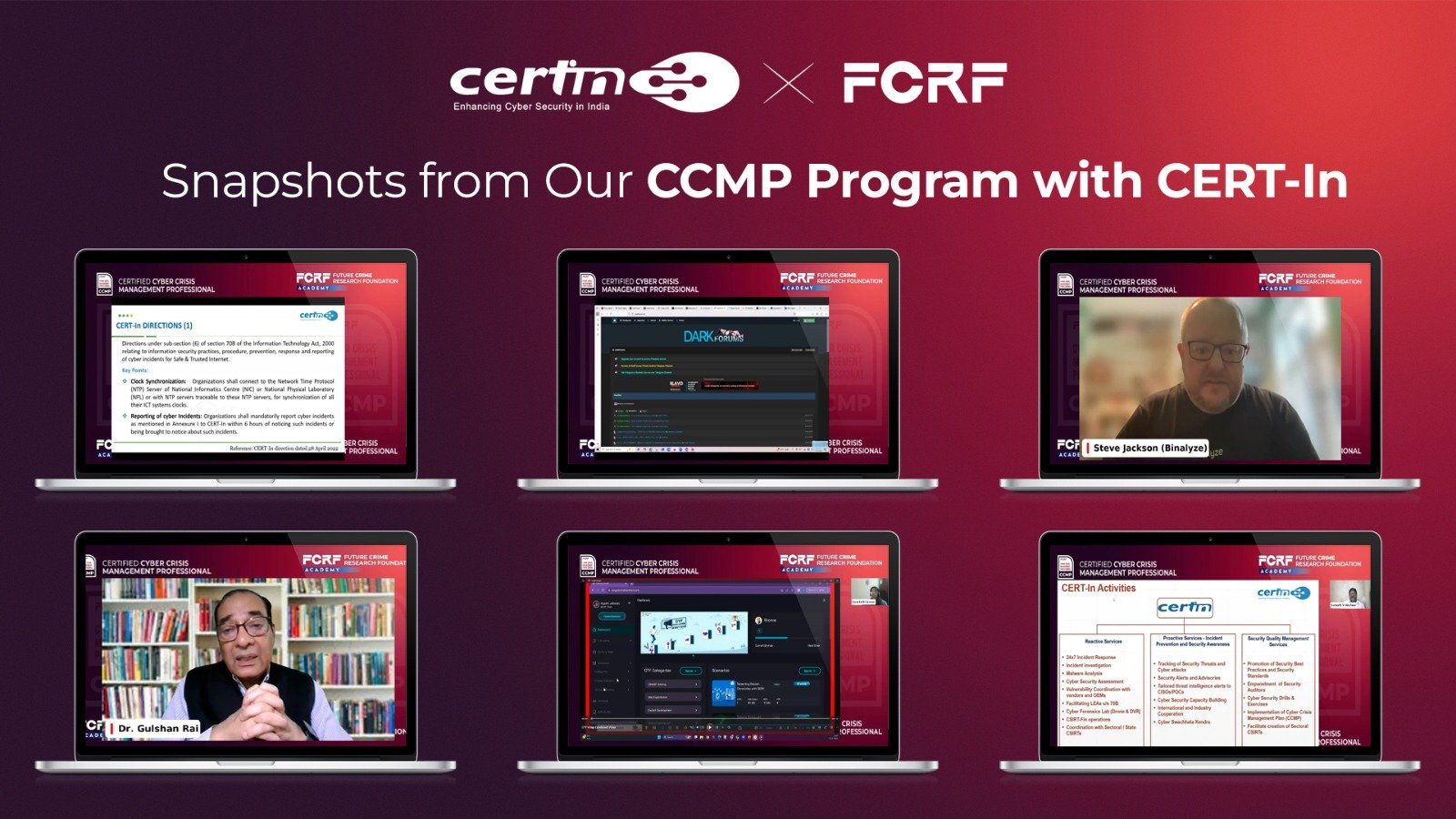
Among its earlier offerings was the Certified Cyber Crisis Management Professional (CCMP), which was being conducted in collaboration with CERT-In. That program helped define the academy’s model: practitioner-led, regulatory-facing, and designed for professionals navigating institutional risk environments. It was followed by the Certified Data Protection Officer (CDPO) program, which extended the academy’s footprint into privacy and compliance at a time when conversations around India’s digital governance architecture were accelerating.
Taken together, those offerings have given FCRF Academy something like a narrative arc. First came cybersecurity and crisis management, then data protection and privacy governance, and now anti-money laundering compliance. Each program has occupied a space where regulation, operational readiness, and professional accountability overlap. The academy’s argument, implicit in this progression, is that the future of executive education lies in specialized domains where law, technology, and governance increasingly converge.
That institutional track record is likely to be central to how the CPAML program is received. In a crowded certification market, past delivery often matters as much as curriculum design. By linking the new course to earlier programs such as CCMP and CDPO, FCRF Academy is attempting to present CPAML not as a one-off addition, but as the next step in a broader compliance and governance portfolio.
Why AML Has Become a Career Priority
The rise of anti-money laundering training is closely tied to the expansion of compliance itself as a career track. What was once treated as a technical or procedural requirement is now being understood as a strategic institutional function. Suspicious transaction reporting, customer due diligence, sanctions screening, onboarding controls, and beneficial ownership checks are no longer peripheral tasks; they are increasingly bound up with enterprise risk, reputation, and regulator scrutiny.
That evolution has widened the field of people for whom AML knowledge is becoming professionally valuable. Compliance officers need it. So do banking professionals, internal auditors, investigators, and lawyers whose work touches financial regulation, white-collar crime, or institutional advisory. In many organizations, the lines between legal risk, operational compliance, and financial crime monitoring are becoming more porous, and that has increased demand for professionals who can move across those categories with confidence.
For lawyers, the appeal of such a program lies in part in the increasing practical relevance of compliance literacy. Corporate legal teams, independent practitioners, and dispute lawyers are now dealing more frequently with questions involving regulatory documentation, liability frameworks, internal reporting obligations, and enforcement-adjacent fact patterns. A course like CPAML is therefore being pitched not simply as a technical add-on, but as a meaningful professional differentiator for anyone working near regulated sectors.
The broader compliance ecosystem has also matured. Institutions no longer look only for academic familiarity with laws; they increasingly value professionals who understand implementation. That includes how controls are built, how risks are classified, how alerts are escalated, and how documentation stands up under scrutiny. This is the space FCRF Academy appears to be targeting.
An Expanding Academy, and a Sharper Focus on Compliance
The introduction of CPAML also says something about where FCRF Academy sees future demand. The academy has long operated in spaces adjacent to law enforcement, cyber policy, governance, and digital risk. With this new certification, it is moving more explicitly into financial compliance and regulatory preparedness, two areas that have become especially relevant as India’s financial system grows more digitized and more closely monitored.
The academy is presenting the course as a premier certification in the AML space, an expression that is as much about branding as it is about curriculum. But the strategic logic is evident. By offering a structured program beginning May 16, 2026, and by emphasizing limited seats, FCRF Academy is attempting to create urgency around a field that is rapidly gaining institutional significance.
The timing is notable. Across banking, fintech, corporate compliance, and legal services, anti-money laundering is increasingly treated as a specialized competency rather than a secondary procedural obligation. Training programs that can claim practical relevance, institutional credibility, and a track record in adjacent fields are likely to attract attention.
For FCRF Academy, CPAML is not merely another course launch. It is an effort to consolidate its identity as a provider of regulatory and risk-oriented professional education. And for professionals in compliance and law, the program is being framed as more than a credential. It is being presented as an entry point into one of the most consequential and fast-evolving domains in modern governance. Interested participants can click here to register for the Certified Professional in Anti-Money Laundering (CPAML) program.
Follow for daily updates on cybercrime, corporate fraud, DFIR, hacking, investigations, and digital forensics
