

A high-profile property investment fraud case in the United Kingdom has underscored the growing role of digital forensics in financial crime prosecutions, after electronic evidence recovered from an iPhone and a damaged MacBook helped secure the conviction of Jason Cunningham. Cunningham, 39, of Cardigan, Wales, was found guilty at Reading Crown Court of defrauding property investors and landlords of more than £113,000, roughly ₹1.3 crore, through forged contracts and false business representations, following a nine-week trial. He was sentenced to four and a half years in prison, with confiscation proceedings under the Proceeds of Crime Act still ongoing.
A Legitimate Business Model Turned Into a Fraud Vehicle
According to investigators, Cunningham operated multiple businesses under the “rent-to-rent” property model, a legitimate practice in which properties are leased from landlords and then sublet, often as houses in multiple occupation. Prosecutors alleged he exploited this structure over roughly three and a half years to charge at least 15 customers non-refundable “sourcing” fees for property deals that repeatedly collapsed, refusing to issue refunds when investors demanded their money back.
To sustain investor confidence, Cunningham projected himself as a highly successful entrepreneur, reportedly styling himself as a jet-setting multi-millionaire with regular trips to Dubai, leased Lamborghinis, and stays in five-star hotels. Investigators noted this was not his first brush with the law either; he had previously been convicted of unfair trading in 2015, a history that added weight to the prosecution’s case that his image of legitimate success was manufactured rather than earned.
How a Broken Laptop Still Yielded a Full Digital Trail
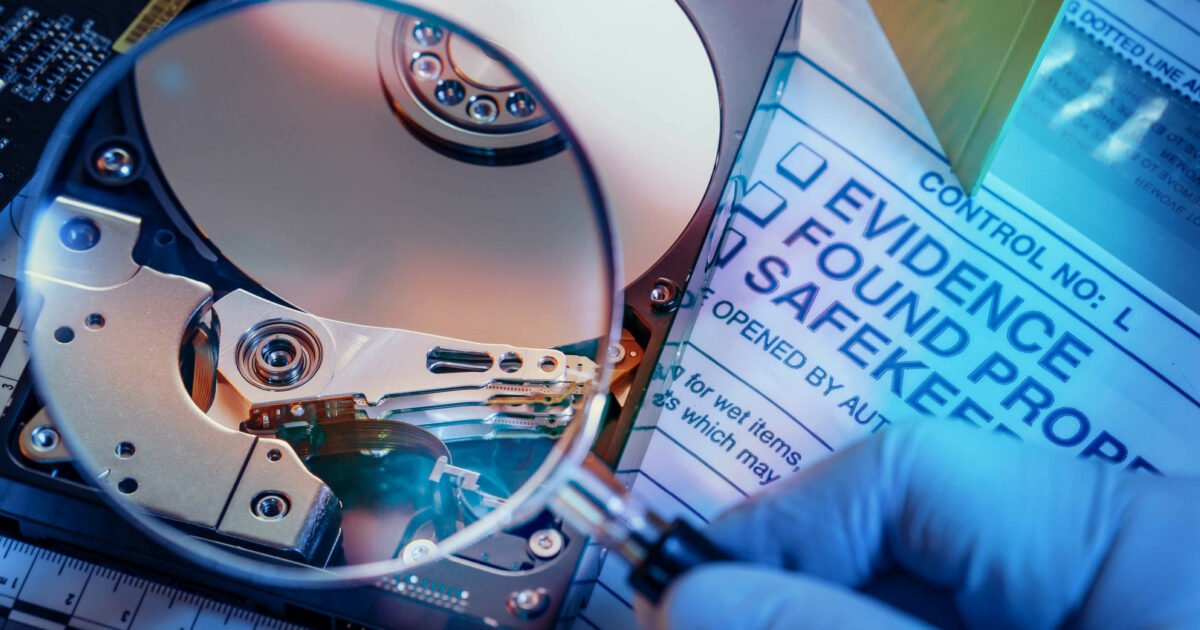
Following his arrest, forensic specialists, working with digital forensics firm Belkasoft, examined an iPhone and the damaged MacBook seized during the investigation. Because the MacBook’s display and keyboard were non-functional, investigators connected the device to an external monitor and keyboard through a powered docking station before creating a complete forensic backup, while the iPhone was separately acquired through a secure forensic image, allowing experts to analyse data from both devices in tandem.
Analysts then conducted an extensive review of WhatsApp messages, iMessages, SMS records, emails and documents, cross-referencing the recovered communications and contractual paperwork against banking records and witness statements. Mark Morris, a digital forensic expert who worked on the case, said Cunningham had scammed both landlords and tenants with forged documents, and would attempt to play victims off against each other or threaten litigation whenever challenged. The digital evidence revealed significant inconsistencies between the documents Cunningham presented and the actual sequence of events, undermining the defence’s argument that he was simply a successful businessman with no motive to defraud anyone.
A Verdict Built on Financial Flow Analysis
During the trial, prosecutors presented digital documents, chat records, photographs and financial flow analyses to a jury, alongside testimony from more than 30 witnesses, ultimately securing Cunningham’s conviction on two counts of fraudulent trading and five counts of using a false instrument. Investigators have already recovered more than £100,000, roughly ₹1.15 crore, from identified bank accounts, with proceedings continuing to trace additional suspected proceeds of crime. West Berkshire Council officials said the 15 victims in the case suffered significant financial harm and stress, with some having paid thousands of pounds for properties that never materialised.
Prof. Triveni Singh, the former IPS officer and cybercrime specialist, said digital forensics has evolved from a supporting investigative tool into one of the most critical sources of evidence in complex financial crime cases. He noted that the scientific examination of smartphones, laptops, cloud data and banking trails allows investigators to reconstruct fraudulent activity with a high degree of accuracy, and pointed to the growing role of AI-powered forensic tools, capable of describing images, extracting text from scanned documents and transcribing audio and video, in helping investigators process the increasingly massive volumes of digital evidence involved in modern financial fraud investigations.
Follow for daily updates on cybercrime, corporate fraud, DFIR, hacking, investigations, and digital forensics
