
Mumbai. India’s entertainment industry has once again been drawn into a high-profile copyright controversy after producer Firoz Nadiadwala filed a police complaint that has revived long-standing disputes over the ownership of remake rights linked to the iconic comedy franchise ‘Hera Pheri’. The case is connected to the Malayalam film ‘Ramji Rao Speaking’, which served as the inspiration for the Bollywood hit.
Old Contracts, New Firestorm
According to official information, the complaint has been registered at a Mumbai police station and names two individuals in connection with allegations of cheating and defamation. The FIR claims that multiple transactions involving the remake rights of the original 1989 Malayalam film created ambiguity over the chain of ownership across different entities over time.
Industry accounts suggest that the original Malayalam film was produced in 1989 under a production banner, while its remake rights were later transferred through different companies in the early 1990s. In 2000, Firoz Nadiadwala acquired these rights, which he states legally enabled him to produce ‘Hera Pheri’ and its sequel ‘Phir Hera Pheri’.
FCRF Academy Launches Premier Anti-Money Laundering Certification Program
FIR Puts Remake Rights Under the Scanner
The franchise went on to become one of the most successful comedy series in Indian cinema history, achieving strong commercial performance and long-lasting cultural impact. However, renewed claims in recent years have raised questions about the validity of the original agreements and whether all licensing conditions were properly maintained throughout the transfer process.
The complainant has also alleged that attempts were made in 2000 to obstruct the film’s release, including pressure tactics and financial demands routed through intermediaries. He has further stated that the situation at the time became serious enough to require legal intervention.
In addition, the dispute has resurfaced through notices and petitions filed in various courts over the past few years, bringing the matter back into active legal discussion. The producer has rejected these newer claims, describing them as baseless and financially motivated.
Hera Pheri 3 Faces Fresh Uncertainty
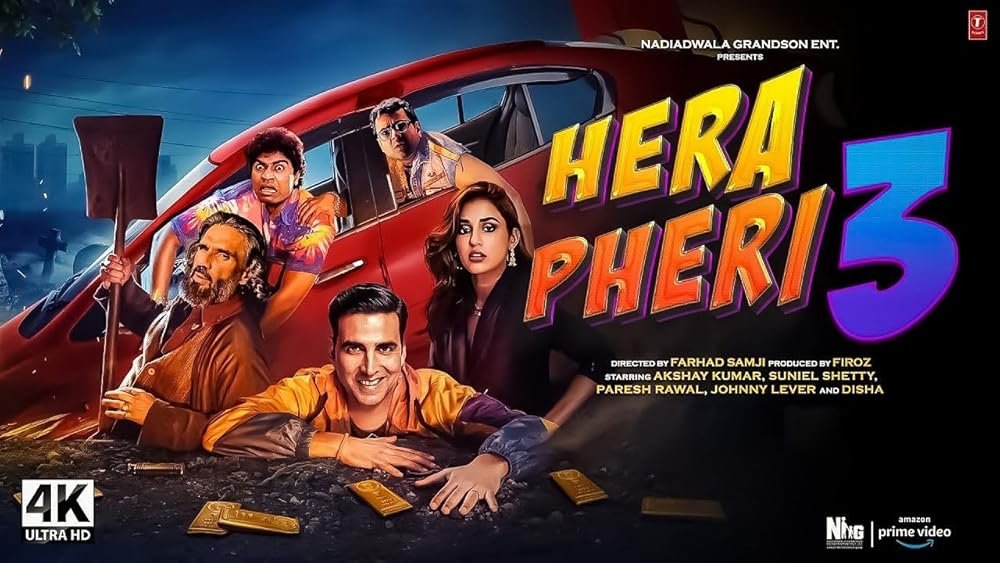
The controversy has also created uncertainty about future projects in the franchise, including the long-awaited ‘Hera Pheri 3’. Industry observers believe that clarity on intellectual property ownership will be essential before any new production decisions can move forward.
At present, representatives from the parties involved have largely avoided issuing detailed public statements. However, some have confirmed continued cooperation with authorities as the investigation progresses. The matter remains under legal review, with further proceedings expected in due course.
Legal experts note that disputes involving remake rights are relatively common in the Indian film industry, where older contracts often involve multiple layers of licensing, distribution, and sub-licensing agreements. In such cases, establishing a clear “chain of title” becomes critical in determining rightful ownership.
Bollywood’s Chain-of-Title Problem Takes Centre Stage
Experts also point out that successful film franchises often gain significant commercial value over time, which can lead to renewed disputes when earlier agreements are revisited or interpreted differently. This has heightened attention to the need for clearer contractual frameworks for legacy film properties.
Since its release in 2000, ‘Hera Pheri’ has achieved cult status, with its characters, dialogues, and comedic sequences becoming deeply embedded in popular culture. Its 2006 sequel further strengthened its position as one of Bollywood’s most recognizable comedy franchises.
For now, the case remains in the investigation stage, with no final judicial ruling on the competing claims of ownership. The entertainment industry is closely watching the developments, as the outcome could influence not only the future of this franchise but also how remake and adaptation rights are structured and enforced in Indian cinema going forward.
