

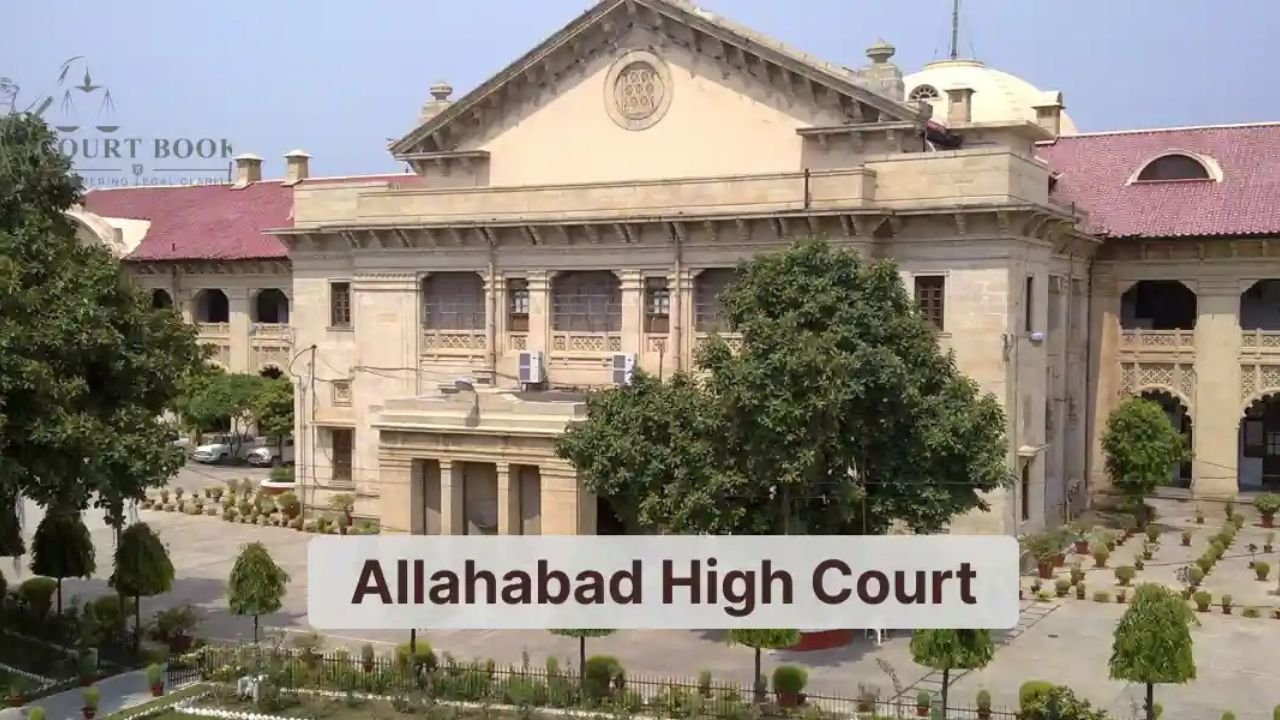

Prayagraj: The Allahabad High Court has imposed a cost of ₹1 lakh on the Uttar Pradesh government after finding that negligence by police officials delayed the disposal of a bail application, resulting in an accused remaining in jail for more than 15 additional days. The Court directed that the amount be paid to the petitioner as compensation and granted the State liberty to recover the sum from the officials found responsible after completing an appropriate departmental inquiry.
The order was passed by the single-judge Bench of Justice Arun Kumar Singh Deshwal while hearing a petition filed by Amit, a resident of Gorakhpur. Amit had been in judicial custody since March 20, 2026, in a case registered under charges including kidnapping and the Protection of Children from Sexual Offences (POCSO) Act. His bail application could not be decided in time because the police failed to submit the required instructions to the Court.
Court records showed that the matter was listed for hearing on July 8, 2026. During the proceedings, the State counsel sought additional time after informing the Court that despite repeated reminders from the office of the Joint Director of Prosecution of the High Court, the concerned police authorities had not supplied the necessary instructions and case records. As a result, the bail application could not be adjudicated on the scheduled date.
Taking serious note of the delay, the High Court directed the Senior Superintendent of Police (SSP), Gorakhpur, to appear in person and explain why repeated communications from the prosecution office had not been acted upon and why the lapse had disrupted the judicial process.
An internal inquiry conducted by the SSP found the Station House Officer of Bansgaon Police Station, a Sub-Inspector and a Constable responsible for the delay. Following the inquiry, all three police personnel were attached to the police lines. The SSP also tendered an unconditional apology before the Court and informed it that appropriate departmental directions had been issued to prevent similar lapses in the future.
The High Court observed that because of the negligence of the police officials, the petitioner’s bail application could not be decided within the expected timeframe. Had the required instructions been submitted promptly, the bail plea could have been considered earlier. The administrative lapse resulted in the petitioner remaining behind bars for more than 15 additional days, adversely affecting his fundamental right to personal liberty.
The Court also referred to the victim’s statement while considering the bail application. The First Information Report (FIR) alleged that the complainant’s daughter had been lured away. However, in her statement recorded before the Magistrate, the victim stated that she had left her home voluntarily because of her relationship with the petitioner. The Court considered this statement to be a relevant factor while examining the bail request.
Emphasising the importance of timely compliance with judicial directions, the High Court observed that unnecessary delays in court proceedings can seriously affect an individual’s constitutional rights. It stressed that investigating agencies and police authorities have a duty to provide courts with the required information and instructions without delay to ensure the fair and expeditious disposal of cases.
Accordingly, the Court directed the Uttar Pradesh government to pay ₹1 lakh to the petitioner as compensation at the earliest. It further clarified that if the departmental inquiry establishes the responsibility of the concerned officials, the State would be free to recover the amount from them in accordance with law. The ruling is being viewed as a significant reminder of administrative accountability and the responsibility of law enforcement agencies in ensuring the smooth functioning of the justice system.
About the author — Suvedita Nath is a science student with a growing interest in cybercrime and digital safety. She writes on online activity, cyber threats, and technology-driven risks. Her work focuses on clarity, accuracy, and public awareness.
