
Follow us on Google News

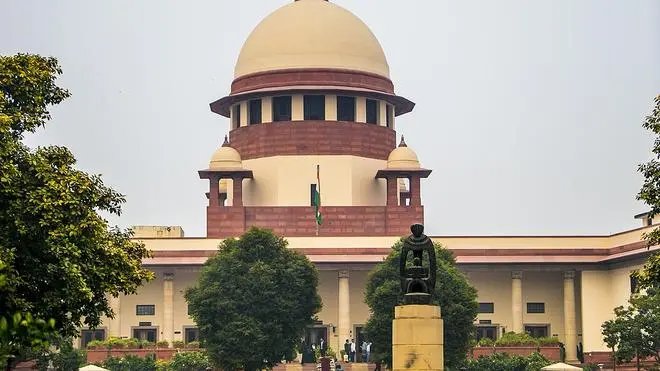
NEW DELHI: The Supreme Court has questioned app developers on whether they can opt out of Google’s payment mechanism and engage alternative payment processors amid an ongoing legal battle over the tech giant’s Play Store billing terms. A Bench comprising Justice P S Narasimha and Justice Alok Aradhe sought to know whether the contracts entered into by developers allow them to choose not to use the Google Play Billing System. The queries were raised during the hearing of an appeal challenging a January 19, 2024 judgment of the Madras High Court, which had upheld the dismissal of civil suits filed by developers against Google’s billing terms, User Choice Billing framework, and Developer Distribution Agreement.
Developers allege restrictions over authorised payment providers
During the proceedings, the Bench directly asked the developers’ counsel if they possessed the freedom under their contracts to opt out of Google’s proprietary payment architecture. Responding to the query, counsel conceded that developers were technically free not to use Google Play Billing and could hire outside payment processors. However, counsel asserted that subsequent policy alterations by Google severely restricted their operational autonomy in contrast to prior arrangements.
Before these regulatory updates, app creators could independently enter into contracts with third-party payment gateways such as Paytm and Razorpay. The developers pointed out that the definition of an Authorised Provider, inserted into Google’s contractual ecosystem on October 3, 2022, effectively curtailed this operational independence. They argued that even though they can technically discontinue using Google’s billing interface, the fundamental conflict rests on whether they can freely partner with any external processor, or if such processors are obligated to obtain prior clearance from Google.
Approval mandate violates statutory norms, developers tell court
Counsel representing the developers submitted that the contractual conditions give Google sweeping control over the selection of third-party payment providers permitted to collect user funds for products sold on Google Play. They argued that this approval mechanism is contrary to the Payment and Settlement Systems Act, 2007, and violates regulatory directions issued by the Reserve Bank of India by curbing contractual freedom.
The developers further submitted that the Madras High Court erred in concluding that their civil suits were barred under Section 24 of the Payment and Settlement Systems Act, 2007. They argued that the statutory dispute resolution process applies specifically to participating entities within payment systems, whereas app developers act as users rather than system participants. In addition, the developers maintained that their grievances arise directly from contract and civil law, encompassing issues such as undue influence, restraint of trade, novation, and tortious interference with business relationships under the Indian Contract Act.
Google cites competition watchdog findings to oppose suits
Senior advocate Sajan Poovayya, appearing for Google, opposed the developers’ submissions and stated that they were seeking to convert an established competition law dispute into a regular contractual conflict. He contended that the Competition Commission of India (CCI) had already examined Google’s Play Store billing structure and the corresponding developer fees under Section 27 of the Competition Act, concluding that the charges were neither excessive nor unreasonable.
Google’s counsel noted that the developers had initially framed the controversy as an abuse of market dominance, an issue that strictly belongs within the regulatory domain of the competition watchdog. Poovayya submitted that developers should not be permitted to reagitate identical concerns before ordinary civil courts by presenting them as breaches of payment laws or contractual terms. Following the arguments, the Supreme Court adjourned the hearing to December 1.