

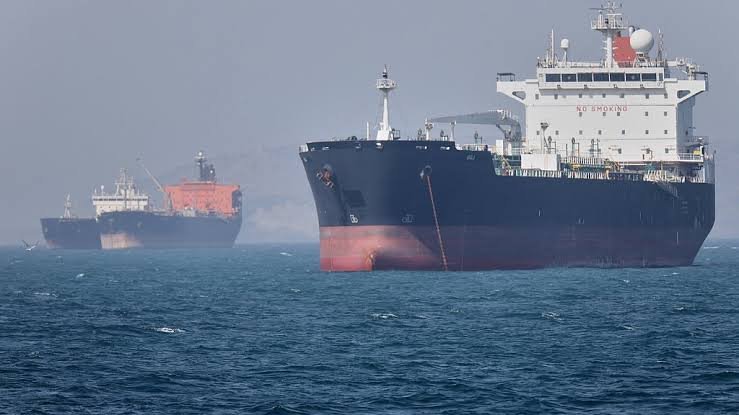

The United States has imposed sanctions on two Mumbai-based companies and five Indian nationals over allegations that they helped facilitate trade in Iranian petroleum products.
The action targets SSPL Solutions Private Limited and Samudra Marine Services Private Limited.
The five Indian nationals named are Dhwani Nisarg Vora, Nisarg Samir Vora, Ketan Manohar Kochikar, Bhupendrasingh Dhalsingh Sahu and Harishyam Hariharan Chundakattil.
The designations form part of Washington’s wider “Operation Economic Outcast”, which is aimed at cutting off revenue from Iran’s petroleum and petrochemical trade.
Two Mumbai Firms Added to US Sanctions List
US authorities say SSPL Solutions and Samudra Marine Services facilitated imports of Iranian petroleum products.
Both companies have now been added to the US sanctions framework under Executive Order 13846.
SSPL Solutions is registered in Mumbai and was incorporated in September 2023.
Samudra Marine Services was incorporated in January 2011 and is also based in Mumbai.
US sanctions generally mean property and interests in property falling under US jurisdiction can be blocked, while transactions involving sanctioned parties may be prohibited for US persons.
FCRF Launches CP-FRM to Build India’s Next Generation of Fraud Risk Professionals
Five Indian Nationals Also Named
Two of the sanctioned individuals, Dhwani Vora and Nisarg Vora, are linked to SSPL Solutions.
Ketan Kochikar, Bhupendrasingh Sahu and Harishyam Hariharan Chundakattil are linked to Samudra Marine Services.
OFAC records identify Kochikar, Sahu and Chundakattil as linked to Samudra Marine Services, while Dhwani and Nisarg Vora are linked to SSPL Solutions.
The designations do not by themselves amount to criminal convictions in India.
They are US sanctions actions based on Washington’s assessment of the entities’ alleged role in Iranian petroleum trade.
Wider Action Targets Iran’s Shadow Fleet
The action against the Indian firms is part of a broader sanctions package announced on October 8.
The US Treasury separately targeted 17 shadow-fleet vessels that it says transported millions of barrels of Iranian crude oil, petroleum products and petrochemicals to markets in South and East Asia.
The vessels operate through networks of companies registered across several jurisdictions.
Treasury says these structures are used to obscure ownership, cargo origin and financial flows associated with Iranian oil exports.
Samudra Marine Gets Temporary Wind-Down Period
US authorities have allowed transactions involving Samudra Marine Services to continue temporarily for wind-down purposes until October 23.
This gives affected parties a limited period to close existing business before the sanctions restrictions fully take effect.
That does not amount to an exemption from the designation itself.
It is a time-limited authorisation intended to allow existing transactions to be unwound.
Why the US Is Targeting Oil Trade
Iran’s petroleum exports remain one of the country’s biggest sources of foreign revenue.
Washington argues that those earnings help fund activities by the Iranian state and groups it supports in the region.
Treasury Secretary Scott Bessent said the latest action was aimed at reducing the financial resources available to Tehran by targeting companies, vessels and facilitators involved in oil sales.
The US has increasingly used secondary sanctions to pressure non-US companies that continue doing business with sanctioned Iranian entities.
That means firms outside the United States can still face consequences if Washington believes their transactions materially support sanctioned trade.
Sanctions Can Affect Banks and Business Partners
The practical impact can extend beyond the named companies.
Banks, insurers, shipping firms and other international counterparties may avoid dealing with sanctioned businesses because of the risk of losing access to the US financial system.
US rules also allow restrictions on foreign financial institutions that knowingly facilitate significant transactions for sanctioned persons.
That can make sanctions commercially damaging even where the affected firm has little direct business in the United States.
For Indian companies involved in shipping, petroleum trading or cross-border finance, sanctions screening therefore becomes a major compliance issue.
What this means for you
The sanctions do not mean the five Indian nationals or two firms have been convicted of crimes in India. They mean the US has formally blocked them under its Iran sanctions regime, which can sharply restrict their ability to transact with US-linked banks, companies and financial systems.
Follow for daily updates on cybercrime, corporate fraud, DFIR, hacking, investigations, and digital forensics
