

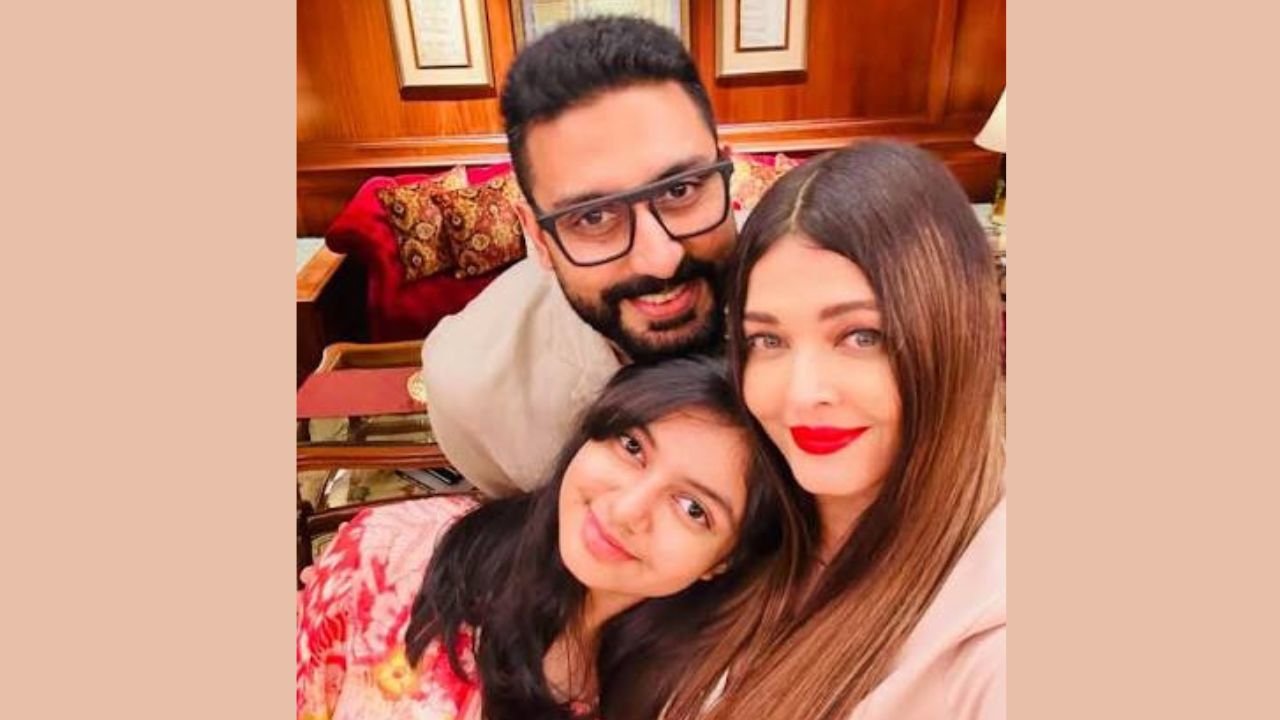

The Delhi High Court has raised a series of legal questions while hearing a case concerning Aaradhya Bachchan, including whether the reputation attached to a well-known family name can be treated in a manner similar to a trademark and, if so, how far that reputation can extend across generations. The case was filed after allegedly false and misleading online content concerning Aaradhya’s health was circulated through YouTube videos.
Aaradhya Bachchan, daughter of Abhishek Bachchan and Aishwarya Rai Bachchan and granddaughter of Amitabh Bachchan, approached the Delhi High Court seeking protection against allegedly defamatory and misleading material concerning her. The case arose after videos claimed that she was seriously ill, had been hospitalised and, in one instance, had died.
During the hearing, Justice Anup Jairam Bhambhani framed broader questions concerning reputation, personality rights and intellectual property law. The Court examined whether the reputation associated with a surname such as Bachchan could be treated in a trademark-like manner and whether such reputation could pass from one generation to another.
Court Examines Scope of Family Reputation
The Court observed that trademark value and reputation generally arise in connection with goods or services, while the position becomes more complex when reputation is associated with an individual or family name. It questioned whether the standing earned by a surname through achievements and prominence in a particular field could be said to flow automatically to later generations.
The Bench framed three broad questions for consideration. The first concerns the extent to which reputation associated with a family name, if treated as analogous to a trademark, may extend across generations. The second is whether fake news, even when considered particularly objectionable, can amount to an infringement of intellectual property rights and, if so, what form of intellectual property protection may apply.
The third issue relates to whether defamation, including slander and libel, or other forms of reputational harm can be brought within the recognised framework of intellectual property rights.
The Court also questioned the expanding interpretation of personality rights and remarked on the increasingly broad way in which such claims are being framed.
Aaradhya’s Counsel Cites Wider Harm to Bachchan Family
Advocate Pravin Anand, appearing for Aaradhya, argued that the matter went beyond her individual reputation and involved the name and standing of the Bachchan family. In response to the Court’s questions on using trademark-like protection for personal reputation, he relied on the wider scope of passing-off law.
According to the submissions recorded in the report, images of members of the Bachchan family and their name had allegedly been used alongside false claims suggesting that Aaradhya had died or had cancer. Anand argued that such use caused reputational harm and that Abhishek Bachchan was also a party to the matter.
The case was originally brought in 2023 against several YouTube channels and unidentified individuals. The petition sought to stop allegedly defamatory or misleading material concerning Aaradhya and the Bachchan family, while also seeking protection against publication of private details about their lives.
The videos at the centre of the dispute allegedly claimed that Aaradhya was seriously unwell and had been admitted to hospital. One video reportedly claimed that she had died, while others alleged that her family had failed to arrange timely medical treatment.
Earlier Injunction Restrained Health-Related Content
In April 2023, the Delhi High Court granted an interim injunction in Aaradhya’s favour, restraining defendants from publishing material concerning her health. At the time, Justice C Hari Shankar emphasised the need to protect children from misleading information, observing that every child is entitled to be treated with honour and respect regardless of whether the child belongs to a celebrity family.
The earlier order also noted that dissemination of misleading information relating to a child, particularly concerning physical or mental wellbeing, could not be tolerated in law.
The present proceedings are now focused on the broader legal principles raised by the case, including the relationship between family reputation, personality rights, passing off, defamation and intellectual property law.
The matter is scheduled to come up for further hearing before the Delhi High Court on September 15.
About the author — Suvedita Nath is a science student with a growing interest in cybercrime and digital safety. She writes on online activity, cyber threats, and technology-driven risks. Her work focuses on clarity, accuracy, and public awareness.
Follow for daily updates on cybercrime, corporate fraud, DFIR, hacking, investigations, and digital forensics
