

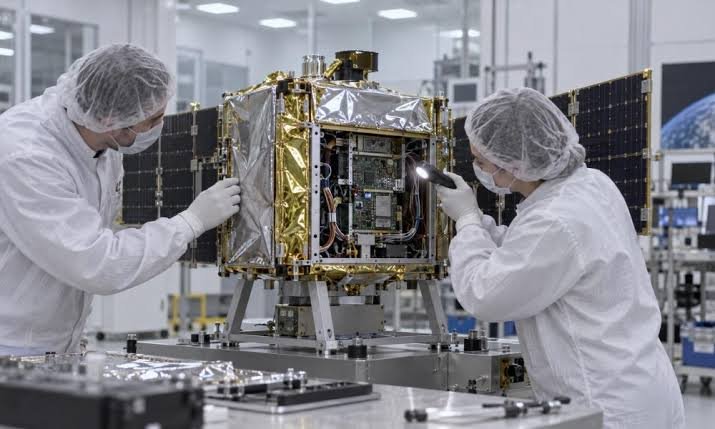

Google is preparing to send its artificial intelligence chips into space for the first time as part of Project Suncatcher, an experimental effort to determine whether large-scale AI computing infrastructure could eventually operate in orbit.
The company plans to launch a prototype satellite next week aboard SpaceX’s Transporter-18 rideshare mission in partnership with satellite operator Planet Labs. The spacecraft will carry Google Tensor Processing Units, or TPUs, into low Earth orbit for their first in-space test.
The experiment will examine whether AI hardware designed for terrestrial data centres can withstand the much harsher environment of space.
Proposal for Conducting Cyber Crisis Drill, Tabletop Exercise (TTEx) & CCMP Readiness Exercise
Google will test TPUs against radiation and extreme temperatures
The mission is primarily a hardware-survival test.
Google wants to determine whether its AI accelerators can continue operating after exposure to launch vibration, radiation and the wide temperature swings found in low Earth orbit.
TPUs are specialised chips developed by Google to train and run artificial intelligence models.
They are widely used inside the company’s data centres for workloads involving Gemini and other machine-learning systems.
If the chips can operate reliably in orbit, it would support the broader idea that some AI computing could eventually move away from Earth-based facilities.
That remains a long-term possibility rather than an immediate deployment plan.
Why put AI data centres in space?
Modern AI data centres consume enormous amounts of electricity.
They also require land, cooling systems and, in many cases, significant quantities of water.
Orbital computing advocates argue that satellites could access solar energy for much longer periods than ground-based facilities and reduce pressure on terrestrial electricity grids.
Space-based infrastructure could potentially operate using near-continuous sunlight while avoiding some land and water constraints associated with conventional data centres.
That is the basic idea behind Project Suncatcher.
The project explores whether large clusters of satellites could eventually provide enough computing power to run major AI workloads in orbit.
The420.in previously reported that Google has been studying a larger architecture involving dozens of interconnected satellites as part of the same research effort.
SpaceX and other firms are pursuing similar ideas
Google is not alone in exploring orbital computing.
Reuters reported that SpaceX and startup Starcloud are also working on plans for data centres in low Earth orbit.
The attraction is obvious.
AI companies are competing for power, land and data-centre capacity at the same time that model sizes and computing requirements continue to grow.
Placing computing hardware in orbit could theoretically provide access to abundant solar power and reduce reliance on already constrained terrestrial grids.
But the engineering challenges are substantial.
Launching hardware remains expensive, electronics must survive radiation, maintenance is difficult and heat still has to be removed even in space.
Data also has to move quickly between satellites and users on Earth.
For large AI systems, communications bandwidth could become just as important as computing power itself.
Planet Labs partnership provides test platform
Google is working with Planet Labs for the upcoming demonstration.
Planet operates Earth-imaging satellites and already has experience designing and operating spacecraft in low Earth orbit.
The Transporter-18 mission will allow Google to place its prototype hardware in space without launching a dedicated rocket.
Rideshare missions combine multiple satellites from different customers on the same launch, reducing costs for smaller experimental payloads.
After reaching orbit, Google will monitor the behaviour of the TPU hardware and supporting systems.
The company will be looking for signs of radiation damage, thermal problems and performance degradation.
A successful demonstration would not immediately produce an orbital data centre.
It would instead provide Google with the technical evidence needed to decide whether larger-scale testing is practical.
Project comes as AI power demand keeps rising
The timing reflects a wider infrastructure problem facing the AI industry.
Large AI models require increasingly powerful computing clusters, and those clusters are driving rapid growth in data-centre electricity demand.
The420.in previously reported that global data-centre electricity consumption is expected to rise sharply by the end of the decade as AI workloads expand.
That has encouraged companies to explore unconventional sources of power and new places to locate computing infrastructure.
Microsoft and other companies are investing heavily in new terrestrial data centres, while firms such as Google and SpaceX are now testing whether part of that infrastructure could eventually move into orbit.
The space approach remains experimental and would face major technical, financial and regulatory challenges before it could compete with conventional facilities.
But Google’s upcoming launch takes Project Suncatcher from a research concept into an actual in-orbit hardware test.
What this means for you: Google is not launching a full AI data centre into space yet. The immediate test is much narrower: proving whether its AI chips can survive and operate reliably in orbit before any larger infrastructure can be considered.
Follow for daily updates on cybercrime, corporate fraud, DFIR, hacking, investigations, and digital forensics
