

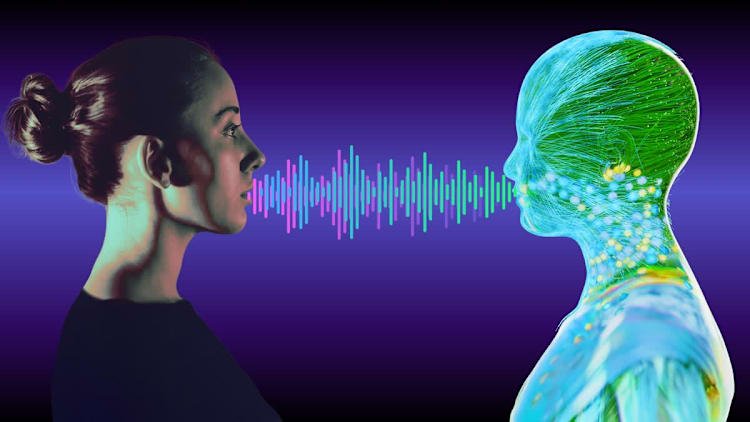
A caller sounds exactly like your brother, daughter, boss or colleague. They know your name, understand the relationship and have a convincing emergency. Then comes the request: send money immediately, keep the matter confidential, or follow an instruction before something goes wrong.
That can be an AI voice cloning scam.
The technology behind these scams is now covered within India’s 2026 regulatory framework for “synthetically generated information”, which expressly includes realistic voice cloning. The danger is not simply that artificial intelligence can reproduce a voice. It is that scammers can combine a familiar voice with urgency, personal information, spoofed numbers and believable stories to make a fraudulent instruction feel authentic.
Recent Indian cases show how this can translate into real financial losses. In January 2026, police investigated a case in Indore in which a schoolteacher transferred ₹97,500 after fraudsters allegedly used an AI-generated version of her cousin’s voice and claimed that money was urgently needed for a medical emergency.
The safest rule is therefore simple: a familiar voice is not proof of identity.
What is an AI voice cloning scam?
An AI voice cloning scam is a form of impersonation fraud in which criminals use synthetic speech technology to make a caller sound like another person.
The target may be:
- a parent, child, sibling or other relative
- a friend
- a company founder, CEO or senior manager
- a police or government official
- a lawyer, banker or other professional.
The cloned voice may be used during a phone call, through a messaging application, in an audio message or alongside a video/deepfake impersonation.
The scam does not necessarily require the criminal to compromise the victim’s phone or bank account. The attack can instead exploit trust: if the victim believes the person speaking is someone they already know, an otherwise suspicious request can appear legitimate.
Publicly available recordings can also become useful source material for impersonation. Interviews, social-media videos, podcasts, public speeches and other recordings can expose a person’s voice to people they have never met.
Why does the voice sound so convincing?
Modern synthetic speech systems can reproduce characteristics such as pronunciation, pitch, rhythm and vocal tone. A scammer can then generate new speech that the real person never recorded.
That creates an important distinction:
The voice may be genuine as an acoustic imitation while the conversation itself is completely fake.
This is why listening carefully for a strange accent or unusual pronunciation is not a reliable defence. Some fraudulent calls may contain audible glitches; others may not be obvious to an ordinary listener.
Verification outside the call is more dependable than trying to become an expert at detecting synthetic audio.
How the AI voice scam usually works
The exact script varies, but the pattern is often built around four stages.
1. The scammer chooses a trusted identity
The criminal may impersonate someone whose request would normally receive immediate attention.
For a family member, that could mean an accident, hospital emergency, arrest or urgent payment.
For a workplace target, it could be an executive requesting a transfer, confidential document or payment to a new account.
For an official, the story may involve an investigation, legal notice, suspicious transaction or alleged criminal activity.
2. The scammer creates urgency
The victim is pushed to act before they have time to verify the story.
Common pressure tactics include:
- “Send it now.”
- “I only have a few minutes.”
- “Don’t tell anyone.”
- “I’m in trouble.”
- “You have to do this before the account is blocked.”
- “This is confidential.”
The pressure is part of the fraud. It reduces the opportunity for the victim to pause and independently verify the caller.
3. The cloned voice supplies familiarity
Hearing a familiar voice can override normal suspicion.
A scammer may also know real details about the supposed caller and victim. Those details can come from social media, previous data leaks, public information or information obtained during earlier conversations.
The combination of voice + personal information + urgency can be considerably more convincing than any one element by itself.
4. The victim is directed towards an action
The final objective is usually practical rather than technological.
The scammer may seek:
- a UPI transfer;
- bank-account details;
- an OTP or authentication credential;
- access to an account;
- a payment to a new beneficiary;
- confidential company information;
- installation of software;
- or continued communication while the victim is prevented from checking the story.
Not every AI voice impersonation attempt involves money. But when a financial instruction appears unexpectedly, treat the voice as an unverified identity.
Family-member voice cloning scams
The family version is particularly effective because it exploits an existing emotional relationship.
A typical scenario is a caller claiming to be a son, daughter, parent or sibling who says they have been involved in an accident, need hospital treatment, have been detained or urgently need someone to make a payment.
The caller may deliberately discourage verification:
“Don’t call anyone else. Just send it now.”
That instruction should have the opposite effect.
Stop the conversation and contact the person through a number or channel you already trust. Do not use the number supplied during the suspicious call as your verification method.
A family can also establish a private verification phrase or question in advance. It should not be something that can easily be found on social media.
The “boss scam”: when the cloned voice targets employees
Voice cloning is not limited to family fraud.
In July 2026, SEBI issued a specific caution to regulated entities and listed companies about the “Boss Scam”, involving impersonation of senior executives and the use of techniques including deepfake voice cloning and AI-generated video calls.
The business version can involve an apparently senior executive instructing an employee to transfer funds or perform another sensitive action.
For finance, accounts and administrative teams, the defence should therefore not be “I recognised the CEO’s voice”.
The better control is procedural:
An unusual payment request must pass the company’s normal verification and approval process, even when the caller sounds exactly like the person authorised to make it.
A second-channel confirmation — such as independently calling the executive’s known number or confirming through an established internal system — is much harder for an impersonator to bypass.
Government-official impersonation and deepfake voice scams
Another variant combines voice cloning with fake authority.
A caller may claim to be from the police, CBI, ED, RBI, telecom authorities or another government institution and allege that the victim’s identity or bank account is connected to criminal activity.
This overlaps with the broader digital-arrest scam ecosystem, where fraudsters use fake officials, fabricated documents, video calls and threats to pressure victims into transferring money.
A cloned voice can make the impersonation feel even more authentic, but the fundamental defence remains the same: independently verify the identity and never transfer money merely because a caller claims to represent an authority.
Can you tell if a voice is AI-generated?
Sometimes, but you should not rely on your ears alone.
Possible warning signs include:
- unnatural pauses or breathing;
- strange pronunciation;
- inconsistent emotional expression;
- unusual background sound;
- a voice that sounds unusually clean or detached;
- a caller who refuses independent verification;
- sudden changes in the person’s normal speaking style.
But none of these is a guaranteed detection method.
A genuine person’s voice can sound unusual because of poor connectivity, illness, stress or background noise. Conversely, a sophisticated synthetic voice may sound completely normal.
The more reliable question is not “Does this sound like them?”
It is:
“Have I independently verified that I am actually dealing with them?”
What should you do if you receive a suspected AI voice scam?
Step 1: Do not transfer money during the call
End the financial decision-making process.
Do not allow the caller’s urgency to determine your actions.
If they claim someone is in danger, verify the emergency independently.
Step 2: Call the real person separately
Use a number already saved in your contacts or another trusted communication channel.
Do not call back using a number provided by the suspicious caller.
If the supposed family member cannot answer, contact another relative.
If the supposed executive is involved, use the company’s established verification procedure.
Step 3: Ask a private verification question
For family members, use a pre-agreed phrase or question.
Do not rely only on information that could be available publicly, such as a birthday, pet’s name or workplace.
Step 4: Preserve evidence
Keep:
- the caller’s number;
- call logs;
- recordings, where lawfully available;
- WhatsApp or other chat messages;
- voice messages;
- payment details;
- UPI IDs;
- account numbers;
- screenshots;
- URLs and social-media profiles;
- transaction IDs.
Do not edit the original evidence unnecessarily.
Step 5: If money has been transferred, call 1930 immediately
For financial cyber fraud, India’s National Cyber Crime Reporting Portal directs victims to the 1930 national cybercrime helpline for immediate reporting.
The online reporting channel is the National Cyber Crime Reporting Portal.
Do not wait until you have reconstructed every detail of the fraud. Report first and provide the available information.
Step 6: Inform your bank or payment provider
Contact the bank or payment service through its official channel and report the transaction as cyber fraud or an unauthorised transaction, as applicable.
Ask for the complaint/reference number and follow the bank’s instructions for securing the affected account or payment channel.
Step 7: Complete the cybercrime complaint
Preserve the acknowledgement/reference number and provide the transaction information and supporting evidence requested by the authorities.
Early reporting can give banks and law-enforcement agencies more opportunity to trace or place controls on funds before they move further.
It does not, however, guarantee recovery.
What if you realise the fraud days later?
Report it anyway.
There is no rule that a victim should abandon a complaint simply because the fraud was discovered late.
A delayed report can still provide investigators with useful information about:
- phone numbers;
- beneficiary accounts;
- UPI IDs;
- communication accounts;
- transaction trails;
- websites;
- and related evidence.
The correct response to delayed discovery is to report the incident, not to assume that nothing can be done.
What does Indian law say about AI voice cloning?
There is no single standalone criminal offence called “AI voice cloning scam”.
The legal provisions that apply depend on what the person actually did.
The Information Technology Act, 2000 contains provisions relevant to digital impersonation. Section 66C deals with identity theft involving another person’s electronic signature, password or unique identification feature, while Section 66D covers cheating by personation using a communication device or computer resource.
The Bharatiya Nyaya Sanhita, 2023, which came into force on July 1, 2024, also contains general cheating provisions. Section 318 addresses cheating, while Section 319 addresses cheating by personation.
The technology itself does not determine the offence. Investigators and courts would look at the conduct, deception, identity used, financial loss and other facts of the particular case.
What changed with India’s 2026 IT Rules?
The 2026 amendments to the Information Technology (Intermediary Guidelines and Digital Media Ethics Code) Rules, 2021 introduced a framework specifically addressing synthetically generated information (SGI).
MeitY’s official FAQ expressly states that realistic synthetic audio can include voice cloning where it meets the legal definition of SGI.
The amendments came into force on February 20, 2026.
Among other things, the framework introduces obligations concerning unlawful synthetic content, user warnings, labelling and provenance-related measures, and faster action by intermediaries in specified circumstances.
The rules do not mean that every AI-generated recording is automatically unlawful. The definition and exclusions matter, including provisions covering routine good-faith editing and other legitimate uses.
For a voice-cloning scam, the important point is that realistic synthetic audio used as part of an unlawful act is no longer something the regulatory framework simply ignores.
What families and companies should do before a scam happens
The best protection is a verification process that does not depend on recognising someone’s voice.
For families
Agree on:
- A private code word or question.
- Who should be contacted during an emergency.
- A rule that unexpected money requests must be independently verified.
- A rule against transferring money solely on the basis of a phone call.
- A trusted second person who can be contacted if someone appears distressed.
For companies
Financial teams should maintain:
- dual approval for unusual transfers;
- independent verification of new beneficiary details;
- callback procedures using known contact information;
- clear escalation channels;
- restrictions on changing payment instructions during a single phone conversation;
- and employee awareness training covering voice and video impersonation.
The SEBI “Boss Scam” warning is a useful reminder that authentication cannot rest on voice recognition alone.
The biggest mistake to avoid
Do not spend the first few minutes trying to determine whether the voice is “real”.
Verify the person.
That distinction matters because synthetic-media detection will continue to evolve. A scammer only needs the victim to make one irreversible decision before the fraud becomes difficult to undo.
A voice can be copied.
Your verification process should not be.
Proposal for Conducting Cyber Crisis Drill, Tabletop Exercise (TTEx) & CCMP Readiness Exercise
FAQ: AI Voice Cloning Scams
What is an AI voice cloning scam?
It is an impersonation scam in which artificial intelligence is used to generate speech that resembles another person’s voice. The cloned voice may then be used to request money, information or another sensitive action.
Can scammers clone a family member’s voice?
Yes. Publicly available recordings and other audio can provide material for synthetic voice impersonation. A familiar voice should therefore be treated as a clue to identity, not proof of identity.
How can I tell whether a voice is AI-generated?
There is no foolproof listening test for an ordinary caller. Audio glitches can be clues, but a convincing synthetic voice may not have obvious abnormalities. Independent verification through a trusted channel is safer.
What should I do if someone using a cloned voice asks for money?
Do not transfer the money during the call. End the conversation and contact the real person through a known number or another trusted channel. For workplace requests, follow the company’s independent approval process.
What should I do if I already transferred money?
Call 1930 immediately, report the incident through the National Cyber Crime Reporting Portal and inform your bank or payment provider through its official channel. Preserve transaction details, call records, messages and other evidence.
Is AI voice cloning itself illegal in India?
The technology itself is not automatically illegal. The legal position depends on how it is used. Fraudulent impersonation can attract provisions under laws including the IT Act and the Bharatiya Nyaya Sanhita, while the 2026 IT Rules also establish obligations concerning unlawful synthetically generated information.
Can a bank guarantee that money sent in a voice-cloning scam will be recovered?
No. Immediate reporting can give financial institutions and authorities an opportunity to act, but reporting does not guarantee recovery. The outcome depends on the transaction trail, timing, investigation and other circumstances.
Your next step
Set up a family verification phrase today and agree that any unexpected request for money even from a familiar voice must be independently confirmed.
If money has already moved, do not spend time trying to prove whether the caller used AI. Call 1930 and contact your bank immediately.
About the author — Ananya Aradhya writes on cybercrime, fraud, scams, cybersecurity, digital safety, and emerging threats. Her work also covers major criminal cases, financial frauds, consumer scams, and stories that highlight risks affecting people in the real and digital world.
Follow for daily updates on cybercrime, corporate fraud, DFIR, hacking, investigations, and digital forensics
