
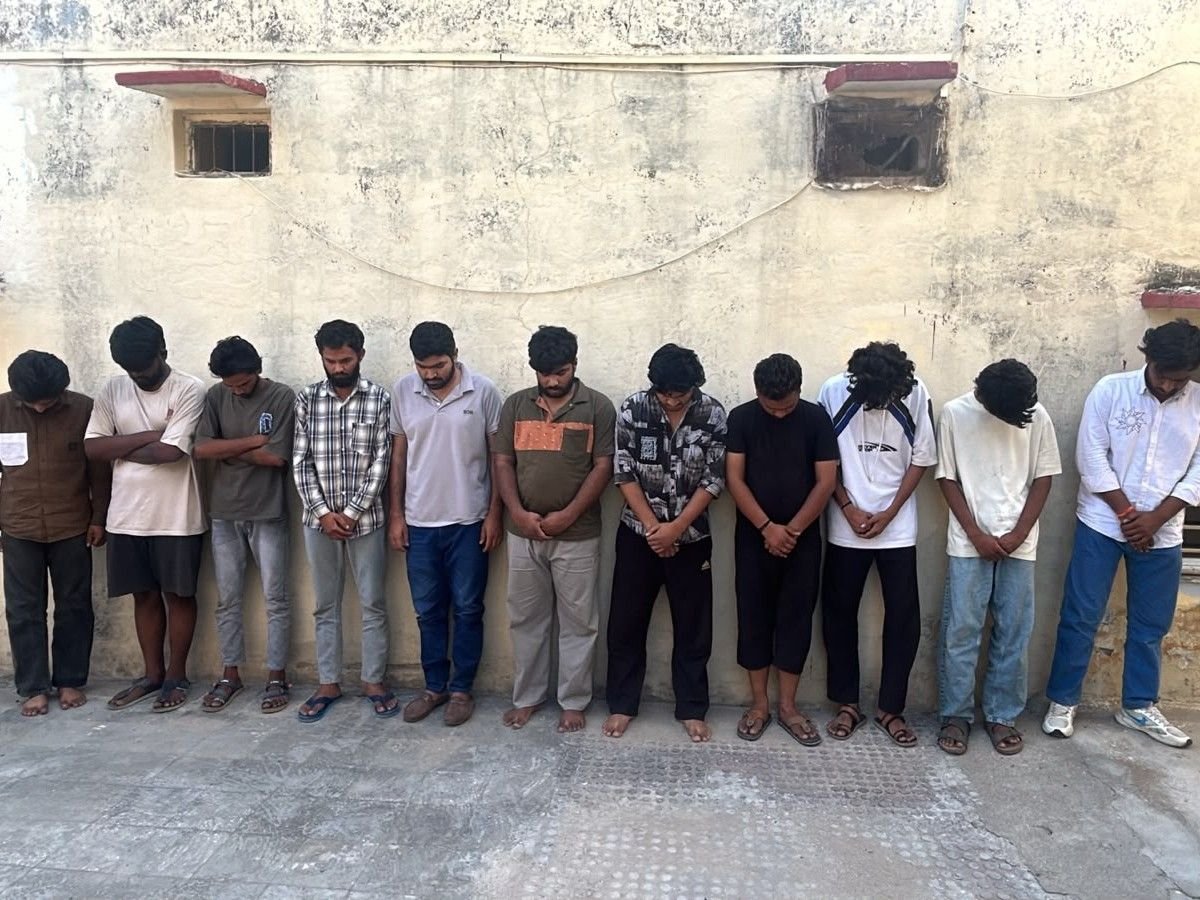

Police have reportedly arrested 11 men in Rajasthan’s Bhim town over an alleged cyber fraud racket that used fake female profiles and promises of “Playboy jobs” to extract money from young men.
The operation, described in the supplied police account, took place on September 6 in the Dharmeshpuri area. Officers seized 20 smartphones, several ATM and debit cards, three point-of-sale machines and a car allegedly linked to the operation.
The investigation is now focused on identifying victims, tracing payments and determining whether the arrested men were part of a larger network operating across multiple online platforms.
Proposal for Conducting Cyber Crisis Drill, Tabletop Exercise (TTEx) & CCMP Readiness Exercise
Fake Female Profiles and VIP Client Promises
According to the police account, the suspects created social media profiles using women’s names and photographs obtained from the internet. These accounts were allegedly operated on Telegram, Snapchat and other platforms to approach young men.
The profiles offered supposed opportunities to work as male escorts, sometimes described as “Playboy jobs”. Victims were allegedly promised access to wealthy or VIP female clients and the possibility of earning thousands of rupees through part-time work.
Police suspect the offers were designed to create curiosity and encourage private conversations. Once a person expressed interest, the operators allegedly introduced payment requirements before any supposed assignment could begin.
The investigation has not established that genuine escort jobs or clients existed. The alleged deception lay in using those promises to obtain money.
Registration Fees Became Repeated Payment Demands
The supplied report describes a familiar advance-fee fraud pattern.
A victim would first be asked to pay a registration charge. Further demands could follow under the names of security deposits, commissions or other formalities.
Each payment was allegedly presented as necessary to unlock the promised opportunity. The victim could therefore be persuaded to send additional money after the initial amount had already been paid.
The report does not provide a verified fee schedule or individual victim statements. It would be premature to state how much any particular person lost or how many instalments were collected.
The important feature is that the promised income remained in the future, while the payments demanded from the victim were immediate.
How the ‘Playboy Job’ Scam Works
This type of fraud combines fake recruitment with identity-based deception.
A profile displaying an attractive photograph creates the impression that the person offering the opportunity is genuine. The supposed job then gives the conversation a commercial purpose, while promises of high earnings reduce the victim’s hesitation.
The fraudster may claim that registration, verification or a security payment is required before the victim can meet a client. Once the money is sent, further conditions may be introduced or communication may stop.
There can also be a privacy risk. Victims may hesitate to approach police because they are embarrassed about the nature of the offer. Fraudsters can exploit that reluctance, particularly if private photographs, identity documents or conversations have been shared.
The supplied Rajsamand account does not establish that blackmail or intimate-image extortion occurred in this particular case. Those are recognised risks of similar online interactions, not additional allegations against these 11 men.
Twenty Phones and Three POS Machines Under Examination
Police reportedly acted on information that a group of youths was conducting online fraud in Dharmeshpuri. A special team surrounded the area and detained 11 men found with a car.
After examining their phones and other material, officers allegedly found evidence connecting them to the suspected racket and arrested them.
The seized smartphones are expected to help investigators identify the accounts used to contact victims. Chat histories, account logins, contact numbers and payment messages may also help establish the role of each suspect.
The three POS machines and bank cards are particularly relevant to the financial investigation.
A POS machine is a device commonly used by merchants to accept card payments. Its presence does not automatically prove money laundering or fraud. Investigators will need to examine transaction records, merchant registrations and linked bank accounts to establish how the devices were allegedly used.
The same applies to the ATM and debit cards. Police must determine who owned the accounts, whether they received victim payments and whether money was withdrawn or transferred onwards.
Police Probe Wider Links and Possible Victims
The supplied report states that a case has been registered under the Bharatiya Nyaya Sanhita and Section 66D of the Information Technology Act.
Section 66D addresses cheating by personation using a computer resource or communication device. In simple terms, it can apply when someone uses an online identity to deceive another person into parting with money or property.
The precise BNS sections, however, have not been independently confirmed.
Investigators are also examining whether other people supplied bank accounts, operated fake profiles or helped move the alleged proceeds. Digital evidence may reveal additional contacts, but no wider network should be treated as established until police verify those links.
The total amount allegedly defrauded remains unknown. Police have not publicly established a final victim count in the material available.
The 11 arrested men remain accused, and the allegations will have to be established through investigation and judicial proceedings.
What this means for you: Never pay registration, security or verification fees to an unknown person promising escort work, VIP clients or unusually high earnings through social media. Do not share identity documents or private images with such accounts. If you have already transferred money, preserve chats, payment references and profile links, contact your bank immediately, and report the fraud through 1930 or cybercrime.gov.in.
The420 Insight: The alleged racket shows how fraudsters can turn an unconventional job offer into an advance-fee scam. The strongest investigative lead is likely to be the connection between fake profiles, payment accounts and the devices used by the suspects. Police should also make it easier for victims to report without fear of embarrassment. Identifying the people who supplied financial accounts and operated the online identities will be crucial to establishing whether the arrests have disrupted the entire network or only its visible operators.
https://www.linkedin.com/company/policetechnology/
