

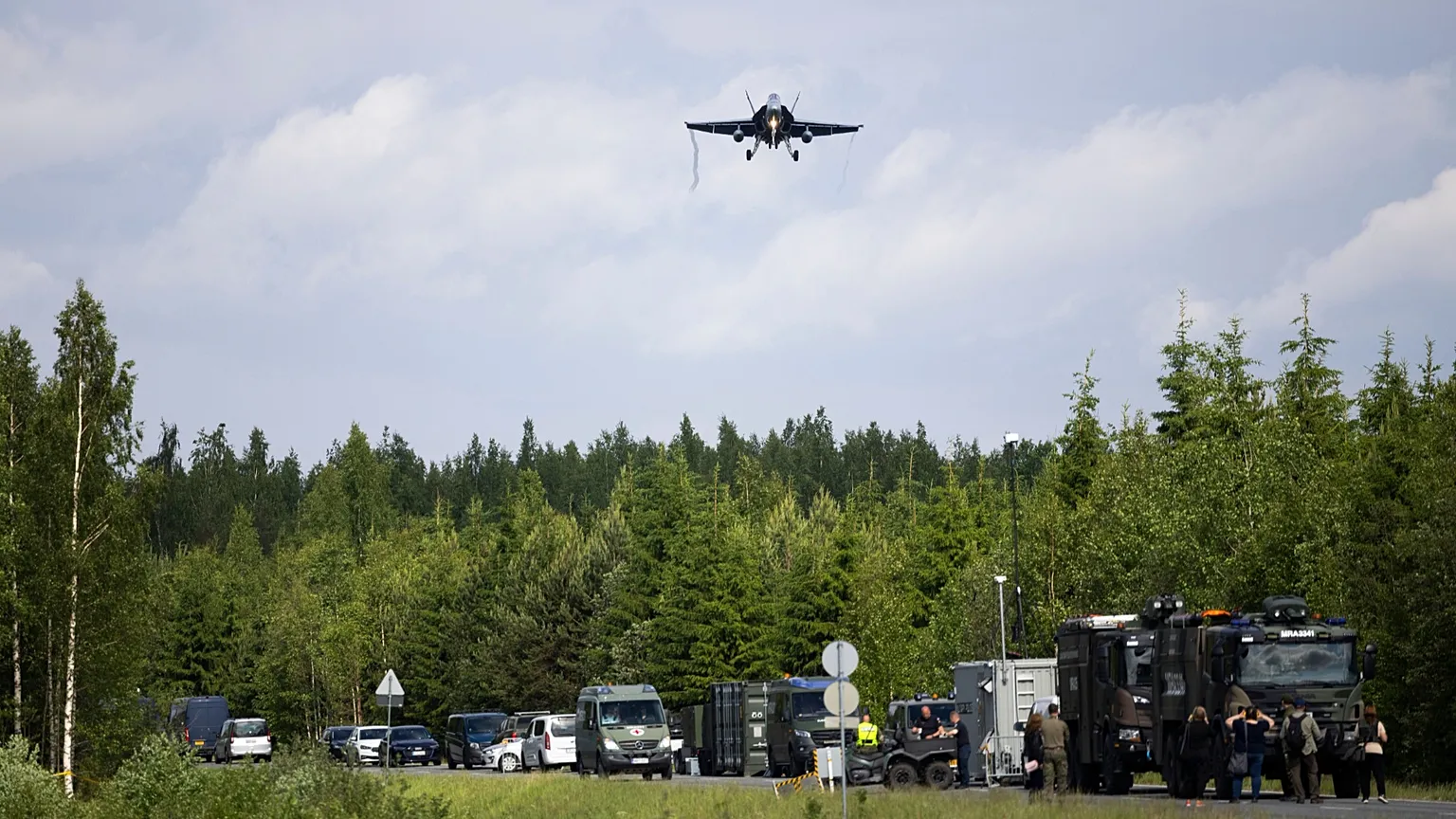

A three-minute intrusion into Finnish skies has added fresh strain to an already tense stretch of NATO’s eastern frontier, with Helsinki confirming on Thursday evening that a Russian aircraft is suspected of violating its airspace over the Gulf of Finland. The Finnish Border Guard has since identified the aircraft as a Russian IL-20 reconnaissance plane, a platform built specifically for intelligence-gathering rather than routine transport, a detail that has sharpened concern over whether the incursion was accidental or deliberate.
According to Finnish authorities, the aircraft entered sovereign airspace near Porvoo in the eastern Gulf of Finland and travelled nearly nine kilometres inside Finnish territory before turning back towards international airspace. Defence Minister Antti Häkkänen said every suspected territorial violation is treated with seriousness, confirming that an investigation was already underway even as initial technical details remained limited.
A Pattern That Has Repeated Three Times This Year
Thursday’s episode is not an isolated event but the latest in a series stretching back to May, when Finland first suspected a Russian military aircraft of crossing into its airspace near Porkkala while allegedly manoeuvring around a thunderstorm over the Gulf of Finland. A second suspected incursion followed in June, prompting Helsinki to summon Russia’s chargé d’affaires on both occasions to demand an explanation. Following this latest incident, Finland’s foreign ministry confirmed it had summoned the Russian ambassador directly, seeking a formal account of what transpired.
Finland shares a land border with Russia stretching roughly 1,340 kilometres, the longest of any NATO member state, a geography that has made even brief or seemingly accidental aerial encounters carry outsized strategic weight since Helsinki joined the alliance in 2023. Officials in Helsinki have been careful not to characterise the incident as confirmed or intentional ahead of a full investigation, though the choice of aircraft, a dedicated reconnaissance platform rather than a transport or fighter jet, has drawn particular attention from regional security analysts.
Part of a Broader Pattern Along NATO’s Frontier
The Finnish incident arrives against a backdrop of intensifying aerial and drone activity across NATO’s northern and eastern flanks throughout 2026. Romania has reported destroying an explosive-laden maritime drone near one of Europe’s largest offshore gas projects, while separate reports have documented Russian drones striking close to Moldova’s border with Ukraine. NATO Secretary General Mark Rutte announced the formation of the Eastern Sentry programme earlier this year specifically to deter further Russian incursions, following a previous violation of Polish airspace that alarmed alliance members.
Finnish officials have also flagged a related but distinct concern, namely the growing risk of long-range drones drifting unintentionally into Finnish territory as Ukrainian strikes near the Gulf of Finland region continue, separate from the question of deliberate manned aircraft incursions. Kyiv has separately accused Russia of using electronic warfare to steer Ukrainian drones toward Finnish and Baltic airspace, a tactic that complicates the task of distinguishing accidental drift from deliberate provocation.
Why the Incident Resonates Beyond Europe
For Indian observers, the episode underscores how contested airspace management has become a defining feature of modern great-power friction, a concern India itself navigates along its own sensitive frontiers. Analysts tracking NATO-Russia tensions describe these repeated aerial probes as low-cost tests of an alliance’s detection speed and political response, a dynamic with clear parallels to airspace violations India has periodically reported along its own contested borders.
The Finnish Border Guard has said it will examine radar data and additional surveillance information before publishing further findings, a process that typically takes several days to weeks depending on the complexity of the technical evidence involved. Moscow’s embassy in Helsinki had not issued a formal response to the allegations at the time of Finland’s ambassador summons, continuing a pattern in which Russian officials have generally declined immediate comment on similar suspected incursions elsewhere in the region this year.
