

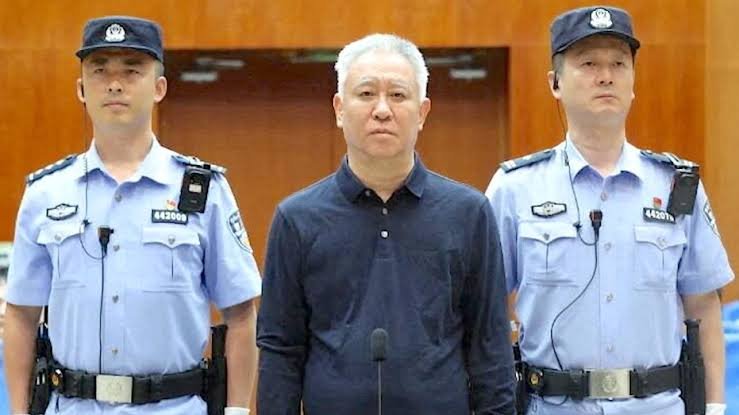

The rags-to-riches story of Hui Ka Yan, once Asia’s second-richest man, has ended in a Shenzhen courtroom with a life sentence for fraud and bribery, marking the definitive close of one of the most consequential corporate collapses in modern Chinese history. A court in the southern Chinese city sentenced the 67-year-old founder of China Evergrande Group, the world’s most heavily indebted property developer, to life imprisonment and stripped him of political rights permanently, while confiscating all his personal property.
Hui, also known by his birth name Xu Jiayin, had pleaded guilty in April to charges including embezzlement of corporate assets, corporate bribery and illegal absorption of public deposits. Alongside his sentencing, Evergrande Group was fined 8.82 billion yuan, roughly $1.31 billion, while its onshore operating unit Hengda Real Estate was fined a further 7 billion yuan, together forming some of the largest corporate fines ever levied by a Chinese court in a criminal proceeding.
A Collapse Rooted in Manipulated Numbers
According to the court’s findings, the criminal conduct at the heart of the case took place between 2016 and 2021, a period during which authorities say Evergrande systematically overstated its financial position, including prematurely booking revenue from property sales before apartments were completed and delivered to buyers. Chinese regulators had earlier established that the company’s revenues were inflated by tens of billions of dollars in 2019 and 2020 alone, a scale of manipulation that ultimately concealed the true extent of a debt burden exceeding $300 billion once it came due.
This was not Hui’s first regulatory reckoning. China’s securities watchdog had already fined him approximately $6.5 million in 2024 and banned him for life from the country’s securities markets over the same inflated results, a penalty that in hindsight now appears to have been merely a prelude to the far more serious criminal proceedings that followed his 2023 detention.
More Than Fifty Sentenced Alongside Hui
The court also sentenced Hui’s two sons, Xu Tenghe and Xu Zhijian, along with senior Evergrande executives and other individuals connected to the group. According to China’s Xinhua News Agency, more than fifty people in total received prison sentences ranging from 22 months to 18 years, reflecting the scale of the alleged institutional fraud that extended well beyond Hui himself into the company’s broader leadership structure.
The court’s verdict described the conduct as having seriously disrupted the order of the socialist market economy, infringed upon public and private property rights, and undermined the integrity of public officials, language that signals Beijing’s continued willingness to pursue aggressive legal action against corporate figures whose failures carry systemic economic consequences.
A Warning Echoing Beyond China’s Borders
Evergrande’s 2021 default effectively ended what analysts have termed the “three highs” business model prevalent among Chinese developers, one built on high debt, high leverage and rapid asset turnover, a model that fuelled explosive growth but left little margin for error once credit conditions tightened. The company’s subsequent unravelling triggered a broader crisis across China’s real estate sector, denting consumer confidence in an economy where property had long underpinned household wealth.
For Indian observers, the Evergrande saga carries familiar echoes of the IL&FS collapse and subsequent NBFC liquidity crisis that shook Indian financial markets, both cases in which aggressive leverage, opaque accounting and delayed regulatory intervention combined to produce systemic shocks extending well beyond the companies directly involved. Analysts tracking the Chinese property market’s aftermath have suggested Hui’s sentencing is unlikely to trigger further meaningful disruption, given that the sector’s structural adjustment has already largely played out over the preceding years.
Evergrande, once a symbol of China’s property boom and owner of one of the country’s most prominent football clubs, was formally delisted from the Hong Kong Stock Exchange in 2025 and ordered into liquidation, closing out a corporate trajectory that took Hui from a rural upbringing in Henan province to a peak fortune once estimated at $45.3 billion, before ending in a Shenzhen prison cell.
Follow for daily updates on cybercrime, corporate fraud, DFIR, hacking, investigations, and digital forensics
