

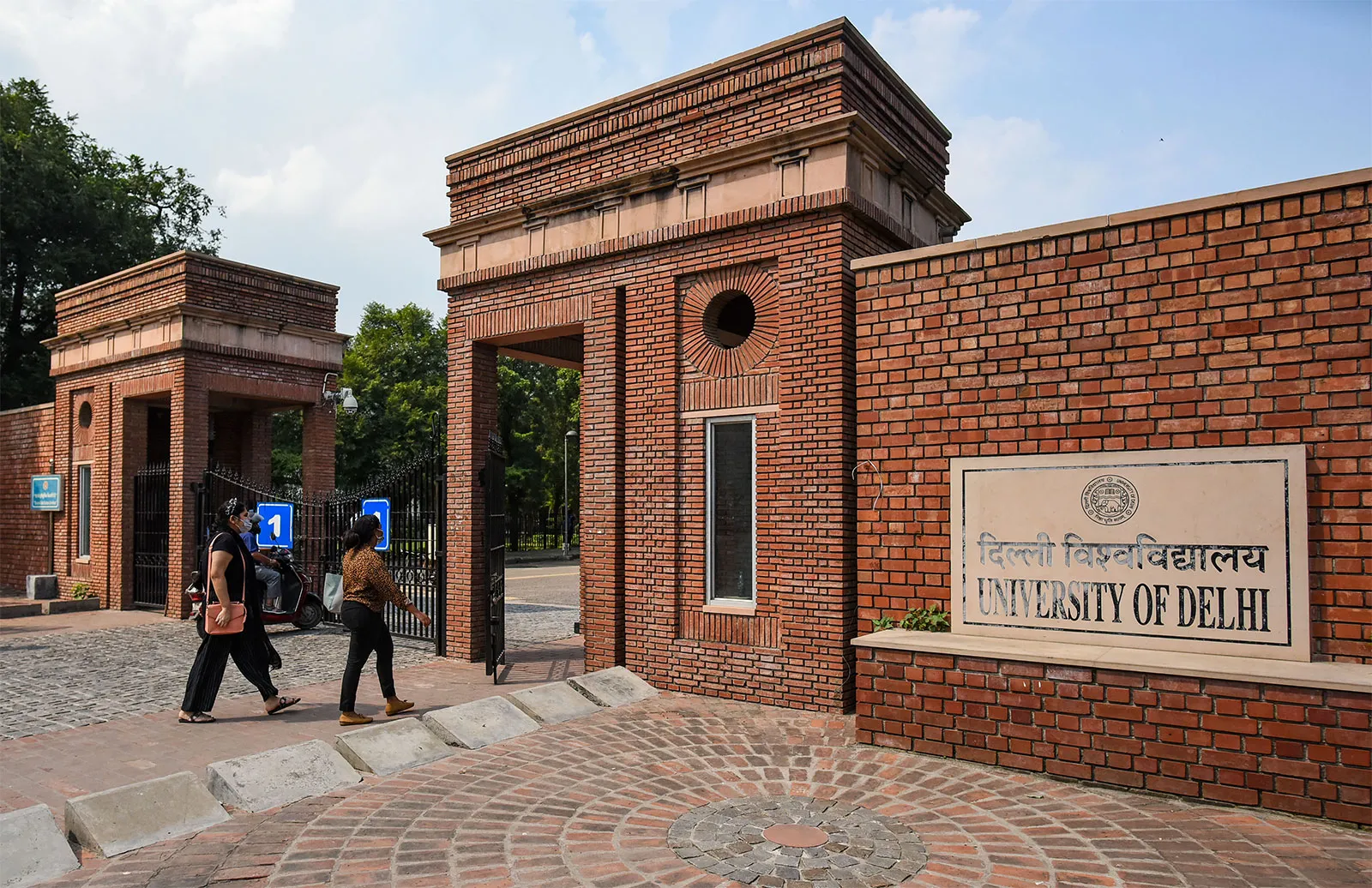

In a landmark policy shift reshaping higher education progression in India, Delhi University has formally opened a direct admission pathway to Doctor of Philosophy (PhD) programmes for the inaugural batch of its Four-Year Undergraduate Programme (FYUP). The decision removes the traditional prerequisite of a master’s degree for high-performing students, allowing top scholars to transition straight from undergraduate studies into advanced academic research.
Under the updated framework, students completing their fourth undergraduate year with a minimum Cumulative Grade Point Average (CGPA) of 7.5 will be eligible to apply directly for doctoral admissions starting in the 2026-27 academic session. A relaxed threshold of 7.0 CGPA will apply to candidates from Scheduled Castes and Scheduled Tribes, bringing university regulations into alignment with guidelines established under the National Education Policy (NEP) 2020.
Structural Transition and Academic Benchmarks
The rollout of the direct doctoral track represents the culmination of a multi-year structural overhaul initiated when Delhi University introduced the FYUP under the Undergraduate Curriculum Framework in the 2022-23 academic year. Out of the initial cohort of 75,948 enrolled students, 40,005 chose to exit after three years in 2025 with conventional bachelor’s degrees, while 35,943 students elected to continue into the optional fourth year dedicated to research, skill-building, and applied projects.
To accommodate the continuing cohort, the university instituted parallel postgraduate pathways alongside the new direct doctoral option. More than 12,000 fourth-year students, representing roughly 34 per cent of the senior class, submitted applications for one-year master’s programmes across 46 academic disciplines. The introduction of the direct PhD route offers an accelerated trajectory for research-oriented graduates who wish to enter doctoral studies without completing additional postgraduate coursework.
Institutional Reforms Under NEP 2020
University officials noted that amendments to PhD Ordinance VI were formally ratified following approvals from the Academic Council and Executive Council. The curriculum for the fourth undergraduate year was explicitly designed to incorporate rigorous dissertation work, hands-on laboratory training, and field research, equipping students with technical capabilities that mirror postgraduate research standards.
To support the expanded academic infrastructure, 25 constituent colleges established dedicated Skill Development Centres backed by central university funding and innovation initiatives. Academic leadership emphasized that high-achieving undergraduates who demonstrate research aptitude during their fourth year should not face unnecessary institutional delays, validating recommendations submitted by the university’s Research, Innovation and Entrepreneurship Council.
Academic Debates and Implementation Concerns
Despite official endorsement, the regulatory change has sparked active debate among faculty members and educational experts. Concerns have been raised regarding potential disparities during departmental interviews, where direct undergraduate applicants will compete against candidates holding master’s degrees or established national fellowship qualifications.
Some educators maintain that postgraduate studies impart crucial disciplinary breadth that helps scholars frame complex research questions. Questions have also emerged regarding the clear implementation of reservation policies and fellowship allocations when grouping four-year graduates alongside traditional master’s degree holders. Nevertheless, university authorities confirmed that the direct admission track will proceed for the 2026-27 academic year as a special measure, establishing a significant precedent for central universities across the country.
