


New Delhi: In a significant legislative move affecting India’s digital payments ecosystem, the Lok Sabha on Thursday passed a Bill amending the Payment and Settlement Systems Act, 2007, empowering the Central Government to allow banks and other payment service providers (PSPs) to levy charges, including Merchant Discount Rate (MDR), on Unified Payments Interface (UPI) transactions and other notified electronic payment modes.
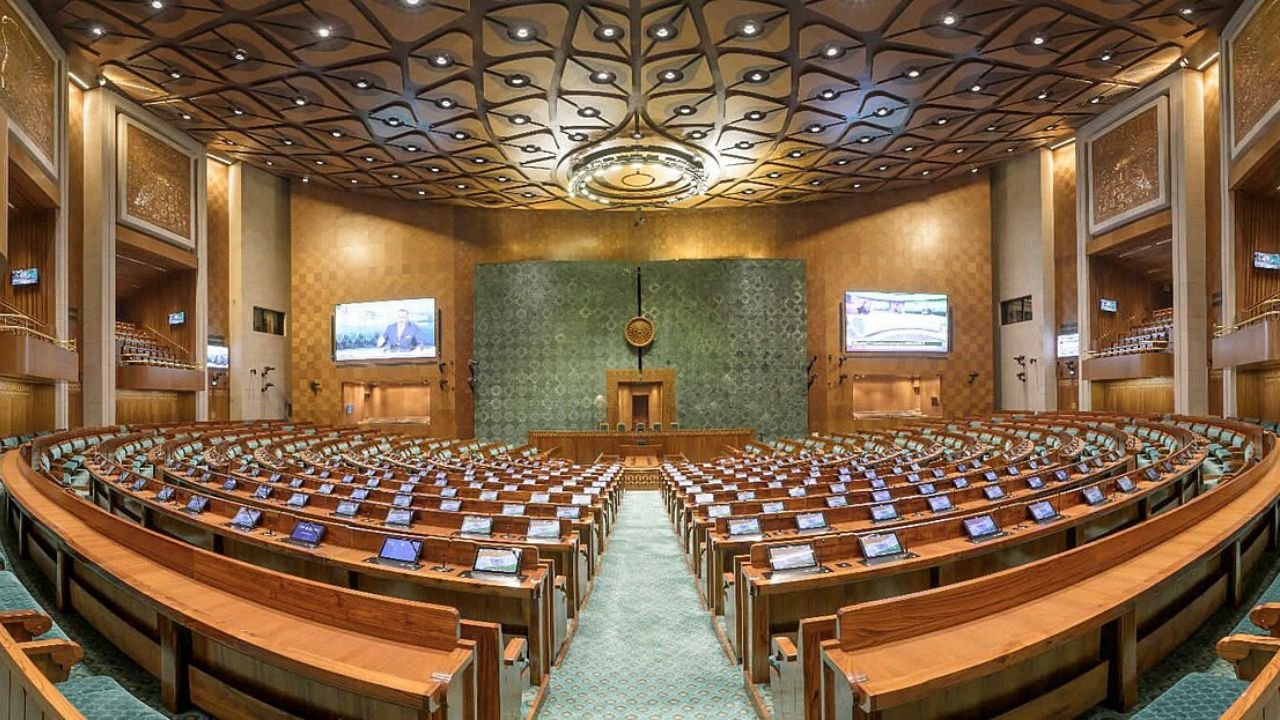
The amendment forms part of the Taxation and Other Laws (Amendment) Bill, 2026, which was introduced in the House on Tuesday. After the Lok Sabha reconvened at 2 p.m. on Thursday, Finance Minister Nirmala Sitharaman moved the Bill for consideration and passage. Amid opposition protests, the legislation was passed by voice vote without a detailed discussion.
Under the existing legal framework, Section 10A of the Payment and Settlement Systems Act prohibits banks and payment system providers from imposing any direct or indirect charges on electronic payment modes notified under the Income Tax Act. As a result, UPI transactions have so far remained free from MDR or service charges, unlike real-time payment systems such as RTGS and NEFT, which attract transaction-related fees.
The amendment revises Section 10A by replacing the reference to Section 269SU of the Income Tax Act with a provision authorising the Central Government to notify one or more electronic payment modes on which charges may be permitted. The legislative change does not automatically introduce charges on UPI transactions. Instead, it provides the government with the legal authority to take such a decision in the future through an official notification, if considered necessary.
According to the government, the amendment is intended to create a sustainable revenue model for India’s rapidly expanding digital payments ecosystem. It maintains that banks, payment service providers, and companies developing payment infrastructure continue to make substantial investments in technology, security, and operational capacity, making a long-term financial framework essential for maintaining and expanding digital payment services.
Speaking on the issue a day earlier, Reserve Bank of India (RBI) Governor Sanjay Malhotra said it would be premature to speculate on the introduction of MDR for UPI transactions. He emphasised that continuous investment is required to strengthen and modernise the country’s digital payment infrastructure, adding that the associated costs ultimately have to be borne by someone.
Malhotra explained that there are essentially two possible approaches. One is for the cost to be borne by taxpayers through government expenditure, while the other follows the “user pays” principle, under which merchants pay the Merchant Discount Rate on digital transactions. He clarified that, for now, the government has only initiated the necessary legal amendment and that the future policy framework will evolve over time.
Banks and stakeholders in the digital payments industry have long advocated the introduction of MDR on merchant UPI transactions, arguing that maintaining payment networks, enhancing cybersecurity, upgrading technology, and supporting large-scale digital infrastructure involve significant recurring costs. They contend that the current zero-MDR regime makes it difficult to recover these operational expenses.
At the same time, the government has consistently refrained from permitting MDR on UPI in order to promote digital payments and accelerate financial inclusion. This policy has played a major role in making UPI India’s most widely used digital payment platform, processing billions of transactions every month across individuals, businesses, and institutions.
Industry observers believe that if the government decides to introduce MDR in the future, it is likely to apply only to merchant UPI transactions above a specified value, while person-to-person (P2P) transfers may continue to remain free of charge. However, no such decision has been announced so far, and any future implementation will depend on a notification issued by the Central Government.
With the passage of the amendment, the government now possesses the statutory authority to frame a policy regarding charges on notified digital payment modes. Nevertheless, no new fee has been imposed on UPI users or merchants at present, and any future decision on levying MDR or similar charges will be subject to further government notification and policy deliberations.
About the author — Suvedita Nath is a science student with a growing interest in cybercrime and digital safety. She writes on online activity, cyber threats, and technology-driven risks. Her work focuses on clarity, accuracy, and public awareness.
Follow for daily updates on cybercrime, corporate fraud, DFIR, hacking, investigations, and digital forensics
