

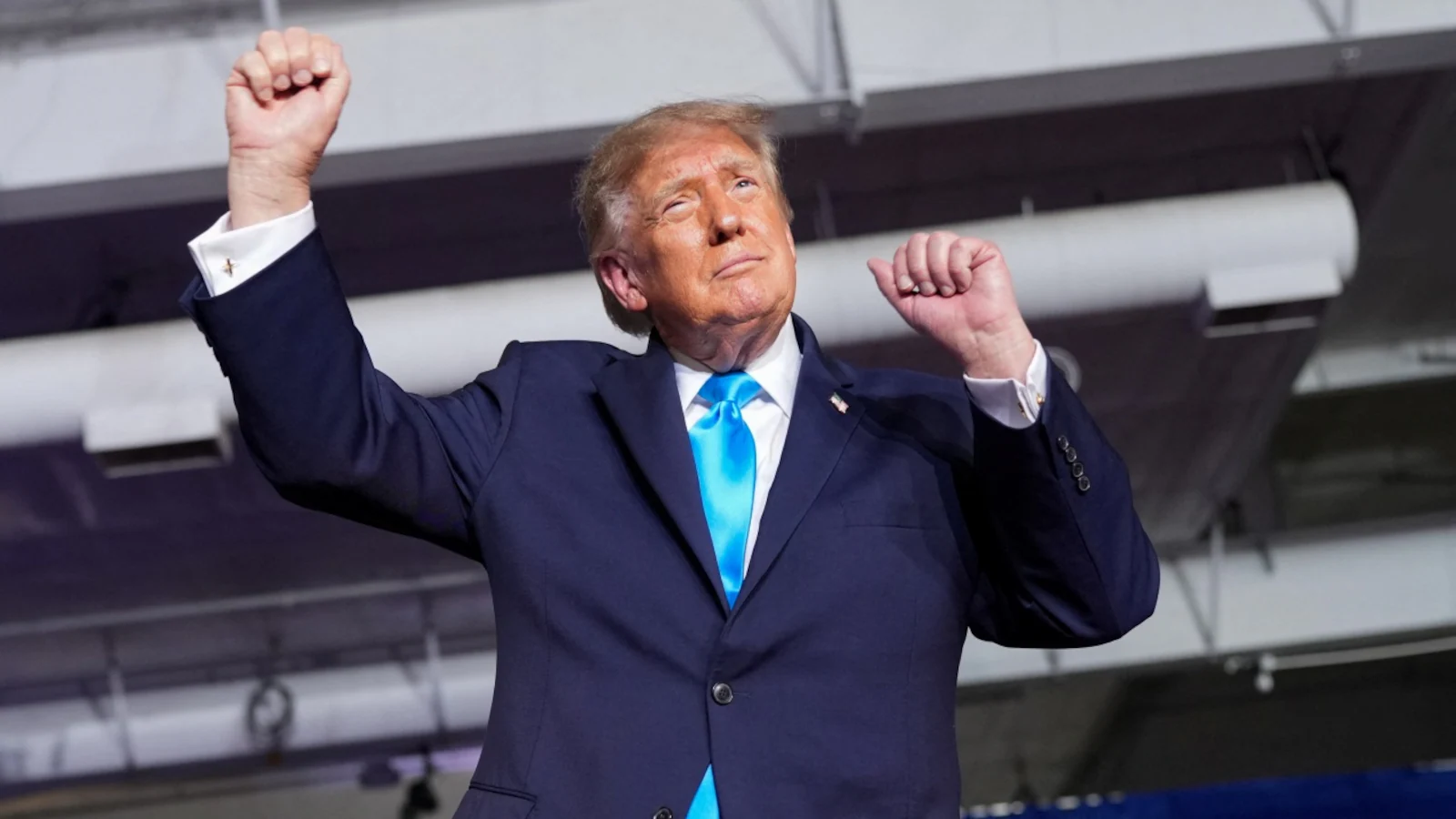

The United States is pressing international partners to replace the term “artificial intelligence” with “super intelligence”, taking President Donald Trump’s domestic technology rebranding campaign into global economic institutions.
US Treasury Undersecretary for International Affairs Erin Browne said Washington is negotiating with other International Monetary Fund shareholders over whether the new term should appear in a statement being prepared by the Fund’s main steering committee.
The dispute may appear linguistic, but it has wider implications. “Superintelligence” already has a specific meaning in AI research, where it generally describes a hypothetical system that substantially exceeds human capabilities across a wide range of tasks.
FCRF Launches CP-FRM to Build India’s Next Generation of Fraud Risk Professionals
Washington Takes AI Rebranding to the IMF
The US wants the International Monetary and Financial Committee, or IMFC, to use “super intelligence” in its upcoming communiqué.
The IMFC represents the IMF’s 191 member countries and provides political direction on major global economic and financial issues.
Browne said the administration believes “super intelligence” better reflects the rapidly advancing technology and its potential economic impact.
President Trump directed US government agencies last month to replace “artificial intelligence” with “super intelligence” in official terminology.
The administration is now trying to persuade international institutions and foreign governments to follow the same approach.
The US currently holds the G20 presidency, giving Washington another platform through which it can promote the terminology among major economies.
However, IMF members have not necessarily agreed.
Negotiations over the wording were still underway, and one possible compromise could be to avoid both terms and instead refer broadly to “new technology”.
The final wording is expected to become clearer when the IMFC releases its statement.
Why ‘Super Intelligence’ Is Not Just Another Name for AI
Artificial intelligence is a broad term covering computer systems that perform tasks normally associated with human intelligence.
That can include recognising images, generating text, recommending content or writing software code.
Superintelligence traditionally means something much narrower and much more powerful.
In AI research, it usually describes a future system whose abilities exceed those of humans across most intellectually important tasks.
Current generative AI systems can outperform people in some areas but also make basic mistakes, hallucinate information and struggle with tasks that require sustained real-world reasoning.
That is why researchers often distinguish between today’s AI, artificial general intelligence and hypothetical superintelligence.
Using “super intelligence” as a general replacement for AI could blur those distinctions.
It could also create confusion in scientific papers, regulation and international agreements where precise definitions matter.
US officials, however, argue that current AI systems have advanced far beyond what the word “artificial” suggests and that a stronger term better captures their economic importance.
Tech Companies Are Already Responding to the Shift
Parts of the technology industry have begun adopting Trump’s preferred language.
Several technology executives have publicly used the phrase “super intelligence” more frequently, while the administration has incorporated it into the names of new government initiatives.
Trump’s newly created government AI body is called the Super Intelligence Task Force.
The group is expected to play a central role in developing the administration’s technology policy.
The terminology push also arrives as Washington takes a broadly pro-development approach to advanced AI.
The administration has argued that the US must accelerate AI infrastructure, computing capacity and adoption to maintain its lead over China.
That approach contrasts with calls from some researchers and lawmakers for tighter controls on increasingly capable systems.
The word “superintelligence” therefore carries political weight as well as technical meaning.
Calling current technology “super intelligence” can frame it as a transformative economic asset rather than primarily as a risk requiring restraint.
Global Institutions Could Face a Terminology Problem
The IMF and other international organisations rely heavily on agreed definitions.
A change in terminology can affect policy papers, financial assessments and discussions involving governments with very different approaches to AI regulation.
The US Treasury itself was still using “artificial intelligence” in official financial-sector guidance earlier this year.
It released an Artificial Intelligence Lexicon and an AI Risk Management Framework in February to help financial institutions understand and manage the technology.
A global shift to “super intelligence” would therefore require governments and institutions to decide whether they are merely changing the label or also changing the definition.
That distinction will matter if the phrase later appears in laws, regulatory standards or international agreements.
For now, the push remains primarily a political and diplomatic effort.
Whether other governments adopt the terminology will show how much influence Washington can exert over the language used to describe one of the world’s most important emerging technologies.
What this means for you:
The technology itself is not changing because governments rename it. Readers should distinguish between today’s AI systems and the much more advanced “superintelligence” traditionally discussed by researchers.
Follow for daily updates on cybercrime, corporate fraud, DFIR, hacking, investigations, and digital forensics
