

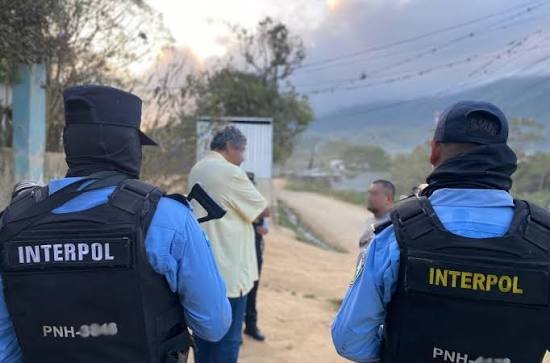

INTERPOL has coordinated a multinational crackdown that led to the arrest of 95 suspects accused of producing, distributing or monetising child sexual abuse material through messaging platforms and cryptocurrencies.
The operation involved 17 countries across Latin America and Europe and was carried out through four parallel law-enforcement actions between March and September 2026.
Authorities executed 127 search warrants and rescued one child.
Investigators also seized digital material that could lead to further arrests and help identify more children at risk.
FCRF Launches CP-FRM to Build India’s Next Generation of Fraud Risk Professionals
Messaging Apps and Crypto Used to Spread Abuse Material
The operation, known as International Effort Confluencia, targeted groups that allegedly used online messaging applications to circulate illegal material and connect offenders.
Investigators also examined cryptocurrency payments linked to the sale of abuse content.
According to INTERPOL, digital platforms are increasingly being used not only to distribute illegal files but also to groom children, coordinate abuse and monetise exploitation.
That makes such cases harder to investigate.
Messaging groups can involve users in multiple countries, while cryptocurrency transfers can move across borders without relying on traditional banking systems.
The same file can also be copied and redistributed repeatedly.
For victims, that means the abuse can continue long after the original material was created because every new circulation creates another form of victimisation.
INTERPOL said about 89% of those arrested were men and 11% were women.
Five-Year-Old Child Rescued in Colombia
One of the most serious cases uncovered during the operation involved a five-year-old child in Colombia.
Authorities there safeguarded the child and arrested a parent who was allegedly producing and selling abusive material online.
INTERPOL investigators used its Child Sexual Exploitation database to connect multiple files showing the same child.
Some of the material reportedly dated back to when the victim was one year old.
The database allows law-enforcement agencies to compare images and videos collected in different investigations.
That can help officers determine whether material from separate cases depicts the same victim, identify locations or connect offenders operating in different countries.
The Colombian case shows why international databases are important.
A single country may only see part of an offender’s activity, while investigators comparing material globally may recognise patterns that would otherwise remain hidden.
Panama Group Had More Than 700 Users
Authorities also identified large online groups allegedly dedicated to distributing abusive content.
In Panama, police arrested the administrator of a group that had more than 700 users.
In Ecuador, investigators seized more than 4,000 files containing around 15GB of child abuse material from one suspect.
Authorities in Argentina also arrested a suspect accused of communicating with more than 260 girls from several countries.
Investigators allege that the suspect used sextortion tactics.
Sextortion occurs when someone pressures or blackmails a victim into providing sexual images, videos or money.
In this case, the accused allegedly asked minors for increasingly explicit material and threatened them when they tried to refuse.
Authorities in Argentina, Costa Rica, Ecuador, Peru and Spain also found adolescents participating in some messaging groups, both requesting and distributing illegal content.
That adds another challenge for investigators because young people may appear in such networks both as victims and participants.
Cross-Border Cooperation Becomes Central to Online Abuse Cases
The operation involved Argentina, Bolivia, Brazil, Chile, Colombia, Costa Rica, the Dominican Republic, Ecuador, El Salvador, Guatemala, Honduras, Italy, Panama, Paraguay, Peru, Spain and Uruguay.
The large number of participating countries reflects how quickly online exploitation networks cross national boundaries.
An offender may live in one country, communicate through a platform hosted elsewhere and send payments using services based in another jurisdiction.
That makes traditional local investigations less effective when agencies work alone.
INTERPOL coordinated intelligence sharing between participating countries and helped investigators compare evidence collected across separate cases.
The operation was also supported by international police networks and funded partly through European Union and child-protection programmes.
The arrests do not mark the end of the investigation.
Authorities expect seized devices and digital files to produce additional leads, including possible new suspects and unidentified victims.
For law enforcement, one of the priorities will be tracing people who paid for material or participated in closed groups even if they were not directly involved in producing it.
The operation also reinforces growing scrutiny of messaging platforms and cryptocurrency services that can be misused to facilitate serious crimes.
What this means for you:
Parents should take unusual online contact, requests for private images or threats involving children seriously and preserve evidence before reporting it. Suspected child sexual exploitation should be reported immediately to local police or the appropriate cybercrime authority.
Follow for daily updates on cybercrime, corporate fraud, DFIR, hacking, investigations, and digital forensics
