

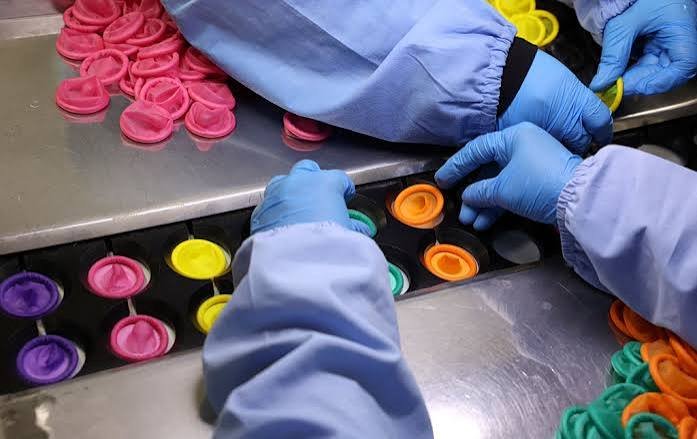
The European Anti-Fraud Office (OLAF) has executed a major international enforcement operation, dismantling a highly sophisticated illicit distribution grid responsible for flooding the continental market with more than 200,000 counterfeit condoms. Operating under direct coordination with multi-national customs task forces, central intelligence analysts traced a complex logistics chain extending straight from an unregulated manufacturing exporter based in China. The cross-border data inquiry unraveled a dangerous corporate personation racket that systematically hijacked the branding, visual trademarks, and corporate logos of a premium healthcare manufacturer to bypass regulatory checkpoints and distribute non-compliant barrier devices across vulnerable retail sectors.
Registration Begins for FutureCrime Summit 2026, India’s Largest Cybercrime Conference
The Misdeclaration Framework and Medical Device Subversion
The operational parameters of the smuggling cell relied on a calculated evasion strategy designed to exploit secondary customs processing lanes. The network intentionally mislabeled the high-volume sea and air freight shipments as plastic toys on international manifest documentation, betting that consumer goods streams would face less rigorous regulatory screening than verified therapeutic shipments. Under strict European Union safety codes, condoms are legally classified as high-risk medical devices, requiring absolute compliance with rigorous clinical baselines alongside mandatory CE certification and ISO 4074 validation protocols before clearing border entry ports.
The transnational enterprise managed its product distribution and subsequent customs manipulation through heavily integrated operational sequences across three distinct regional jurisdictions. The fraud cell initiated the campaign by processing mass volumes of unverified synthetic latex materials inside domestic Chinese facilities, stamping the sub-standard products with lookalike corporate logos to mirror authentic retail batches. Moving directly into the logistics phase, the handlers routed the bulk consignments through decentralized entry ports across Spain, Romania, and Serbia, utilizing proxy maritime brokers to obscure the true country of origin and fragment the audit trail. The sequence reached its final stage as the non-certified devices penetrated mainstream online marketplaces and shadow retail chains, where they were listed at standard commercial pricing to exploit established consumer trust while generating exceptional profit margins for the offshore handlers.
Comparative Forensic Audits and Multi-State Disruption
The massive contraband grid began to unravel after localized customs desks intercepted several anomalous shipments, triggering a centralized intelligence alert within OLAF’s master databases. Task force investigators executed a line-by-line comparative forensic review of the physical product composition, mapping out consistency patterns in batch numbers, ink signatures, and packaging laminates across different entry hubs. This centralized data matching confirmed that the separate seizures across Eastern and Western Europe shared an identical production source in China, enabling OLAF to coordinate directly with Asian regulatory commands to isolate the primary exporting ring and freeze their active logistical pathways.
The successful technical interception successfully blocked a legitimate market value exceeding €200,000 while cutting off defective products that completely failed standard safety metrics. Independent laboratory screenings revealed that the seized batches failed vital safety criteria, including microbial contamination controls, material biocompatibility standards, structural leak testing, precise dimensional metrics, and shelf-life stability tests. OLAF Director-General Petr Klement emphasized that counterfeit medical devices pose an immediate, unyielding threat to public health because they are entirely untested, uncontrolled, and unsafe. By allowing structural fluid leaks and introducing unverified chemical stabilizers, these illicit items strip consumers of basic protection, exposing populations to severe reproductive health hazards, unintended pregnancies, and unchecked sexually transmitted infections.
Cross-Sector Enforcement Alliances and Zero-Trust Freight Controls
The public exposure of this high-volume medical device compromise has prompted senior healthcare analysts and international trade enforcement boards to demand an immediate upgrade to wholesale import verification standards. Data protection experts and maritime security analysts state that relying entirely on traditional paper-bound cargo declarations remains highly vulnerable to corporate mislabeling loops. Future border mitigation frameworks are moving toward the mandatory deployment of real-time digital shipping registries, automated container analytics, and localized laboratory testing pools at major entry ports to verify the chemical signature of incoming rubber and latex shipments before they enter domestic commerce channels.
To permanently protect continental supply networks from brand exploitation and synthetic medical products, European compliance councils are urging retail marketplaces to implement strict zero-trust background checks on all independent medical suppliers. Following the formal closure of OLAF’s administrative investigation phase, the complete evidence dockets have been transferred to competent national prosecutors and EU judicial units to initiate corporate asset forfeitures and formal criminal proceedings against the local distribution partners. Enforcement commands maintain that all connected retail supply channels remain under active technical tracking, advising the public to purchase reproductive health devices exclusively through licensed pharmacies and authorized brand partners to neutralize shadow networks before they can compromise public safety.
