

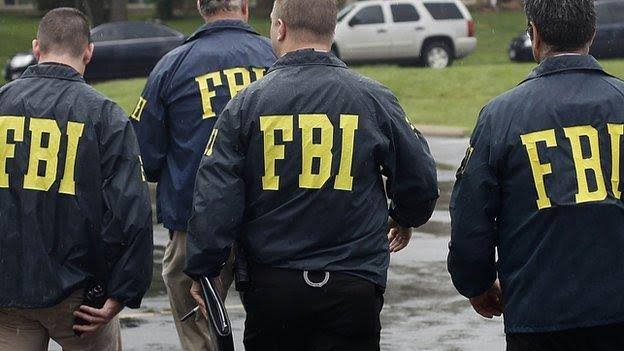
The Office of the United States Attorney for the District of Vermont, working in immediate tactical coordination with the Federal Bureau of Investigation, has successfully finalized a major asset recovery operation, securing a formal judgment of forfeiture for $2,270,202.39 (approximately ₹19.5 crore) in stolen public funds. United States District Judge William K. Sessions III signed the judicial release order to permanently return the seized capital to the Chittenden Solid Waste District, the largest solid waste management entity in Vermont. The federal data inquiry unraveled a highly sophisticated Business Email Compromise campaign where international fraudsters systematically exploited structural authentication blind spots in public municipal procurement streams to divert massive capital allocations meant for infrastructure expansion.
Registration Begins for FutureCrime Summit 2026, India’s Largest Cybercrime Conference
The Identity Cloning Snare and Dual-Invoice Capital Siphoning
The structural parameters of the electronic diversion dates back to late January 2026, when the public agency was heavily engaged in constructing its new automated Materials Recycling Facility in Williston. Exploiting open-source data regarding regional public infrastructure contractors, a sophisticated cybercrime cell deployed precision domain-spoofing techniques to generate lookalike email addresses that completely mirrored the digital profiles of the district’s trusted construction partner. The threat actors further accelerated their social engineering matrix by embedding stolen digital signatures and the actual photographs of corporate finance executives within the communication thread, creating an absolute illusion of legitimate administrative authority.
The fraudulent messages explicitly directed the waste management district’s finance team to adjust their existing system profiles and route all upcoming vendor settlements into a newly designated Citibank account. Misled by the high-fidelity presentation, the agency’s underwriting desk authorized two major Automated Clearing House payments totaling over $3 million to cover what they believed was a past-due invoice alongside a current construction milestone billing. The absolute collapse of the verification loop went completely unnoticed for weeks until the genuine construction partner issued a non-payment alert, revealing that the primary repository account was entirely controlled by a fraudulent shadow network with zero institutional ties to the infrastructure project.
Technical Surveillance Triangulation and Fast Civil Forfeiture
The public agency immediately escalated the financial discrepancy to federal law enforcement bureaus and Citibank compliance desks, triggering an aggressive, machine-speed asset tracing protocol. The FBI’s specialized electronic crimes unit launched line-by-line digital audits of the clearing house transaction logs, enabling authorities to instantly freeze the destination account before the transnational syndicate could complete total capital extraction. While the fraudsters managed to successfully withdraw or layer approximately $750,000 before the containment block went live, the swift intervention allowed federal prosecutors to lock down the remaining $2.27 million.
To bypass the long delays associated with traditional international criminal trials, the U.S. Attorney’s Office initiated an expedited civil forfeiture action on April 30, tracking the frozen electronic instruments directly to the underlying cyber fraud. First Assistant U.S. Attorney Jonathan A. Ophardt emphasized that successful capital recovery from sophisticated cyber actors remains entirely dependent on the speed of institutional reporting. By choosing to completely own up to the procedural error and bypass the administrative shame often linked to high-profile phishing compromises, the public agency enabled federal tracking cells to secure a rapid judicial forfeiture judgment, bypassing long-term debt gaps and ensuring the immediate transfer of the capital back to public custody via the U.S. Marshals Service.
Infrastructure Preservation and Zero-Trust Procurement Overhauls
The successful return of the ₹19.5 crore capital block provides a critical lifeline for Vermont’s primary solid waste network, preventing a major schedule disruption for the under-construction automated sorting facility. CSWD Executive Director Sarah Reeves confirmed that the returned capital will be injected straight back into the Williston recycling plant project, allowing the municipality to avoid high-interest short-term loans and maintain its scheduled launch for early next year. To maintain essential cash flow during the temporary capital block, the district had been forced to adjust its broader regional budgets, deferring smaller equipment updates and putting off non-essential fleet replacements to protect the main project.
To permanently protect municipal payment grids from similar identity cloning loops and automated phishing scams, regional administrative boards are executing sweeping security updates. The waste management district has completely eliminated manual payment approvals, mandating a strict zero-trust validation framework for all upcoming vendor transactions. Future compliance protocols require independent, multi-layered voice and video verifications through pre-registered communication channels before any field operator can execute a change to existing corporate banking instructions. Law enforcement commands maintain that the international criminal investigation into the primary threat actors remains highly active, warning public institutions that continuous behavioral screening of vendor networks remains the absolute defense to neutralize advanced corporate skimming cells before they breach public funds.
